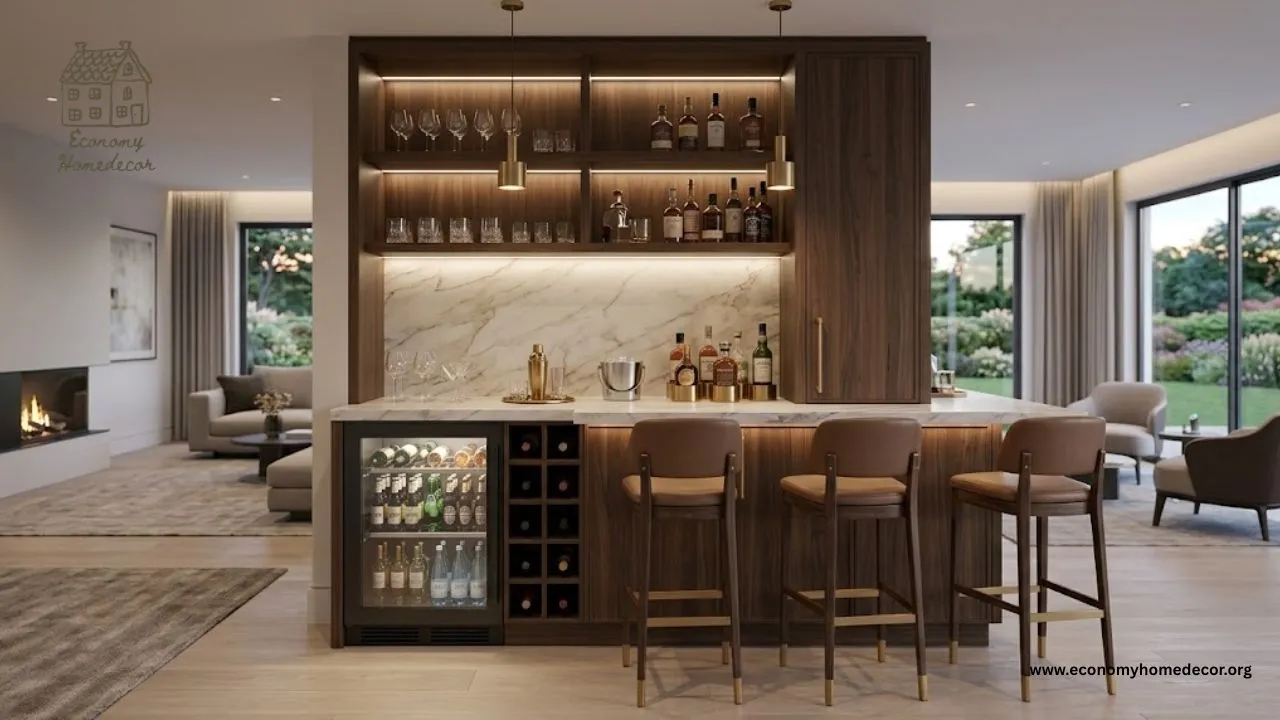
A beautiful bar can be the part of a room everyone remembers. But the best ones aren’t beautiful just because of the marble, brass hardware, dramatic wallpaper, or rows of glassware. They work. You can reach the bottle you need without moving six other bottles.
Guests can sit comfortably without blocking the refrigerator. The counter has enough room to mix a drink, but not so much depth that the bar eats half the room. And when nobody is making cocktails, the space still earns its footprint.
That’s the difference between a bar that looks good in a photograph and one you genuinely enjoy using. The good news is that you don’t need a basement, a huge budget or a dedicated lounge. A narrow wall, empty corner, dining-room cabinet, under-stair recess or even a well-styled console can become a surprisingly useful beverage station.
These home bar ideas range from simple furniture-based setups to built-in wet bars, with practical advice for choosing the right one for your space.
What makes a home bar work?
Before choosing a style, think about what the bar needs to do. A useful home bar ideas usually has four jobs:
- Store bottles, glasses, and accessories.
- Prepare drinks on a surface that is easy to clean.
- Serve without creating a traffic jam.
- Look intentional enough to belong in the room.
Not every bar needs all the equipment found in a professional cocktail bar. In fact, adding too much can make a small home bar less useful.
For occasional entertaining, a cabinet, countertop, and a few shelves may be enough. Someone who regularly hosts dinner parties may appreciate a beverage refrigerator, sink, and dedicated glassware storage. Start with how you entertain. Then design around that.
Turn an empty corner into a compact bar
One of the easiest solutions is also one of the most adaptable. A neglected corner can hold a narrow console or freestanding bar cabinet with a few shelves above it. Add a lamp or wall sconce, a tray for bottles, and a small collection of glassware.
The trick is not filling every inch. Leave some breathing room around the bottles. A little empty wall space makes the arrangement look considered rather than crowded. This approach works especially well in a living room, dining room, or large hallway where a full built-in would feel excessive.
Use a bar cabinet when you want everything hidden
If you love the idea of a bar but dislike seeing bottles and equipment all day, choose a cabinet with doors. This is one of the smartest solutions for a multipurpose room. Closed storage hides:
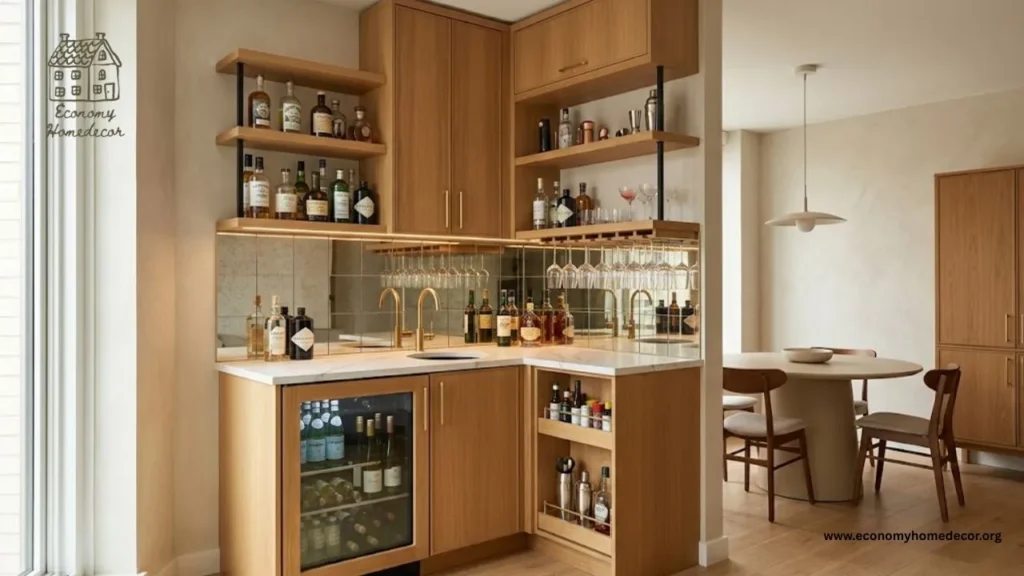
- bottles
- cocktail tools
- napkins
- extra glassware
- mixers
- serving pieces
- coffee supplies
Open the doors when guests arrive and close them when the party is over. Current 2026 home-bar designs are increasingly using concealed storage rather than relying entirely on open shelving.
Houzz’s most recently saved examples include large hidden storage zones and cabinetry designed to keep the countertop visually clear.
Create a kitchen beverage station
A beverage station doesn’t have to compete with the kitchen. In fact, it can make the kitchen work better. Place the bar at one end of the kitchen run, in a pantry area or on an adjacent wall. A beverage refrigerator can keep drinks away from the main refrigerator, while glass-front cabinets make frequently used items easy to grab.
This setup is particularly useful when the cook is preparing food and guests want drinks. The bar becomes a separate zone rather than another workstation fighting for counter space.
Add a bar to the dining room
An unused dining-room wall can be perfect for a built-in bar. Think of it as a compact serving station rather than a miniature pub. Use cabinetry below, a countertop in the middle, and either open shelves or glass-front cabinets above. A backsplash can give the area its own identity while still echoing colors from the dining table or chairs.
A beverage refrigerator tucked below the counter is another useful addition if the space permits. Houzz’s 2026 examples show dining-room beverage stations being designed to coordinate with surrounding cabinetry and furniture instead of looking like unrelated additions.
Turn the space under the stairs into a bar
That strange little cavity under a staircase can become one of the most interesting features in the house. Use the available height intelligently. Where the ceiling is lowest, reserve space for lower cabinets or storage. Use the taller end for shelves, glassware, or decorative display.
A dark paint color can make the recess feel intentional and cozy. If you want a brighter look, use reflective tile or a mirror backsplash to bounce light around the space. Don’t try to force standard cabinets into an awkward opening. Measure the actual shape first and design around it.
Build a basement bar that feels like a lounge
A basement gives you room to create a stronger atmosphere. Instead of simply installing a counter against a wall, think about the entire experience:
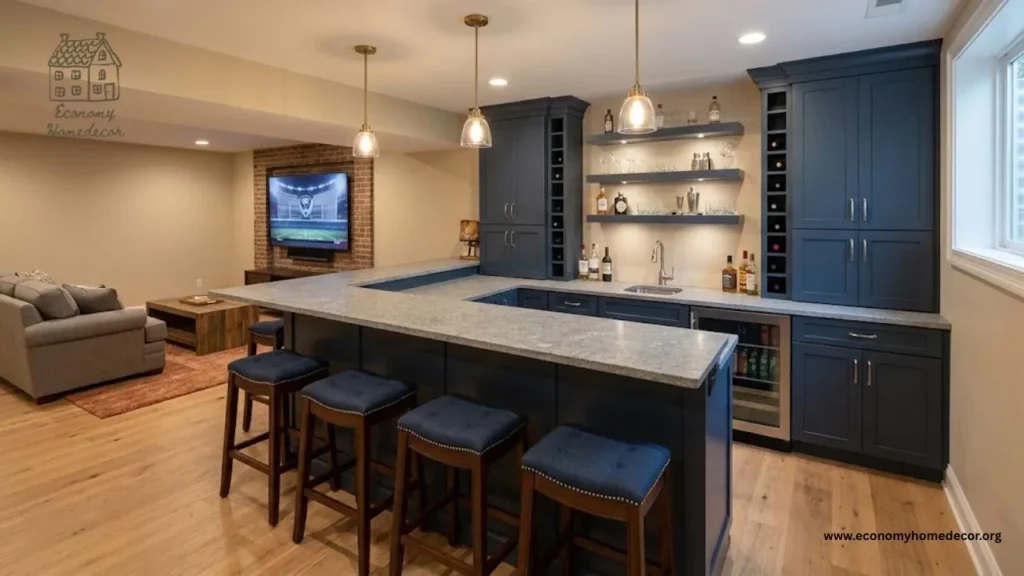
- comfortable seating
- layered lighting
- sound control
- television placement
- storage
- refrigerator access
- countertop workspace
- nearby tables
Dark cabinetry can work beautifully here because the surrounding room already tends to feel intimate. But don’t assume a basement bar has to be dark. Warm wood, textured tile, soft lighting and natural materials can create a relaxed lounge without turning the room into a themed “man cave.”
Make a small apartment bar
You can build a surprisingly good bar without changing the architecture at all. A slim bar cart is the obvious choice, but don’t stop there. A narrow console with a wall-mounted shelf can provide more usable storage while taking up very little floor space.
A cabinet with a fold-down surface is another clever option. For a rental, prioritize furniture that can move with you. The best small-space bar is often the one you can remove without leaving a trail of holes, plumbing, and electrical work behind.
Create a hidden bar behind doors
A concealed bar has a useful advantage: it can disappear. Use a cabinet with pocket, bifold or traditional doors. Inside, organize bottles, glassware, and tools so that everything is visible when the doors are open. This approach works especially well in:
- libraries
- dining rooms
- living rooms
- studies
- hallways
- kitchens
It also solves a common design problem: not everyone wants their liquor collection to become the main visual feature of the room.
Try a freestanding bar instead of a built-in
A freestanding bar gives you flexibility. You can move it, replace it, or take it with you if you move house. It also lets you test the location before committing to cabinetry. This is a useful strategy if you’re unsure whether the bar belongs in the dining room or living room.
Live with the furniture for a few months. Pay attention to where guests naturally gather. That information is often more valuable than guessing from a floor plan.
Add an outdoor home bar
Outdoor bars can be as simple as a weather-resistant counter and storage cabinet or as elaborate as a full outdoor kitchen. The key is choosing materials that can handle the environment. Think carefully about:
- sun exposure
- rain
- humidity
- drainage
- corrosion
- outdoor-rated appliances
- cleaning
A beautiful indoor-style cabinet may not be the best outdoor choice if it isn’t designed for exterior conditions. For a simple patio setup, concentrate on a good serving surface, storage, and shade before worrying about a sink or refrigerator.
Keep a modern bar clean and restrained
Modern doesn’t mean empty. A simple combination of flat-panel cabinetry, a stone countertop, restrained hardware and carefully positioned lighting can make a small bar feel sophisticated. The secret is consistency. If the kitchen has warm oak cabinets.
Don’t automatically install a glossy black bar that looks like it belongs in another house. Repeat one or two materials from nearby rooms. A home bar idea usually looks better when it feels connected to the architecture rather than dropped into it.
Warm up the space with wood
Wood can take some of the chill out of a bar design. Walnut, oak, and other wood finishes work especially well with stone, brass, black metal, and warm lighting. Use wood on cabinetry, shelves, or the front of the bar rather than everywhere at once.
If the surrounding room already contains substantial wood furniture, repeat the tone carefully. Matching every piece exactly can look overly coordinated; completely different tones can look accidental. A related undertone is usually enough.
Create a moody cocktail corner
A bar is one of the rooms where you can get away with being a little dramatic. Deep green, navy, charcoal, or burgundy can create an intimate backdrop. Add warm lighting and reflective details such as an antique mirror, glass, or polished metal.
The important part is lighting. A dark bar with one bright ceiling fixture can feel harsh. Several low-level light sources create much more atmosphere.
Borrow Art Deco details without making the room look themed
Art Deco-inspired details are particularly useful for a home bar because the style naturally suits entertaining spaces. Think:
- geometric patterns
- curved forms
- marble
- brass
- rich jewel tones
- mirrored surfaces
- sculptural lighting
You don’t need all of them. One geometric backsplash or a pair of statement sconces may be enough. Houzz identifies Art Deco influences, richer materials, geometric details, and dramatic finishes among broader 2026 design directions.
Decide between a wet bar and a dry bar
This is one of the decisions worth making before buying cabinets.
A dry bar
A dry bar has no permanently connected sink. It can be as simple as:
- cabinet
- counter
- shelves
- refrigerator
- barware storage
For many homes, that’s enough.
A wet bar
A wet bar includes a sink with water supply and drainage. That makes cleanup easier and can be genuinely useful when the bar is far from the kitchen. But plumbing adds complexity. If you’re connecting a permanent sink, water supply, or drain.
Plan that work with an appropriately qualified professional and follow local requirements rather than treating a wet bar as a simple cabinet installation. If you entertain occasionally and the kitchen is nearby, a dry bar may give you most of the benefit with much less disruption.
Get the bar dimensions right
A beautiful bar can become annoying very quickly when the proportions are off. A common planning reference places a bar top around 42 to 45 inches high and roughly 24 to 30 inches deep. A comfortable working space behind the bar is typically 31 to 37 inches, depending on the layout and equipment.
These figures are useful starting points, not universal building-code requirements. For seating, don’t squeeze stools together just because they physically fit.
People need elbow room. Before ordering cabinetry, mark the proposed footprint on the floor with painter’s tape. Put a chair or stool in the taped area. Walk around it. You will notice circulation problems immediately.
Plan storage before styling the shelves
Storage is where many attractive bars fall apart. Open shelves are excellent for displaying a few beautiful glasses or bottles. They are not automatically the best place for everything. Use a combination of:
Closed cabinets: Less attractive but frequently used supplies.Drawers: Tools, napkins, bottle openers, and small accessories. Open shelves: Favorite bottles, glassware, and decorative objects.
Glass-front cabinets: A compromise between display and protection. Refrigerated storage: Bottles and beverages that benefit from consistent cooling. The goal isn’t maximum storage. It’s easy access without visual chaos.
Light the bar in layers
Lighting can make a modest bar look far more expensive than it is. Think in three layers.
Task lighting
This illuminates the working surface. Under-shelf lights are particularly useful.
Ambient lighting
This establishes the general mood. A pendant, wall sconce, or nearby lamp can do the job.
Accent lighting
This highlights the features you want people to notice. Use it behind shelves, inside glass-front cabinets or against a textured backsplash. Recent Houzz examples show shelf lighting being used almost like gallery lighting to highlight bottles and glassware.
Choose a countertop that suits real life
Marble looks beautiful, but it isn’t automatically the best choice for every household. Consider how the bar will actually be used.
Quartz
Low-maintenance and visually versatile.
Natural stone
Beautiful variation and a premium feel, but maintenance depends on the material and finish.
Wood
Warm and approachable, although spills and moisture require sensible care.
Laminate
Often overlooked, but useful when budget matters, and a durable decorative surface is desired. The right material is the one that fits your maintenance tolerance, budget, and overall room.
Let the backsplash do the heavy lifting
A small bar is a good place to use a material you might not want throughout the kitchen. Try:
- small-format tile
- marble
- stone slab
- zellige-style tile
- mirrored glass
- wallpaper behind protected areas
- decorative panels
Because the surface area is usually limited, a more distinctive finish can have a surprisingly large visual impact.
Make a cheap bar look intentional
You don’t need custom millwork to create a convincing bar. Start with a strong foundation:
- one attractive cabinet or console
- a tray
- a small lamp
- three or four useful glasses
- one bottle or decanter worth displaying
- a plant or artwork
- a small shelf
The mistake is buying ten decorative objects before establishing the basic structure. A restrained arrangement usually looks more expensive.
Give the bar a second job
This may be the smartest modern approach. A beverage station can serve coffee in the morning, sparkling water during the afternoon, and cocktails or mocktails at night. That means the space earns its footprint every day.
Houzz’s 2026 home-bar coverage specifically highlights beverage stations that support coffee, snacks, cleanup, and entertaining. This is especially valuable when you’re deciding whether a built-in bar is worth sacrificing valuable storage or floor space.
Use vertical space in a narrow bar
If floor area is limited, look upward. Tall cabinets can provide much more storage than a wide, shallow unit. Vertical panels, tall shelving, and cabinets that reach toward the ceiling can also make a narrow bar feel intentional rather than cramped.
The 2026 Houzz examples include slim bars using tall cabinetry and vertical detailing to create visual height while maximizing storage.
Don’t forget seating
A bar doesn’t necessarily need stools. If the bar is primarily a preparation station, stools may simply obstruct the room. If guests regularly sit there, however, comfortable seating matters more than matching the latest style.
Measure the relationship between stool height and countertop height before buying. And consider the people who will actually use it. A beautiful stool that nobody wants to sit on for 45 minutes isn’t a successful design.
Build the bar around how you entertain
This is the idea that ties everything together. If you host dinner parties, prioritize serving space and glassware. If you mostly drink wine, prioritize bottle storage and appropriate glassware. If you make cocktails, give yourself real preparation space.
If your family drinks coffee, build the station around the coffee machine first. If you entertain outside, weather resistance matters more than a glamorous indoor finish. There is no single “perfect” home bar. There is only the bar that fits the way you actually live.
How much space do you really need?
You can create a useful beverage station in surprisingly little space. A compact setup might be little more than a narrow cabinet and wall shelving. A full bar requires much more consideration because you need to account for:
- working space
- seating
- circulation
- appliance doors
- cabinet doors
- plumbing
- electrical access
- storage
Before construction, tape the proposed dimensions on the floor. Then physically stand in the space. Open imaginary cabinet doors. Pull out a drawer. Sit on a stool. Walk behind it. This simple exercise catches problems that a beautiful digital rendering can hide.
What should you actually put in a home bar?
Don’t buy a professional cocktail setup if you only make three drinks. Start with what you use. A practical basic collection might include:
- everyday drinking glasses
- wine glasses if you serve wine
- a cocktail shaker
- measuring tool
- bottle opener
- corkscrew
- ice bucket or ice storage
- small tray
- napkins
- mixing spoon
- decanter if you actually use one
Then add specialized equipment as your habits justify it. A bar should serve your drinks, not become a museum of cocktail equipment.
Common home-bar mistakes
Making the bar too deep
A deep counter can consume valuable floor space without providing meaningful benefit.
Using only open shelving
It looks great until every bottle, glass, and accessory becomes part of the room’s visual noise.
Installing a sink because “real bars have sinks”
If the kitchen is six steps away, a sink may not justify the plumbing.
Forgetting appliance clearance
A refrigerator door needs room to open. So do drawers and cabinet doors.
Choosing style before location
A beautiful design that blocks a doorway is still bad.
Over-lighting the bar
A cocktail station usually benefits from warm, layered illumination rather than a single harsh overhead fixture.
Treating the bar as a separate universe
Repeating one material or color from the surrounding room usually creates a more convincing result.
Building for photographs instead of real life
If nobody can comfortably reach the glasses, clean the counter, or sit at the bar, the design has failed.
A simple way to choose your bar
If you’re overwhelmed by all the possibilities, answer five questions.
How often will I use it?
Occasionally → cart or cabinet.
Frequently → built-in station.
Do I need a sink?
No → dry bar.
Yes → plan plumbing before cabinetry.
How much space can I sacrifice?
Very little → narrow cabinet, cart, or wall-mounted solution.
More space → built-in or dedicated lounge.
What do I actually serve?
Wine, cocktails, beer, coffee, mocktails, or a mixture?
What should the bar feel like?
Quiet and integrated?
Moody and intimate?
Colorful and playful?
Modern and minimal?
Traditional and warm? Once those questions are answered, the design becomes much easier.
The best bar isn’t necessarily the biggest one
The current direction in home-bar design is telling. The most interesting examples aren’t simply enormous basement lounges. They’re clever beverage stations tucked into dining rooms, concealed behind cabinetry, squeezed into narrow spaces, and designed to perform several jobs.
Houzz’s 2026 examples repeatedly emphasize storage, vertical space, integrated appliances, lighting, and multifunctionality. That is good news if your house isn’t enormous. You don’t need a replica of a hotel lounge. You need a small, well-planned place where the things you use are easy to reach and the things you don’t want to see can disappear.
Start with the location. Then decide what the bar needs to do. Only after that should you choose the countertop, cabinets, lighting, and decorative details. That order tends to produce a better room—and a much better bar.
Frequently Asked Questions
What is the best place for a home bar?
A kitchen, dining room, living room, basement, under-stair area, or unused corner can all work. The best location is close enough to the areas where you entertain while allowing enough room for circulation.
How much space do I need for a home bar?
It depends on whether you’re creating a compact cabinet or a full seating bar. For planning purposes, common bar dimensions use approximately 42–45 inches of bar-top height and 24–30 inches of countertop depth, with additional circulation space behind the bar.
Is a wet bar better than a dry bar?
Not necessarily. A wet bar is useful when you regularly entertain and want a dedicated sink. A dry bar is simpler and often sufficient when the kitchen is nearby.
Can I have a home bar in a small living room?
Yes. A narrow cabinet, bar cart, console, wall shelving or concealed cabinet can provide the function without consuming much floor space.
What should I put behind a home bar?
Use a combination of closed cabinets, drawers, open shelves and, where appropriate, a beverage refrigerator. Don’t rely exclusively on open shelving.