
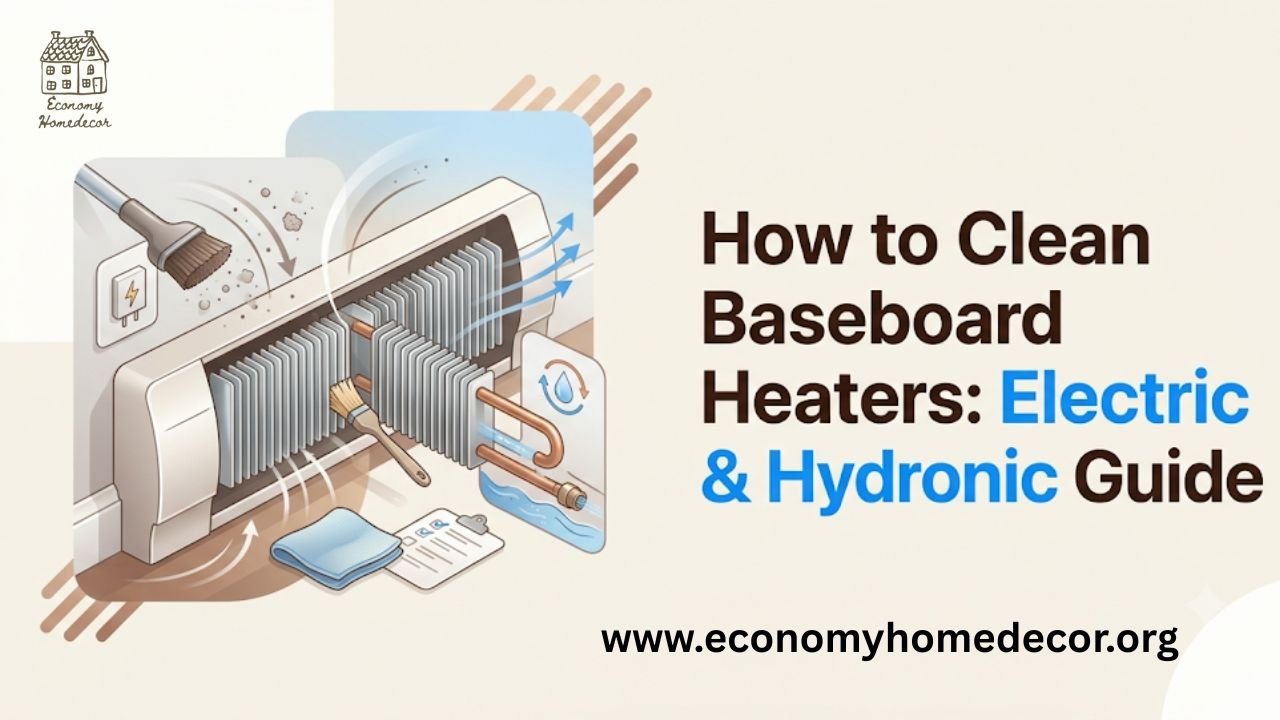
Baseboard heaters are easy to ignore until the heat comes on and you smell months of dust warming up inside the cover. Take the front panel off an older unit, and the reason becomes obvious: pet hair, lint, and household dust can settle deep between rows of thin metal fins where an ordinary duster never reaches.
Cleaning them is usually a manageable DIY job. The important part is knowing what kind of heater you have and shutting it down correctly before your hands or vacuum go anywhere near the interior.
Quick answer: How to clean Baseboard heaters? Turn the heater off and let it cool. For an electric baseboard heater, shut off its circuit at the breaker as well. Remove the front cover without forcing it; vacuum loose dust with a soft brush attachment.
Loosen debris between the fins with a soft brush while vacuuming, clean the removable cover separately, inspect the unit, then reassemble it. Stop if you find obvious electrical damage, a water leak, smoke, sparking, or a persistent electrical smell.
First, Figure Out Which Type of Baseboard Heater You Have
Do this before removing anything. Baseboard heaters may look similar from across the room, but there are important differences inside.

Electric baseboard heater
An electric baseboard heater uses electrical resistance to create heat. It normally has no hot-water pipe carrying heat through the length of the unit. Because electrical components are involved, simply lowering the thermostat is not the same thing as isolating power.
Manufacturer maintenance guidance for electric baseboard heaters can require switching off the relevant circuit breaker before cleaning. If you are unsure which breaker supplies the heater, do not guess while the unit is open.
Hydronic or hot-water baseboard heater
A traditional hydronic baseboard normally contains a copper tube running through closely spaced aluminum fins. Hot water from a boiler travels through that tube, warming the fins; room air passes through the enclosure and is heated by convection.
This construction is why dust packed between the fins matters. The spaces around those fins are part of the heater’s airflow path.
What about plug-in “baseboard-style” heaters?
Portable heaters that plug into a receptacle may have different access panels and maintenance procedures. Follow their manufacturer’s instructions rather than assuming a fixed-wall baseboard heater procedure applies.
What You’ll Need
You do not need a cabinet full of chemicals. For most heaters, the useful kit is simple:
- vacuum with a hose;
- soft brush attachment;
- narrow crevice attachment;
- small soft paintbrush;
- microfiber cloth;
- mild dish soap for the removable cover;
- old towel or drop cloth;
- work gloves;
- eye protection if there is a lot of dust.
A flexible micro-vacuum attachment can be useful on very narrow units, but it is optional. The important word here is soft. The fins inside many baseboard heaters bend surprisingly easily.
Shut the Heater Down Properly
This is the step worth doing slowly.
For an electric baseboard heater
Turn the thermostat off or to its lowest setting. Then shut off power to the heater circuit at the electrical panel. Allow the heater to cool completely before cleaning it.
Do not open a wiring compartment just to clean the heater. The ordinary cleaning area is the accessible heater enclosure and fin/element area specified by the manufacturer.
For hydronic heat
Turn the thermostat for that heating zone down or off and allow the baseboard to cool. There is generally no reason to start closing random plumbing valves just to vacuum a baseboard enclosure. If you do not understand the boiler or zone controls, leave the plumbing alone and clean only after the heater is cool.
Make Some Working Room
Move curtains, baskets, furniture, and toys out of the way. Place an old towel below the heater if you expect a lot of dust to fall out. This is also a good moment to look at the lower and upper openings. Baseboard heating depends heavily on air moving through the enclosure.
A long curtain draped over the top or a piece of furniture pushed directly against the unit can interfere with that airflow even when the heater itself is spotless. Use the clearances specified by the manufacturer rather than relying on a universal inch measurement. Designs differ.
Remove the Cover Without Forcing It
This is where many neat online instructions stop matching real houses. Some baseboard fronts lift upward and then pull forward. Others use removable end caps, retaining clips, or screws. Older enclosures may have several overlapping sections. A previous paint job can even glue the cover to the wall. Look before you pull.
Check both ends for caps or screws. Feel where the panel seems to be retained. If you know the manufacturer and model, finding its manual is safer than applying more force. A heater cover should not require violent bending to remove.
If paint has visibly bridged the removable panel to the wall or another cover section, the paint film may have to be carefully separated along the actual seam. If you cannot identify that seam confidently, stop rather than cutting blindly beside a heater.
Renters should be especially conservative. A cover that appears permanently fastened or painted in place is a good maintenance request rather than a reason to dismantle somebody else’s heating equipment.
Vacuum Loose Dust Before You Start Brushing
Once the accessible cover is off, resist the temptation to scrub immediately. Start with suction. Run the vacuum hose along the bottom of the enclosure first. Dust bunnies, pet hair, and small debris often collect there. Then use the soft brush attachment over the accessible fins.
Move gently along the length of the heater rather than jamming the nozzle into the metal. Why vacuum first? Because brushing dry debris before controlling it can simply throw it into the room or farther into the heater. On a lightly dirty baseboard, this may remove nearly everything that matters.
Clean Between the Fins Without Crushing Them
Heavy buildup needs more patience. Thin aluminum fins can deform with finger pressure, a hard vacuum nozzle, or an aggressively pushed screwdriver. Bent fins reduce the open space through which air can travel.
Use a small soft paintbrush to tease dust outward while holding the vacuum nearby. Think of the brush as loosening the dirt and the vacuum as catching it.
For packed pet hair
Pet hair is different from ordinary dust. It can form felt-like mats around the lower edges of the fins. Work in small sections. Brush downward or outward only as much as needed to release the hair, while keeping the vacuum nozzle beside the area. Trying to pull an entire mat through the fins can distort them.
This brush-and-vacuum combination is slower than blasting the heater with air, but it gives you much better control over where the debris goes.
Can you use compressed air?
Some manufacturer cleaning instructions allow air to be used for removing debris from heater interiors. It is not always the best household option, though. Compressed air can launch dust, pet dander and debris across the room.
If your heater manufacturer permits it, use controlled low-pressure air rather than an aggressive blast, protect your eyes, and capture the loosened debris with a vacuum. Never use enough force to deform fins or damage components.
Clean the Cover Separately
The removable metal cover usually tolerates far more ordinary cleaning than the heater interior. Vacuum it first. Then wipe it with a microfiber cloth and warm water containing a small amount of mild dish soap. Greasy kitchen residue may take another pass.
Dry the cover completely before reinstalling it. The important distinction is this:
A damp cloth on a removable cover is not permission to spray cleaner or water into an electric heater.
For the interior, vacuuming and dry brushing should be the default unless the manufacturer’s instructions for your exact unit say otherwise.
Inspect the Heater While You Can Actually See It
Cleaning gives you a rare clear view inside the enclosure. Use it. You are not performing an electrical or boiler inspection, but obvious abnormalities deserve attention.
On a hydronic baseboard, look for:
- active moisture;
- staining around a pipe joint;
- green, white, or crusty deposits associated with a fitting;
- severe corrosion;
- badly crushed fin sections.
A small amount of surface dust is maintenance. A leaking pipe connection is a repair.
On an electric baseboard, stop if you see or experience:
- obvious scorching or melted material;
- visibly damaged components;
- smoke;
- sparking;
- repeated breaker tripping;
- a persistent acrid electrical or melting-plastic odor.
Do not “clean around” an obvious electrical problem and assume the job is finished.
Reassemble the Heater and Test It
Make sure no cloth, brush, or vacuum attachment has been left behind. Check that the fins and interior are dry and free of loose debris. Reinstall the panel in the reverse order you removed it. End caps, clips, and screws should sit normally; you should not have to distort the cover to make it stay in place.
Restore the heater to normal operation. For an electric unit, restore the breaker after everything is closed and your tools are clear. Then adjust the thermostat. Let the heater complete a normal heating cycle while you remain nearby. Listen and smell.
A little residual dusty odor can occur if some inaccessible dust remains, particularly at the first seasonal startup. A persistent electrical odor, smoke, or another abnormal symptom is different. Shut the unit down and have it inspected.
What If the Baseboard Heater Cover Won’t Come Off?
Do not turn a stuck cover into a demolition project. First check:
- Are there removable end caps?
- Are screws hidden near either end?
- Does the front lift before it pulls forward?
- Are several metal sections overlapping?
- Is paint bridging the panel to the wall?
- Can you identify a manufacturer/model number?
Real homeowners encounter this problem often; older covers are not always as straightforward as generic “lift and pull” instructions suggest. Community cleaning discussions frequently revolve around covers that no longer release normally or vacuum attachments that cannot reach the fins.
If the cover genuinely cannot be removed, vacuum through accessible lower and upper slots using a flexible crevice tool. A soft narrow brush may help if it can enter without catching components. Do not insert metal objects blindly into an electric heater.
If the unit is heavily clogged and inaccessible, professional cleaning or replacement of a damaged enclosure may be more sensible than forcing it.
Why Does My Baseboard Heater Smell Burnt?
The familiar smell after the first cold day of the season often comes from accumulated dust heating up after months of inactivity. That is one reason cleaning before heating season is useful. But “burning smell” is too broad a description to dismiss automatically.
More consistent with ordinary dust
- heater has been unused for months;
- odor begins at seasonal startup;
- no smoke or visible damage;
- smell diminishes as the heater runs.
Treat it as a warning
Switch the heater off if the smell is sharp, electrical, chemical, or like melting plastic, particularly when accompanied by:
- smoke;
- sparking;
- discoloration;
- abnormal noises;
- repeated breaker trips.
Electrical heating products can present genuine fire/electrical hazards when components fail, so an abnormal symptom deserves more than another round of vacuuming.
How Often Should Baseboard Heaters Be Cleaned?
There is no single magic interval for every home. An annual pre-heating-season cleaning is a sensible baseline for many households. Homes with shedding pets, renovation dust, or visibly fast buildup may need attention more often.
Manufacturer recommendations vary, which is another reason not to present one interval as universal. A useful routine is:
- inspect the openings occasionally during heating season;
- vacuum the exterior when dust is visible;
- deep-clean before the heating season;
- clean sooner if pet hair or debris is visibly blocking airflow.
If the manufacturer specifies a maintenance schedule, follow it.
Common Baseboard-Heater Cleaning Mistakes
Only turning down an electric thermostat
A thermostat setting is not a substitute for electrical isolation when your heater’s maintenance instructions require the breaker to be off.
Forcing an unfamiliar cover
The cover may have a fastener or removal sequence you have not found yet. More force is not more expertise.
Spraying cleaner inside an electric heater
Clean removable painted surfaces separately. Keep unnecessary moisture away from electrical interiors.
Crushing the fins with a vacuum nozzle
Use a soft attachment and light pressure.
Digging between fins with hard metal objects
That can bend fins and, on electric equipment, creates additional risk around components you may not understand.
Assuming every burning smell is “just dust”
A brief seasonal dusty odor and a persistent electrical/plastic odor are not the same symptom.
Promising yourself a specific energy saving
Cleaning a clogged heater can restore airflow and help it deliver heat as designed. That does not justify a universal claim such as “cleaning cuts your heating bill by 10%.”The effect depends on how dirty the heater was and on the rest of the heating system and building.
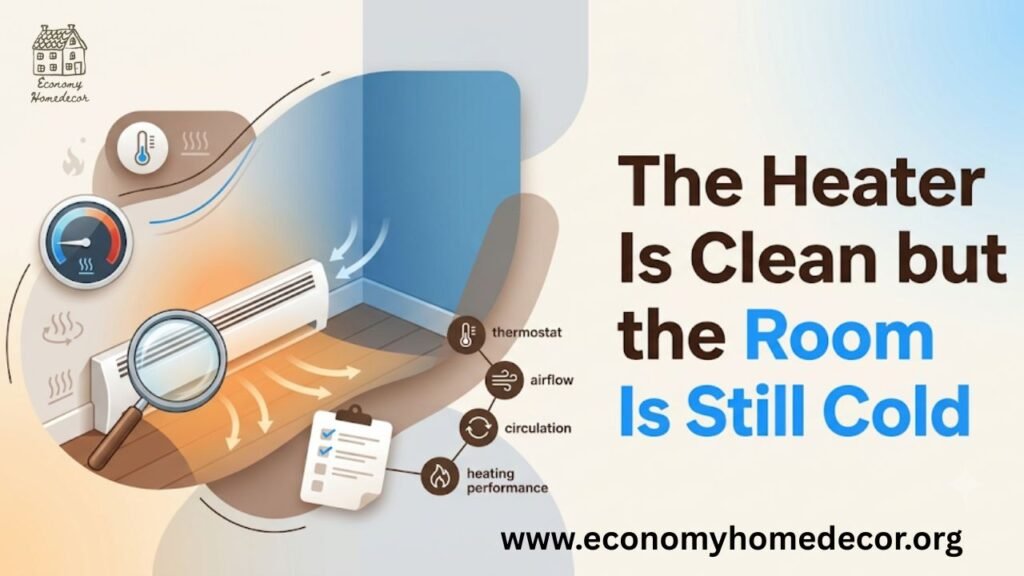
The Heater Is Clean, but the Room Is Still Cold
Cleaning fixes dirt-related airflow restriction. It does not repair every heating problem.
If it is an electric baseboard heater
Possible causes can include:
- thermostat problems;
- supply or breaker issues;
- failed heating components;
- wiring faults.
If the breaker repeatedly trips or the unit has abnormal electrical symptoms, leave troubleshooting to a qualified electrician.
If it is a hot-water baseboard
Possible causes move to the hydronic system:
- inadequate hot-water circulation;
- a zone-control problem;
- trapped air elsewhere in the system;
- valve or circulator trouble;
- boiler problems;
- a leaking fitting.
That is HVAC/boiler territory, not a reason to scrub the fins again. One practical clue is temperature distribution. If an entire zone stays cold despite a heat call, the problem is unlikely to be just a few dusty fins.
When Should You Call a Professional?
Cleaning ordinary dust from an accessible baseboard enclosure is typically straightforward. Repair work is different.
Call an electrician for an electric heater when you have:
- repeated breaker trips;
- sparking;
- scorched or melted material;
- persistent electrical smell;
- a heater that remains dead despite normal controls;
- exposed/damaged electrical parts.
Call an HVAC or boiler professional for hydronic heat when you find:
- active water leakage;
- recurrent corrosion around fittings;
- a cold heating zone;
- circulation problems;
- boiler-related symptoms.
And if you simply cannot identify the heater or determine how the enclosure safely opens, getting model-specific guidance is better than improvising.
A Five-Minute Routine That Makes the Deep Clean Easier
You do not have to dismantle the enclosure every week. During heating season: Vacuum the lower opening and top edge when visible dust develops. Keep curtains and objects from obstructing airflow. Look for pet hair collecting at the bottom. Pay attention to new smells or changes in heat output.
That small amount of attention prevents the once-a-year job from becoming an archaeological dig through several seasons of fur and dust.
Frequently Asked Questions
Can you vacuum a baseboard heater?
Yes. A vacuum with a soft brush attachment is one of the most useful tools for cleaning accessible dust from a baseboard heater. Turn the heater off first, isolate electrical power when applicable, let the unit cool, and avoid pressing a hard nozzle into delicate fins.
Can I use water to clean inside a baseboard heater?
Avoid spraying water or cleaner into an electric baseboard heater. Vacuum and dry-brush the interior unless your specific manufacturer provides different instructions. The removable exterior cover can usually be wiped separately with mild soapy water and dried completely.
How do I clean pet hair from baseboard heater fins?
Use a soft paintbrush to loosen small areas of hair while holding a vacuum nozzle beside the brush. Removing it gradually is safer for delicate fins than trying to pull a large mat through them.
How often should baseboard heaters be cleaned?
An annual cleaning before heating season is a useful general baseline, with more frequent cleaning where pets, renovation dust or visible buildup are present. Follow the manufacturer’s schedule when one is available.
Can I clean a baseboard heater without taking the cover off?
You can remove some dust through the accessible openings with a crevice or flexible vacuum attachment. You will not reach the interior as thoroughly. If the cover appears permanently fastened, do not force it merely to achieve a deeper clean.
Why does my heater smell when I first turn it on?
Dust accumulated during months of non-use can create an odor when the heater warms. It should not be used to explain away smoke, sparking, repeated breaker trips, or a persistent electrical/melting-plastic smell.
Does cleaning baseboard heaters lower the heating bill?
Cleaning can restore unobstructed airflow and heat transfer when a heater is heavily clogged. The actual effect on energy use depends on the amount of buildup, heating system, thermostat behavior, building insulation, and other factors. There is no reliable universal percentage saving.
Can bent baseboard fins be straightened?
Minor fin deformation on traditional hydronic fin-tube baseboards can sometimes be carefully corrected with an appropriate fin tool. Do not improvise around an unfamiliar electric heating element. If the damage is substantial, consult the heater manufacturer or a heating professional.
What is the best tool for cleaning a baseboard heater?
For most jobs, the best combination is a vacuum with a soft brush attachment plus a small soft paintbrush. The brush loosens debris between tight fins while the vacuum captures it.
Why is my baseboard heater still not hot after cleaning?
Cleaning cannot fix a failed electrical component or a hydronic circulation problem. Electric heaters may need electrical/thermostat diagnosis; hot-water units may need boiler, valve, circulator or zone troubleshooting.