
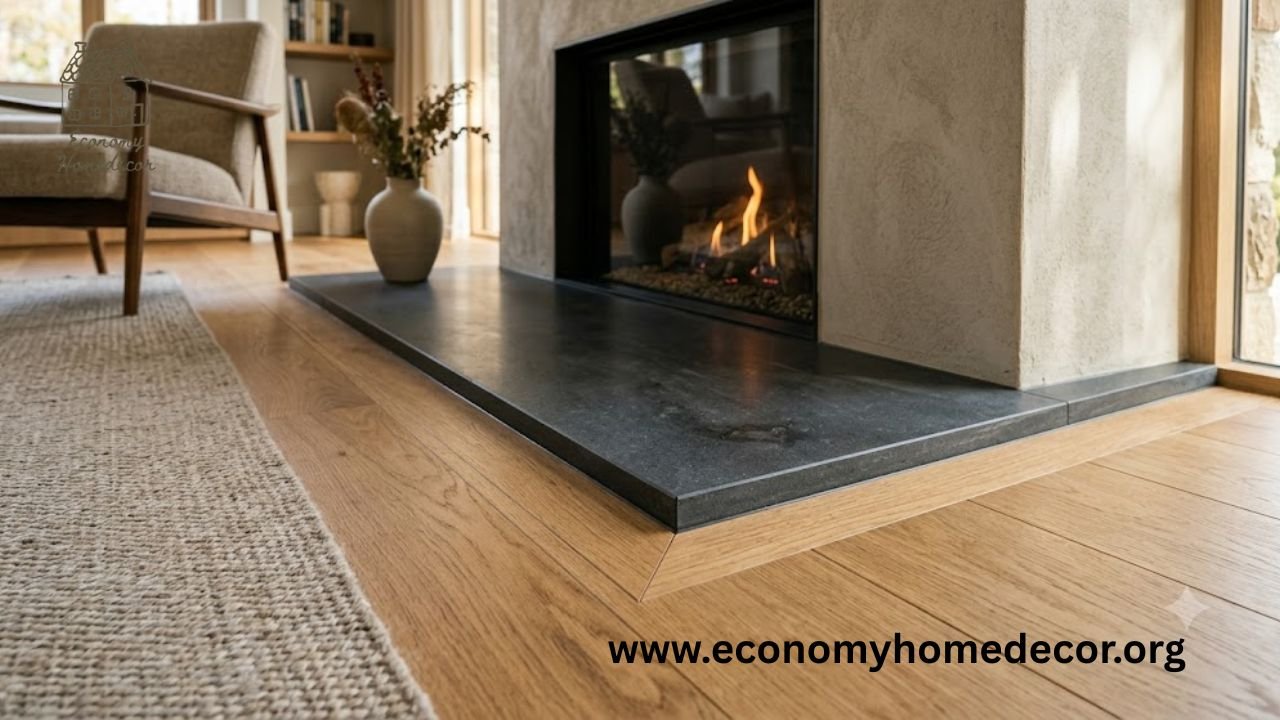
A fireplace can dominate a room, but the part directly beneath it often gets surprisingly little attention. Homeowners spend days comparing surrounds, mantels, inserts, paint colors, and stone samples, then treat the hearth as an afterthought.
That can lead to awkward proportions, difficult cleaning, uncomfortable floor transitions, or a material that looks beautiful but does not suit the way the fireplace is actually used. A well-planned fireplace hearth is different. It feels connected to the fireplace, works with the surrounding floor, handles everyday wear, and makes sense for the type of fire appliance installed.
The best choice is rarely the most expensive stone or the trendiest tile. It is the option that works with your fireplace, your room, and the amount of maintenance you are willing to live with. This guide looks at the decisions that matter before you order stone, start demolition, or commit to a design.
Start With the Fireplace, Not the Material
One of the most common renovation mistakes is choosing a hearth material first. You see a slab of veined marble, black slate, checkerboard tile, or polished granite and immediately imagine it beneath the fire. The problem is that the fireplace itself should determine the boundaries of the project.
A traditional masonry fireplace, a factory-built wood-burning unit, a gas fireplace, an electric fire, and a freestanding stove do not necessarily have identical hearth requirements. Heat exposure, clearances, construction details, and manufacturer instructions can differ significantly.
Before deciding what the hearth should look like, identify exactly what appliance you have. For a manufactured fireplace or insert, find the model number if possible. The installation manual may specify acceptable materials, clearances, projection requirements, or construction details.
For an older masonry fireplace, local building requirements and the condition of the existing structure also matter. This sequence may feel less exciting than choosing colors, but it prevents expensive design reversals later.
What Does a Fireplace Hearth Actually Do?
The hearth is the noncombustible surface at the bottom of a fireplace and, in many installations, the portion extending into the room. Its most obvious function is protection. With an active wood-burning fireplace, sparks, hot ash, and small embers can leave the firebox.
A suitable hearth helps separate those hazards from combustible materials such as wood flooring, rugs, or carpet. Heat is only part of its job, though. The hearth also creates a visual base for the fireplace. Without one, a large chimney breast or surround can appear to stop abruptly at floor level.
A carefully proportioned hearth gives the fireplace more visual weight and makes it feel integrated into the architecture. There is also a practical everyday function. It can provide a durable place for fireplace tools, an ash bucket, or logs, depending on the installation and safe-clearance requirements.
So while homeowners often think of a hearth as a decorative slab, it sits at the intersection of safety, construction, usability, and interior design.
The Hearth Should Match How You Actually Use the Fireplace
Two homes with similar fireplaces may need very different hearths. Imagine one homeowner who lights a wood fire almost every evening through winter. Logs are moved across the hearth, ash occasionally spills, and fireplace tools are used constantly.
Now compare that with someone who has a modern gas unit that is mainly switched on for an hour in the evening. The first homeowner will probably appreciate a surface that hides ash, tolerates regular cleaning, and does not make every small scratch noticeable.
The second may be able to place more emphasis on appearance and continuity with the rest of the room. A decorative electric fireplace changes the decision again. Because there is no burning wood or flying ember, the hearth may be primarily an architectural feature rather than a traditional protective extension.
That is why “What is the best hearth material?” does not have one useful answer. A better question is: What material makes sense for this fireplace, in this room, with this level of use?
Granite: The Dependable All-Rounder
Granite remains popular because it is difficult to make it look completely out of place. A dark honed granite hearth works in traditional fireplaces, contemporary rooms, rustic interiors, and even minimalist spaces. It is also practical.
Dense, relatively smooth surfaces are easier to wipe clean than heavily textured materials. Dark granite is especially forgiving around working fireplaces because small soot marks are less visually obvious. Polished granite produces a more formal look, while honed finishes usually feel quieter and more contemporary.
The disadvantage is that a large expanse of dark stone can look heavy in a small room if the fireplace surround is equally dark. Granite also needs to be detailed correctly. The choice between a single slab, multiple pieces, joints, and thicknesses.
Edge profiles should be made with the installer or fabricator rather than treated purely as an aesthetic decision. For homeowners who want durability without turning the hearth into the main visual feature, granite is often an easy material to live with.
Slate: Better When You Want Character Rather Than Perfection
Slate brings more texture. Its natural variation suits cottages, farmhouse interiors, exposed brick fireplaces, wood-burning stoves, and rooms where a perfectly polished surface would feel too formal. One of slate’s strengths is the way it ages visually.
Dust, slight surface variation, and everyday use often blend into the material instead of standing out dramatically. That does not mean every slate surface is maintenance-free. Natural cleft slate can be uneven. That texture adds character but may require more effort when sweeping fine ash from the surface.
Smoother slate finishes are easier to maintain while keeping the same dark, natural appearance. The important lesson is to see an actual sample rather than choosing from an online photograph. Slate can vary substantially in texture and color.
Marble: Beautiful, but Choose It With Realistic Expectations
There is a reason marble appears so often in luxury interiors. A single piece of natural stone with expressive veining can make a fireplace look more like architectural furniture than a heating feature. Marble works especially well when the hearth continues into the fireplace surround.
That visual continuity creates an elegant, deliberate result. But marble should not be chosen because someone described it simply as “premium.” Natural marble can show scratches, marks, or staining more readily than some tougher alternatives.
Pale stone beside a heavily used wood-burning fireplace may require more attention than a homeowner expects. This is not necessarily a reason to avoid it. Some people enjoy natural materials precisely because they develop character.
The mistake is expecting a frequently used natural-stone hearth to remain identical to the showroom sample forever. If you want marble, ask yourself whether you are comfortable with the material aging naturally.
Porcelain Tile: One of the Most Flexible Choices
Porcelain has changed the fireplace-design market. Modern porcelain can imitate limestone, terrazzo, concrete, slate, marble, or other natural materials surprisingly well. That gives homeowners considerably more design flexibility without automatically requiring the maintenance profile of the material being imitated.
Large-format porcelain is particularly interesting for hearths. Fewer joints can create a cleaner appearance and reduce the amount of grout surrounding an active fireplace. Porcelain is also useful when budgets do not comfortably stretch to custom natural-stone fabrication.
However, the tile is only the visible surface. Its performance depends on the whole installation beneath it. A premium tile laid over a poorly prepared or unstable base is not a premium hearth. Substrate preparation, mortar choice, expansion considerations, edge treatment, and appropriate product selection remain important.
Ceramic and Decorative Tile: Where Personality Comes In
Tile allows a hearth to become a design feature rather than simply a dark slab beneath the fire. Checkerboard patterns can suit period interiors. Geometric designs can bring character to a plain fireplace. Glazed tiles can introduce blues, greens, creams, rust tones, or other colors that would be difficult to achieve with natural stone.
Decorative tile works particularly well when the rest of the fireplace is relatively restrained. The design mistake is allowing every component to compete.
A highly patterned hearth beneath heavily veined stone, ornate molding, strong wall color, and a visually busy mantel can become exhausting. Give one element permission to lead. If the tile is the focal point, simplify the surrounding materials.
Brick: Sometimes the Right Answer Is the Simplest One
Brick feels natural around fire because people already associate the two materials. That gives it an authenticity that can be difficult to reproduce with highly polished surfaces. It works particularly well in traditional homes, converted industrial spaces, farmhouse-style interiors, and relaxed family rooms.
Brick is also comparatively forgiving. Individual units can often be repaired more easily than a damaged large stone slab. The drawback is cleaning.
Textured brick surfaces and mortar joints can collect dust and soot, especially around fireplaces that see regular use. If low maintenance is your top priority, smooth stone or large-format porcelain may be easier. If warmth and character matter more, brick remains difficult to beat.
Concrete: Not Just for Industrial Interiors
Concrete hearths are often associated with minimalist or industrial design, but they can work in softer interiors as well. The material’s strength is visual simplicity. A broad concrete hearth beneath a plastered chimney breast can look extremely calm because there are few joints, strong patterns, or competing textures.
Concrete also allows custom shapes. That can be useful when the fireplace dimensions do not suit standard slabs or tile layouts. The finish makes an enormous difference. Smooth, carefully finished concrete can feel sophisticated.
Rougher concrete feels more architectural and informal. Homeowners should also understand that minor tonal variation or fine surface cracking can occur with concrete. Anyone expecting a perfectly uniform manufactured surface may prefer porcelain with a concrete-effect finish instead.
Raised or Flush? This Decision Changes More Than Appearance
A fireplace hearth can sit almost level with the surrounding floor or project upward into the room. Neither option is automatically better. A flush hearth usually creates the cleanest visual line. It can make a small room feel less interrupted and works particularly well with modern fireplaces, wide-format flooring, and minimalist architecture.
It can also improve circulation because there is no unexpected ledge projecting into a walkway. A raised hearth creates a much stronger architectural feature. It can give a fireplace visual weight and sometimes provide an informal ledge when the fire is not operating.
Raised hearths often suit traditional masonry fireplaces and larger rooms where the extra projection does not interfere with movement. The decision should consider the floor plan, not just photographs.
If the fireplace sits beside the main path through the living room, a large raised corner may become annoying surprisingly quickly. If the room is spacious and the fireplace is intended to be the centerpiece, the same raised platform may make perfect sense.
Think About Children, Pets, and Older Family Members
Interior-design photographs usually show rooms at their most controlled. Real homes are messier. Children run around furniture. Dogs lie near warm surfaces. Older family members may be less comfortable stepping around low projections.
These everyday realities should influence hearth design. Sharp corners deserve particular thought on raised hearths. In some interiors, a softened edge, rounded corner, or less aggressive projection can improve usability without compromising the design.
This is a good example of why the most photogenic solution is not necessarily the best solution for the people living in the room.
How Big Should the Hearth Look?
There are two separate questions here. The first is technical: what dimensions are required for this fireplace and installation? The second is visual: what size looks correct in the room? The technical question should be answered using the appliance instructions, applicable building requirements, and professional advice where needed.
Once that minimum is known, design can begin. A hearth extending only a short distance beyond a very wide fireplace may appear undersized. A huge stone platform beneath a compact fireplace can look equally awkward. Proportion is easier to judge when you physically mark the area.
Before ordering the material, use painter’s tape to outline the proposed hearth on the floor. Then live with it for a day. Walk past it. Place the furniture where it will normally sit. Stand at the room entrance. Look at it from the sofa. This simple test reveals problems that are surprisingly difficult to notice on a plan or computer rendering.
What Should Meet the Hearth at Floor Level?
This detail has more influence on the finished result than many homeowners expect. A hearth may meet hardwood, laminate, luxury vinyl, carpet, stone, or ceramic flooring. Each transition creates a design and construction question.
A flush stone hearth beside hardwood can look beautifully integrated when the joint is straight and carefully detailed. A poorly planned transition can leave an awkward strip, uneven height, wide gap, or improvised trim. Raised tiled hearths create another issue: the exposed vertical edge.
If the tile has a different-colored body beneath its finished face, a raw cut may look unfinished. The solution might involve a finished tile edge, trim piece, stone border, mitered detail, or another purpose-designed transition.
These decisions should be made before installation begins. Trying to invent an edge treatment after all the tile has been cut usually limits the options.
Renovating an Old Hearth Without Creating a Bigger Problem
Old fireplace renovations often start with the assumption that removing the visible surface will reveal a clean, level base. Sometimes it does. Sometimes it reveals cracked mortar, uneven masonry, previous repairs, multiple tile layers, or a height difference that no one anticipated.
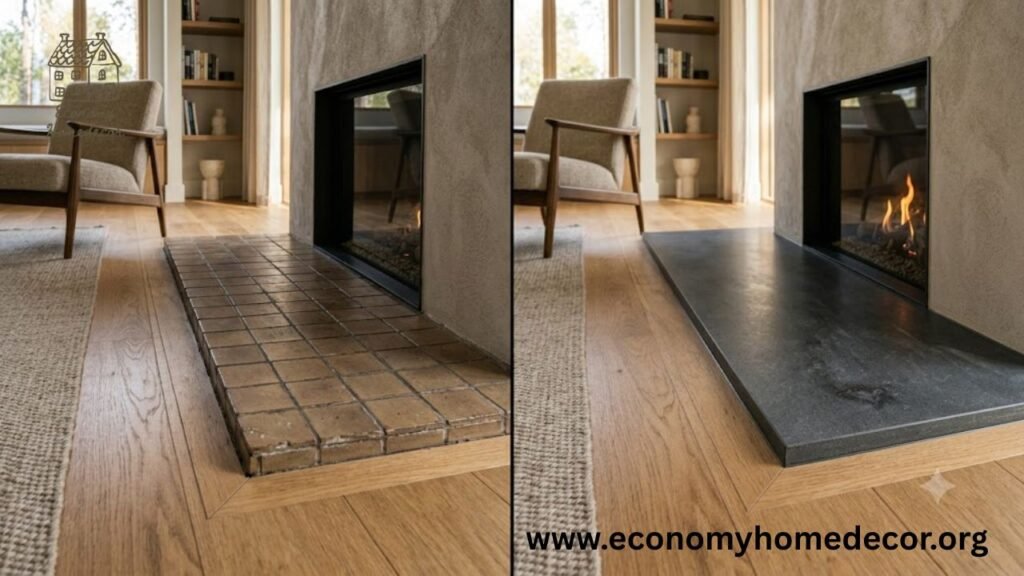
Before removing an existing fireplace hearth, establish what you are actually looking at. Is the surface purely decorative? Is there structural masonry beneath it? How does it relate to the firebox? What finished level does the new flooring need to meet?
Will removing the old material disturb surrounding wood flooring or trim? If the hearth is part of an active fireplace system, this is not a good area for improvisation. The visible finish may be simple. The assembly beneath it may not be.
Can You Tile Over an Existing Hearth?
Sometimes that is the most sensible renovation option. If the existing base is sound, stable, suitable, and correctly constructed, avoiding unnecessary demolition can save considerable mess. The main issue is build-up. New mortar and tile add height.
Even a modest increase becomes obvious when the finished hearth is expected to sit flush with surrounding hardwood. Before laying anything, calculate the complete finished thickness.
That means thinking about more than the tile itself. A few millimeters overlooked in several layers can become a transition you notice every day.
A Dark Hearth Is Not Always the Safest Design Choice Visually
Dark slate and black granite are common because they hide soot and naturally connect to the black interior of a fireplace. They are excellent choices in many rooms. But they are not automatically correct. In a room already dominated by dark timber and black metal.
Deep wall colors, another heavy black plane may visually overload the fireplace. A lighter stone can sometimes produce better balance. Likewise, a pale hearth is not automatically impractical.
The right material and finish may be easier to clean than expected. Choose based on the whole room rather than following a rule such as “working fireplaces should always have black hearths.”
Match the Hearth to the Architectural Style
A fireplace usually looks most convincing when it feels related to the age or visual language of the house. That does not mean every old house requires a historically accurate reproduction. It means the design should have a reason.
A Victorian-style fireplace may suit patterned or quarry tile. A rustic cottage may benefit from slate or brick. A contemporary extension might call for a flush slab of honed stone or concrete-look porcelain. A luxurious modern interior may justify marble. Problems appear when several unrelated trends are placed around the same fireplace.
A rustic brick firebox, glossy marble hearth, farmhouse mantel, and ultra-modern surround may all be attractive individually but still feel disconnected together. Consistency usually creates more visual impact than complexity.
Maintenance Should Influence the Purchase
The best-looking hearth in a showroom may not be the best one after three winters of actual use. Before deciding, think realistically about cleaning. If you burn wood often, expect ash.
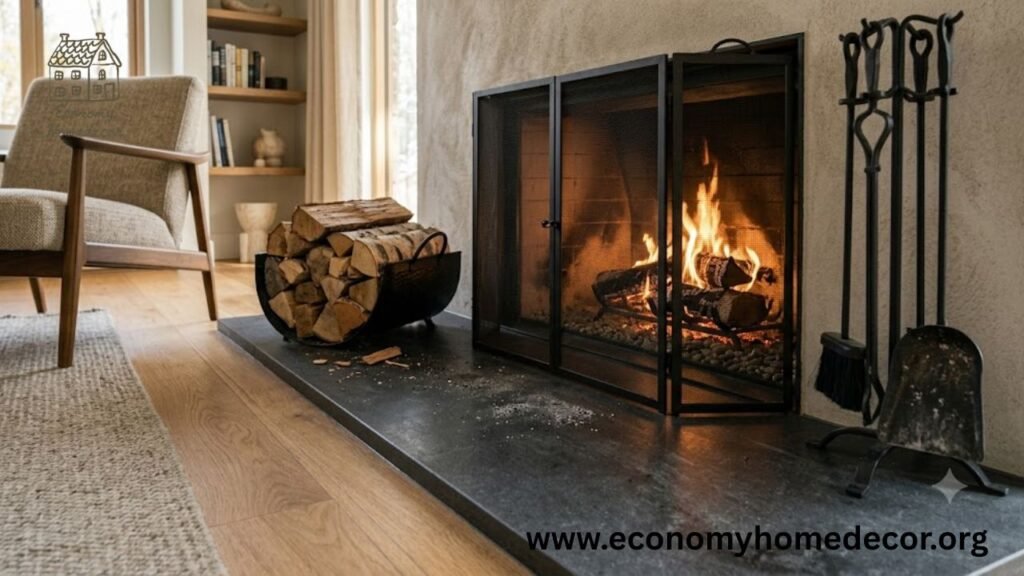
If the household uses the fireplace only occasionally, maintenance may matter much less. If you dislike scrubbing grout, do not choose a small mosaic merely because the installation photograph looks beautiful.
If you worry about staining, investigate the porosity and sealing requirements of natural stone before buying it. If you want an almost maintenance-free surface, prioritize dense materials and simple joints. This is one area where knowing yourself is more useful than following a trend.
Common Hearth Mistakes
Several mistakes appear repeatedly during fireplace projects. The first is choosing a beautiful finish without confirming whether it suits the appliance. The second is designing to minimum dimensions without considering visual proportion.
Another is forgetting that the hearth must meet the surrounding floor somewhere. Poor transitions can make premium materials look inexpensive. Homeowners also underestimate grout maintenance, exposed tile edges, stone variation, and the practical effect of a raised projection on furniture placement.
Perhaps the most expensive mistake is changing the fireplace itself while assuming the existing hearth requirements will automatically remain appropriate.
Different appliances can have different installation requirements. Whenever the appliance changes, reassess the hearth rather than treating it as a permanent independent feature.
A Better Way to Choose Your Fireplace Hearth
Use a simple decision order rather than starting with style. First identify the exact fireplace or appliance. Next, establish the construction, clearance, and hearth requirements that apply to it. Then decide whether the hearth should be raised or flush based on the room layout.
After that, eliminate materials that do not fit your maintenance expectations, heat exposure, construction method, or budget. Only once those decisions are settled should you compare colors, veining, tile patterns, and edge profiles.
This order dramatically reduces the number of choices. Instead of comparing twenty attractive materials, you may discover that only four genuinely fit the project. That makes the final decision much easier.
Which Hearth Material Is Best for You?
| Material | Best suited to | Main strength | Main consideration |
|---|---|---|---|
| Granite | Most traditional and modern rooms | Durable and easy to clean | Can look visually heavy |
| Slate | Rustic and natural interiors | Character and forgiving appearance | Textured surfaces need more cleaning |
| Marble | Luxury and formal fireplaces | Exceptional visual impact | More sensitive to marks and staining |
| Porcelain | Contemporary renovations | Huge design choice and low maintenance | Installation quality is crucial |
| Decorative tile | Period and character interiors | Pattern and color | More grout and visual activity |
| Brick | Traditional and farmhouse rooms | Warmth and authenticity | Textured joints collect dirt |
| Concrete | Modern and custom fireplaces | Minimal, architectural appearance | Natural variation may occur |
Use the table to narrow the shortlist, not to make the final decision. Two pieces of the same natural stone can still look completely different. Whenever possible, view the exact slab or a representative sample inside the room before committing.
When Is Professional Advice Worth Paying For?
Not every cosmetic fireplace project needs a large team of specialists. There are, however, situations where professional input is valuable. If you are changing the fireplace appliance, altering the firebox, removing structural masonry, or modifying the hearth dimensions.
working with an older chimney, or uncertain about clearances, qualified advice is far cheaper than correcting the work afterward. The same applies to expensive fabricated stone. A custom slab that has been cut incorrectly cannot always be altered on site.
Discuss exact measurements, joints, edge profiles, installation tolerances, and floor transitions before fabrication starts. Professionals do not simply help with safety. Good ones also identify awkward details while they are still inexpensive to change.
The Best Hearths Look Like They Belong There
The strongest fireplace designs are rarely the ones with the most expensive materials. They are the ones where every choice appears connected. The hearth width relates to the fireplace. The stone relates to the room.
The height works with circulation. The finish suits the way the fireplace is used. The floor transition looks intentional. The material is realistic for the household’s tolerance for maintenance. When those details are right, the hearth does not need to shout for attention.
It simply makes the fireplace feel complete. A successful fireplace hearth should satisfy the practical requirements first and then quietly improve the room around it. Choose in that order, and you are far less likely to regret the result several winters later.
Frequently Asked Questions
What color fireplace hearth hides soot best?
Dark gray, charcoal, black, and naturally varied materials such as slate tend to disguise soot, ash, and minor staining better than very pale or highly polished surfaces.
What is the best fireplace hearth material for everyday use?
Granite, porcelain, and slate are among the most practical choices for regularly used fireplaces because they are durable and relatively easy to maintain. The best option depends on your fireplace type, heat exposure, cleaning preferences, and interior style.
Can a fireplace hearth be the same material as the surround?
Yes. Using the same stone or tile on both the hearth and surround can create a seamless, high-end appearance. Marble, granite, porcelain, and natural stone are commonly used this way, provided the material and installation method are suitable for the fireplace.
How do I make an old fireplace hearth look modern?
You can modernize an old hearth by replacing dated tile, using large-format porcelain, installing honed stone, simplifying grout lines, choosing a flush design, or coordinating the hearth with the surrounding flooring and fireplace surround.
Should a fireplace hearth be wider than the fireplace opening?
In many designs, the hearth extends beyond both sides of the fireplace opening for safety and visual balance. The required dimensions depend on the fireplace type, manufacturer instructions, and applicable building regulations.
Is a raised fireplace hearth better than a floor-level hearth?
Neither is universally better. Raised hearths create a stronger architectural feature and may provide a useful ledge, while flush hearths offer cleaner floor lines, easier circulation, and a more contemporary appearance.
Can I install hardwood flooring next to a fireplace hearth?
Yes, but the transition between combustible flooring and the hearth must be planned carefully. The hearth still needs to satisfy the fireplace’s required dimensions and construction standards.
Are large tiles better than small tiles for a fireplace hearth?
Large-format tiles create fewer grout joints and usually provide a cleaner, easier-to-maintain surface. Smaller tiles offer more pattern flexibility but require more grout, which can collect soot and dirt around frequently used fireplaces.