
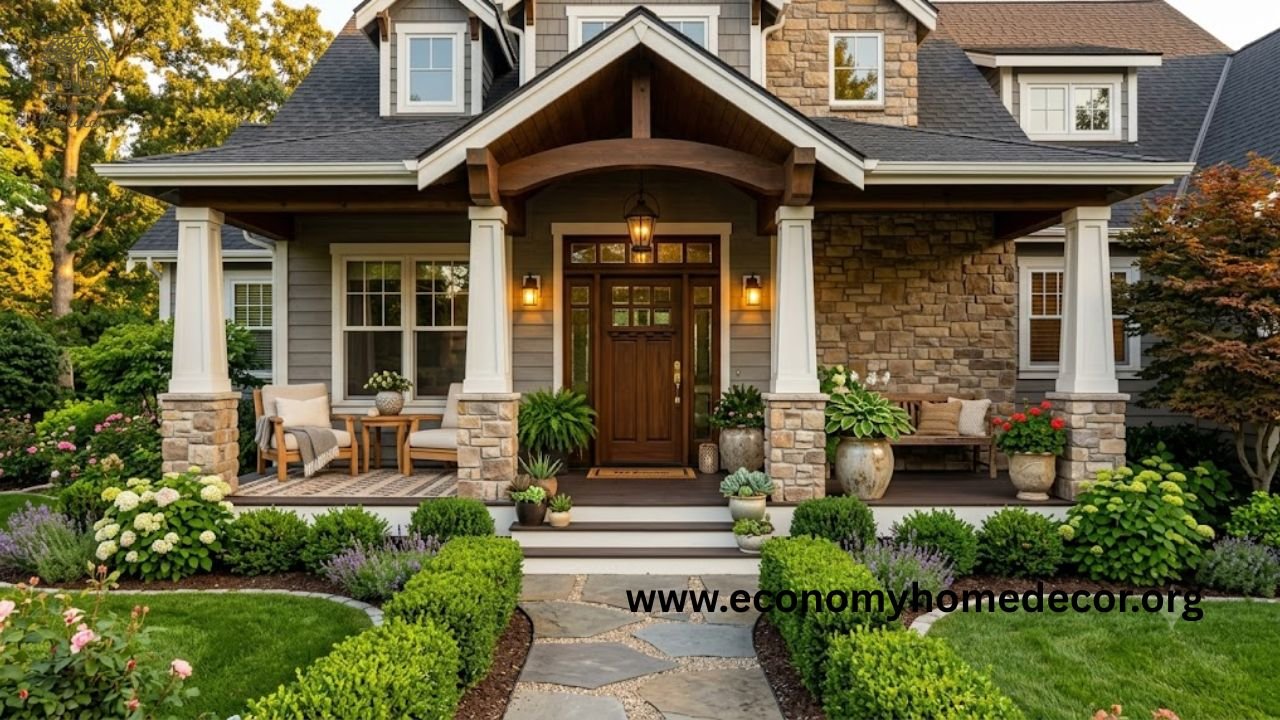
A front porch is more than an entrance area outside your home. It is the transition between the street and your personal space, the first place guests experience your house, and often the first thing you see when returning home. A well-designed porch can make a modest home feel more welcoming and improve curb appeal.
It can create a useful outdoor living space and even change how the entire exterior feels. However, many homeowners approach porch design the wrong way. They start by buying furniture, adding decorations, or copying attractive Pinterest images without considering the most important factors first:
- How will the space actually be used?
- Does the size match the home’s architecture?
- Is there enough room for movement?
- Will the materials survive local weather?
- Does the design improve the house or compete with it?
The best front porch designs are not necessarily the largest or most expensive. They are the ones where every element has a purpose.
A simple wooden bench, carefully selected lighting, a beautiful front door, and well-placed plants can often create more impact than a crowded porch filled with expensive accessories. This guide explains how to design a front porch that looks beautiful, functions naturally, and adds long-term value to your home.
Understanding the Purpose of a Front Porch
Before choosing colors, furniture, or decorations, define what you want your porch to accomplish. Every home has a different relationship with its entrance. Some homeowners need only a protected doorway:
- a place to open the door during rain;
- space for packages;
- a transition area between outside and inside.
Others want a true outdoor room:
- morning coffee space;
- evening relaxation area;
- conversation area for guests;
- seasonal entertaining space.
These are completely different design problems. A narrow entrance porch does not need the same treatment as a deep covered porch designed for outdoor living.
The Three Main Types of Front Porch Functions
Entry-Focused Porch
This type prioritizes:
- clear walking space;
- attractive front door;
- lighting;
- address numbers;
- planters;
- weather protection.
The goal is a beautiful arrival experience. A small porch can succeed remarkably well when it feels intentional.
Relaxation Porch
This type needs:
- comfortable seating;
- shade;
- privacy;
- side tables;
- appropriate lighting.
Furniture becomes important because people are expected to stay rather than simply pass through.
Social Porch
Larger porches can support:
- multiple seating areas;
- outdoor dining;
- porch swings;
- conversation zones;
- decorative landscaping.
The mistake many homeowners make is trying to create a social porch on a space designed only for entry. The result is usually crowded furniture and uncomfortable movement.
How to Choose the Right Front Porch Size
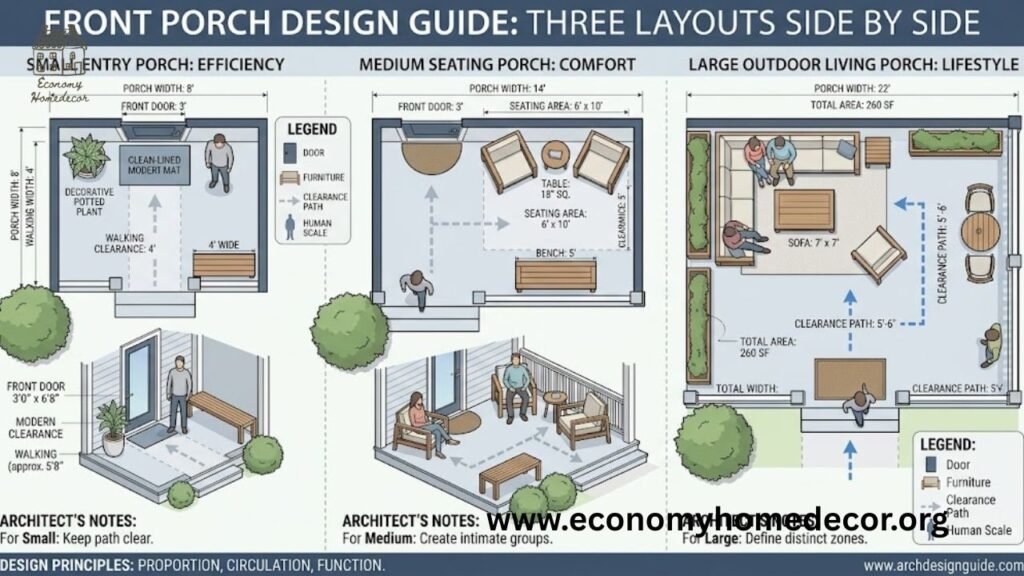
One of the biggest mistakes in porch design is focusing only on appearance. A porch must also work physically. A beautiful chair is useless if opening the front door requires squeezing sideways around it. The correct size depends on the activities you want to support.
Small Front Porch Dimensions
Small porches usually work best when they focus on one strong feature. Good choices include:
- a narrow bench;
- one oversized planter;
- vertical plants;
- attractive lighting;
- a decorative door.
Avoid filling a small porch with multiple chairs, large rugs, and many accessories. The smaller the porch, the more important scale becomes.
Medium Front Porch Design
A medium porch offers more flexibility.
It may support:
- two chairs;
- a small table;
- a bench;
- layered plants;
- decorative lighting.
The key is maintaining a comfortable pathway. The entrance should always remain visually obvious.
Large Front Porch Design
Large porches allow homeowners to think like interior designers. Create zones:
Entry Zone
Near the door:
- lighting;
- welcome mat;
- planters;
- house numbers.
Seating Zone
Away from traffic:
- chairs;
- swing;
- outdoor sofa;
- table.
Decorative Zone
At edges:
- plants;
- seasonal décor;
- architectural details.
A large porch should not feel like an empty deck attached to a house. It should feel like another room.
Choosing a Front Porch Style That Matches Your Home
A common mistake is designing the porch separately from the house. A porch should feel like it belongs there. The architecture of the home should guide:
- columns;
- railing style;
- roof design;
- materials;
- colors;
- furniture choices.
Modern Front Porch Design Ideas
Modern porches usually focus on:
- clean lines;
- simple materials;
- limited colors;
- strong architectural features.
Popular elements include:
- black exterior lighting;
- natural wood accents;
- concrete flooring;
- large planters;
- minimal furniture;
- oversized house numbers.
Modern does not mean empty. A completely plain porch can feel cold. The goal is controlled simplicity. A warm wood door, greenery, and soft lighting can prevent a modern porch from feeling sterile.
Farmhouse Front Porch Design Ideas
Farmhouse porches remain popular because they create a relaxed, welcoming feeling. Common elements include:
- rocking chairs;
- wood furniture;
- lantern-style lighting;
- natural textures;
- neutral colors;
- large planters.
However, farmhouse style is often misunderstood. Adding every rustic decoration available does not create a farmhouse porch. A stronger approach is using fewer authentic-looking elements. For example: A pair of wooden chairs, a simple lantern, and seasonal flowers often look better than ten decorative signs competing for attention.
Traditional Front Porch Design Ideas
Traditional homes often benefit from balance and symmetry. Effective features include:
- matching planters;
- classic columns;
- symmetrical lighting;
- timeless furniture;
- restrained colors.
Traditional design works because it creates visual order. The porch feels established rather than temporary.
Cottage Front Porch Design Ideas
Cottage porches allow more personality. They work well with:
- painted furniture;
- flowering plants;
- softer colors;
- vintage-inspired details;
- handmade accessories.
Unlike formal designs, cottage porches can feel slightly imperfect. A mix of chairs or different textures can actually improve the charm.
Small Front Porch Ideas That Make a Big Difference
Small porches often create the biggest design challenge. The goal is not adding more. The goal is choosing better.
Use Vertical Space
When floor space is limited, look upward. Consider:
- hanging baskets;
- wall planters;
- vertical gardens;
- wall-mounted lights;
- decorative house numbers.
These add personality without blocking movement.
Create One Focal Point
Small spaces need visual discipline. Choose one main feature:
- a colorful front door;
- a beautiful planter;
- a statement light;
- a small seating piece.
Too many competing features make a small porch feel smaller.
Use Furniture Carefully
A common mistake is buying outdoor furniture based on appearance rather than measurements. Before purchasing: Measure:
- porch depth;
- door swing;
- walking path;
- furniture clearance.
A compact chair that fits perfectly will usually look better than oversized luxury furniture that overwhelms the area.
Front Porch Furniture: Choosing Pieces That Actually Work
Furniture is where many porch designs fail. The best furniture depends on how you live.
Rocking Chairs
Best for:
- traditional homes;
- relaxing evenings;
- covered porches.
They create a classic porch feeling but need enough depth to move comfortably.
Benches
Best for:
- narrow porches;
- flexible seating;
- entry-focused spaces.
A bench can provide seating without visually blocking the entrance.
Porch Swings
A swing can become the emotional center of a porch. However, it requires:
- proper structural support;
- enough overhead clearance;
- safe installation.
Never attach a heavy swing to decorative materials that are not designed to carry weight.
Outdoor Sofas
Best for:
- large covered porches;
- entertaining spaces.
They require more maintenance and should only be used when the porch size supports them.
Front Porch Lighting: Creating Beauty, Safety, and Evening Atmosphere
Many homeowners think about porch lighting only as a practical necessity. That is a mistake. Lighting is one of the highest-impact upgrades because it changes how the entire entrance feels after sunset. A front porch without proper lighting can look unfinished, even if the daytime design is attractive.
Good porch lighting should achieve three goals:
- Make the entrance easy to find.
- Improve safety around steps and pathways.
- Create warmth and character.
Choose Lighting Based on Porch Scale
A common mistake is choosing fixtures that are too small. A tiny light beside a large front door can disappear visually. For larger homes and deeper porches:
- oversized lanterns;
- hanging pendants;
- larger wall sconces
often create better balance. For smaller porches:
- compact wall lights;
- recessed lighting;
- simple fixtures
usually work better. The fixture should relate to:
- door height;
- porch width;
- column size;
- overall home architecture.
Layer Your Front Porch Lighting
The best entrances rarely depend on a single light source. A layered approach works better.
Entry Lighting
This is the primary light near the door. It helps with:
- finding keys;
- identifying visitors;
- creating a welcoming entrance.
Path Lighting
If your porch connects to a walkway, subtle path lighting improves both appearance and safety. It also helps guide the eye toward the entrance.
Decorative Lighting
String lights, lanterns, or accent lighting can add personality, but they should support the architecture rather than overpower it. The most attractive porches usually have lighting that feels intentional rather than decorated.
Front Porch Plants: Use Nature to Improve Curb Appeal
Plants are one of the easiest ways to make a front porch feel alive. However, choosing plants only because they look attractive in photos often leads to disappointment. The correct choice depends on:
- sunlight;
- humidity;
- temperature;
- watering availability;
- porch exposure.
A covered porch may receive less rain than expected, while a sunny porch may experience intense heat reflected from walls and pavement.
Best Plants for a Front Porch
Shade Front Porch Plants
Good options often include:
- ferns;
- caladiums;
- coleus;
- begonias;
- hostas.
These work well for porches with limited direct sunlight.
Sunny Front Porch Plants
Common choices include:
- lavender;
- lantana;
- petunias;
- ornamental grasses;
- succulents.
The key is selecting plants that match the actual environment.
Use Planters Strategically
Many homeowners make the mistake of buying many small pots. Large planters often create a stronger visual impact. A pair of appropriately sized planters beside the door can:
- frame the entrance;
- improve symmetry;
- create height;
- make the home feel more finished.
For small porches, one excellent planter is usually better than several crowded containers.
Front Porch Flooring: Choosing Materials That Last
The floor covers a large percentage of the visual space, so the material choice has a major impact.
The best option depends on:
- climate;
- maintenance expectations;
- budget;
- architectural style.
Wood Porch Flooring
Wood remains popular because it provides warmth and character.
Advantages:
- natural appearance;
- classic porch feeling;
- easy to customize with stain or paint.
Challenges:
- regular maintenance;
- moisture concerns;
- possible weathering.
Common options include:
- cedar;
- pressure-treated lumber;
- hardwood decking.
Composite Porch Flooring
Composite materials have become popular because they reduce maintenance. Advantages:
- resistance to rot;
- fewer refinishing requirements;
- consistent appearance.
Possible disadvantages:
- higher initial cost;
- some products can feel less natural.
Concrete Porch Flooring
Concrete is often underestimated. Modern concrete options include:
- stamped finishes;
- decorative coatings;
- textured surfaces;
- stains.
It can work particularly well with:
- modern homes;
- contemporary landscaping;
- minimalist designs.
Brick and Stone Porch Flooring
Brick and stone create a strong architectural connection. They work especially well with:
- traditional homes;
- colonial designs;
- cottage styles.
The important consideration is ensuring the material handles local weather conditions.
Front Porch Makeover Ideas on a Budget
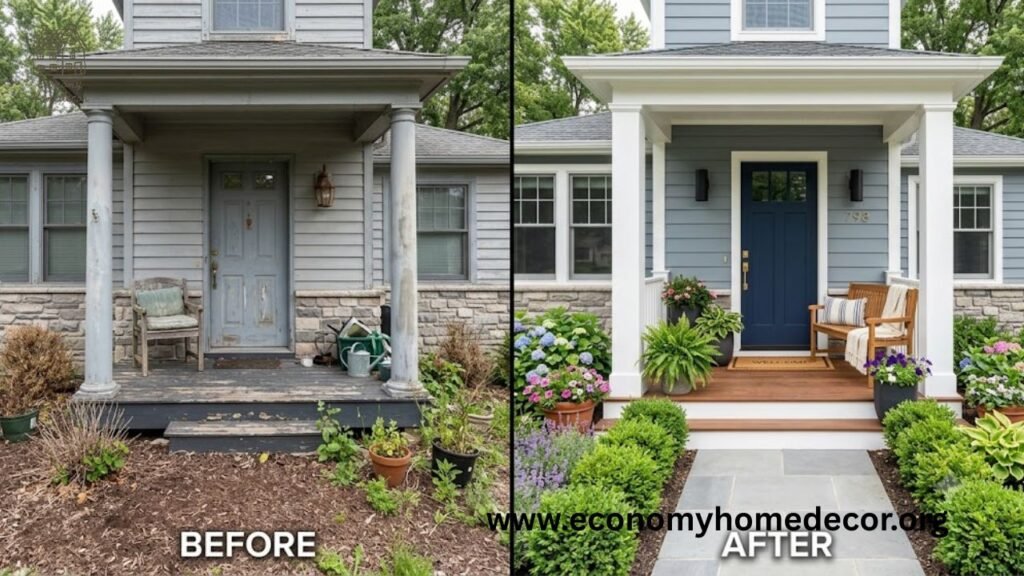
A beautiful porch does not always require a major renovation. Many improvements come from correcting the details that create visual weakness.
Remove Visual Clutter
Before buying anything: Remove:
- outdated decorations;
- broken furniture;
- excessive seasonal items;
- unused objects.
A cleaner porch often looks larger immediately.
Refresh the Front Door
The front door is usually the strongest visual anchor. Affordable improvements include:
- new paint;
- updated hardware;
- improved house numbers;
- seasonal wreath;
- better lighting.
A carefully chosen door color can dramatically change the exterior appearance.
Improve Lighting
Replacing an outdated light fixture can make the entrance feel newer without major construction.
Add Greenery
Plants soften hard surfaces and create life. Focus on:
- quality containers;
- appropriate scale;
- healthy plants.
Add Comfortable Details
Only after the foundation is correct should you add:
- outdoor rugs;
- cushions;
- pillows;
- decorative accessories.
Decor should complete the porch, not hide design problems.
Front Porch Landscaping Ideas That Improve the Whole Property
A porch does not exist alone. The surrounding landscape affects how the entrance is perceived. A beautiful porch with neglected landscaping can still feel disconnected.
Create a Clear Visual Path
The walkway should naturally guide visitors toward the entrance. Avoid:
- overgrown plants blocking steps;
- unclear pathways;
- excessive decoration around the door.
Use Plants to Frame the Entrance
Good landscaping creates a transition: Street → walkway → porch → front door Examples:
- shrubs near the foundation;
- taller plants near corners;
- flowers close to the entrance;
- trees creating background structure.
Front Porch Mistakes to Avoid
Even expensive porches can look unsuccessful when basic principles are ignored.
Mistake 1: Furniture That Is Too Large
Large outdoor furniture can overwhelm a small porch. Always measure first.
Blocking the Entrance
The door should remain the easiest element to access. Avoid placing:
- chairs directly in the walking path;
- large pots near door swings;
- decorations where people enter.
Ignoring the Architecture
A porch should complement the home. A highly decorative Victorian-style porch attached to a minimalist modern house may feel disconnected.
Too Many Decorations
More does not always mean better. A porch with:
- multiple signs;
- too many plants;
- excessive seasonal items;
- random furniture
can feel chaotic.
Choosing Style Over Maintenance
A beautiful porch that requires constant upkeep can be frustrating. Consider:
- cleaning requirements;
- plant care;
- weather exposure;
- material durability.
Front Porch Renovation vs Decoration: Know the Difference
Not every porch problem requires construction. Sometimes the solution is:
- paint;
- lighting;
- furniture;
- landscaping;
- cleaning.
However, some issues require professional attention. Examples:
- unstable railings;
- damaged stairs;
- structural movement;
- water damage;
- poor drainage;
- unsafe electrical installation.
Aesthetic improvements cannot fix structural problems.
How Much Does a Front Porch Cost?
The cost of a front porch varies significantly depending on:
- size;
- materials;
- roof design;
- foundation requirements;
- labor costs;
- location.
A simple cosmetic makeover may cost a few hundred dollars. A new covered porch addition can become a major construction project involving:
- permits;
- structural work;
- roofing;
- electrical work;
- foundations.
Homeowners should separate two budgets:
Cosmetic Budget
Includes:
- paint;
- furniture;
- lighting;
- plants;
- accessories.
Construction Budget
Includes:
- framing;
- roofing;
- flooring;
- stairs;
- railings;
- foundations.
This distinction prevents unrealistic expectations.
A Practical Front Porch Design Process
Instead of copying a random online image, follow a process.
Analyze Your Home
Look at:
- architectural style;
- existing colors;
- roof shape;
- landscaping;
- entry proportions.
Measure the Space
Record:
- porch width;
- depth;
- door location;
- walking path;
- furniture clearance.
Decide the Main Purpose
Choose:
- entrance only;
- relaxation;
- entertaining;
- combination.
Select Permanent Elements First
Start with:
- flooring;
- door;
- lighting;
- railings;
- columns.
Add Furniture and Decor Last
Decor works best when the foundation is already strong.
Frequently Asked Questions About Front Porches
What makes a front porch look expensive?
A front porch looks expensive when it has good proportions, quality lighting, coordinated materials, healthy landscaping, and fewer but better-selected elements.
How can I improve my front porch cheaply?
Start with cleaning, painting the door, upgrading lighting, adding plants, and removing clutter before buying new furniture.
What furniture is best for a small front porch?
Compact benches, narrow chairs, small bistro sets, and vertical planters usually work better than large outdoor sofas.
How do I make my front porch welcoming?
Focus on:
warm lighting;
clear entrance;
comfortable seating;
greenery;
a maintained walkway.
What is the most popular front porch style?
Farmhouse, modern farmhouse, traditional, Craftsman, and contemporary styles remain popular because they adapt well to different homes.
Do I need a large porch to improve curb appeal?
No. Even a small porch can dramatically improve a home’s appearance through better lighting, landscaping, and entrance design.