
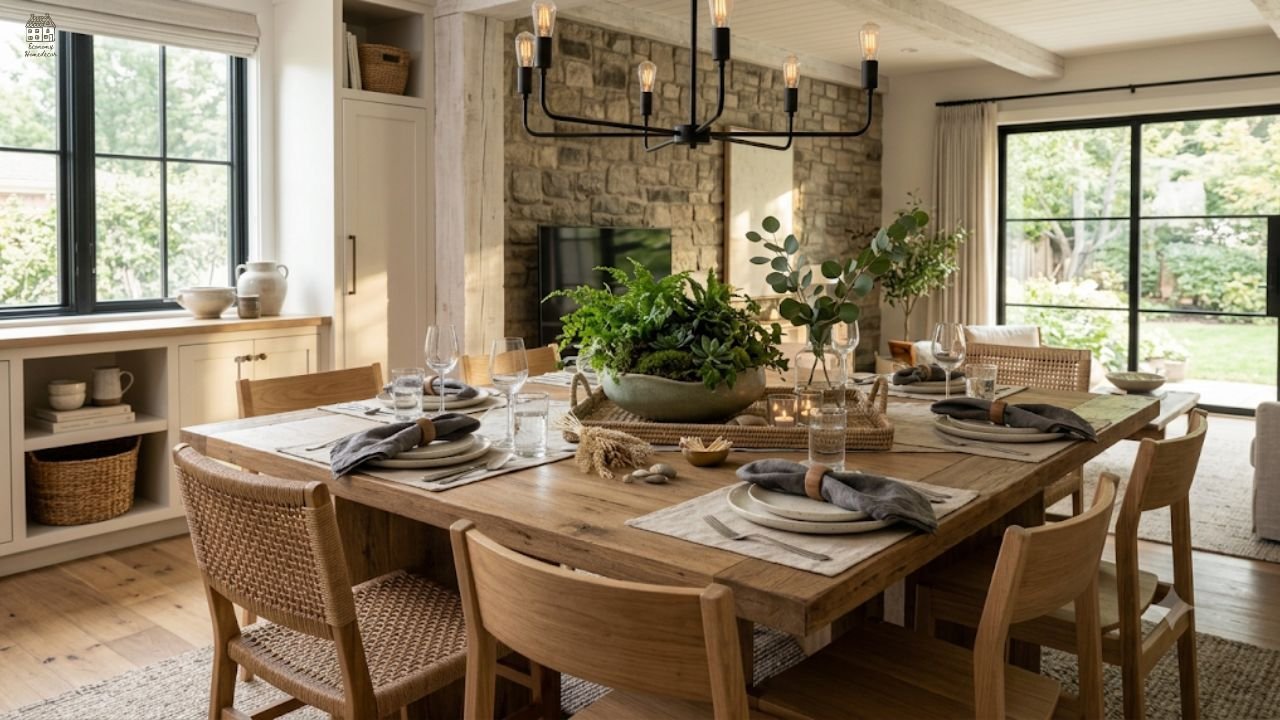
A dining table can look unfinished even when the rest of the room is beautifully decorated. The right table centerpiece ideas solve that problem by giving the eye a clear focal point without making the table feel crowded or overly formal.
This matters because the table is more than a surface for meals. It is where families gather, guests settle in, homework gets finished, and everyday conversations happen. A well-chosen dining table centerpiece adds warmth and personality while still leaving enough space for plates, serving dishes, and comfortable conversation.
Table Centerpiece Ideas That Work Every Day
An everyday centerpiece should be attractive, practical, and easy to move. It should not block sightlines, collect clutter, or require constant maintenance. This is why many of the strongest everyday simple dining table centerpiece ideas rely on one grounded object, such as a bowl, vase, tray, planter, or candleholder.
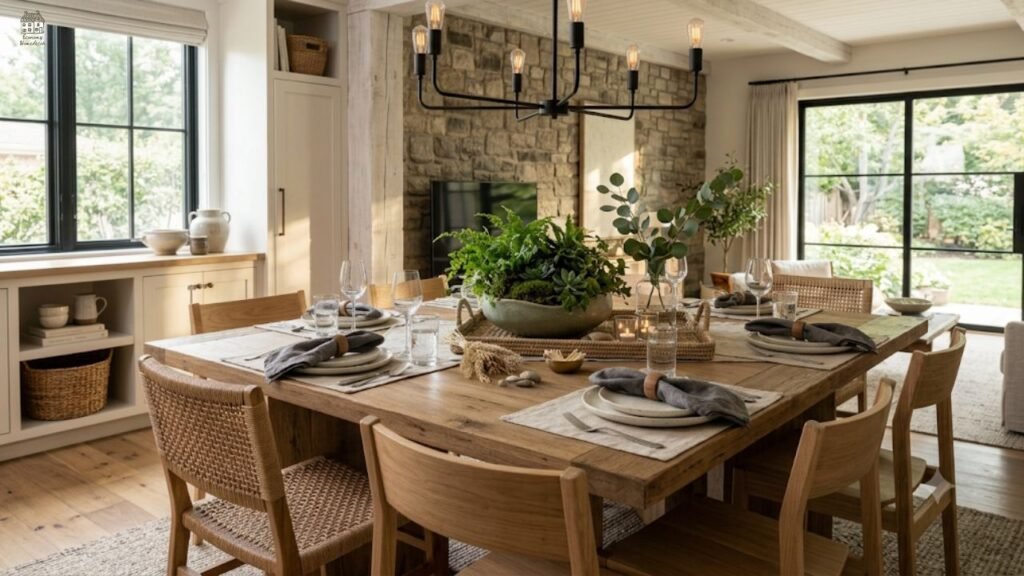
A centerpiece is a decorative arrangement placed near the visual center of a table. Good dining table decor ideas support the room, repeat its materials, and preserve enough negative space for dining.
When choosing among different dining room centerpiece ideas, start with three questions:
- How often is the table used?
- How much open space is needed for meals?
- Does the room feel casual, modern, rustic, traditional, or formal?
For a table used every day, choose a design that can be lifted with one hand. A tray is especially useful because it keeps several small objects from looking scattered. This approach works well for dining table tray centerpiece ideas, centerpiece dining table tray decor ideas, and relaxed dining room table centerpieces everyday.
Get the Scale Right
Scale is the relationship between the centerpiece and the size of the table. A tiny candle on a long table may look lost, while a huge floral arrangement on a small breakfast table can feel overpowering. The best dining table arrangement ideas usually occupy roughly one-third of the table’s visual center while leaving generous room around the edges.
A large dining table centerpiece can have more width or repetition, but it should still remain low enough for conversation. On a smaller surface, a compact bowl, bud vase, or single sculptural object often works better than multiple pieces. These are useful starting points for small dining table centerpiece ideas and compact kitchen centerpieces.
Keep the Height Conversation-Friendly
For seated dining, low centerpieces are generally easier to live with. Tall arrangements can be beautiful on an entry table, but they often interrupt eye contact at dinner. A good rule is to keep everyday arrangements below eye level or use tall, narrow stems that leave open space around them.
Low bowls, short vases, compact greenery, and taper candles are reliable choices. They help create a simple centerpiece for dining table use without turning the setting into a formal display.
Everyday Dining Table Styling Without Clutter
The easiest everyday formula is one base, one focal object, and one supporting detail. For example, place a shallow tray in the center, add a ceramic vase, and finish with a small candle or natural object. This keeps dining table centerpiece decor intentional without making it busy.
A wooden or ceramic bowl filled with fruit, pinecones, or decorative spheres creates an everyday centerpiece for dining table use that changes easily with the season. It also works as a centerpiece for kitchen table styling.Try these simple combinations:
- A ceramic bowl with seasonal fruit
- A low vase with eucalyptus or olive branches
- Three candles in different heights on a tray
- A stack of two books topped with a small object
- A woven basket with linen napkins and greenery
- A sculptural vessel left empty for a minimalist look
These combinations are especially helpful when you want simple table centerpieces for everyday or everyday table centerpiece ideas that do not require fresh flowers every week.
Use a Tray to Create Order
A tray instantly turns separate items into one composition. It also makes clearing the table easier. Round trays soften square or rectangular tables, while long trays echo the shape of a narrow dining table.
For dining table decor centerpiece styling, choose a tray that contrasts slightly with the tabletop. A black metal tray can sharpen a pale wood table, while a woven or wooden tray can warm a glass or stone surface. Keep the number of objects odd—usually three or five—so the arrangement feels relaxed rather than rigid.
Add Greenery Without Overdoing It
Greenery is one of the easiest ways to make a table feel fresh. A greenery dining table centerpiece can be as simple as clipped branches in a vase, a potted herb, or a low garland running through the center of a long table.
High-quality artificial greenery can work when mixed with wood, ceramic, linen, or glass. This supports natural centerpieces for tables and low-maintenance reusable centerpiece ideas.
Kitchen Table Centerpiece Ideas for Real Life
Kitchen tables usually need more flexibility than formal dining tables. They may be used for breakfast, food preparation, schoolwork, or quick family meals. The best kitchen table centerpiece ideas are compact, durable, and easy to move.
A fruit bowl is a classic kitchen table centerpiece because it is both decorative and useful. Other strong options include a small herb planter, a ceramic pitcher filled with branches, a lazy Susan with salt and pepper, or a low basket containing everyday essentials.
For people searching for kitchen table decor ideas, the goal should be to make the table feel welcoming without turning it into storage. Keep mail, chargers, bottles, and unrelated items off the surface. A single intentional arrangement will always look better than several accidental piles.
[Infographic: Centerpiece sizing guide—small tables use one compact object; round tables use one central cluster; long tables use a runner-style arrangement; formal tables use layered symmetry.]
Small and Round Kitchen Tables
On a compact table, every inch matters. A narrow bud vase, small bowl, or short candle is often enough. These choices are ideal for centerpiece for small kitchen table, small kitchen table centerpieces, and simple kitchen table centerpieces.
A round table benefits from a round or softly clustered arrangement. A low bowl, round tray, or group of three small vessels follows the table’s geometry and keeps the setting balanced. This is the most natural solution for round kitchen table centerpiece ideas and a centerpiece for round kitchen table.
Casual Kitchen Centerpieces
Casual styling should feel collected rather than staged. Try a small crock with wooden utensils, a bowl of citrus, a vase of grocery-store flowers, or a tray holding a candle and salt cellar. These relaxed casual kitchen table centerpieces suit busy homes because they look good even when they are not perfectly arranged.
For a modern kitchen, use clean shapes and fewer objects. A matte ceramic vessel, a dark bowl, or a glass vase with one branch can create a modern kitchen table centerpiece without competing with cabinetry or countertops.
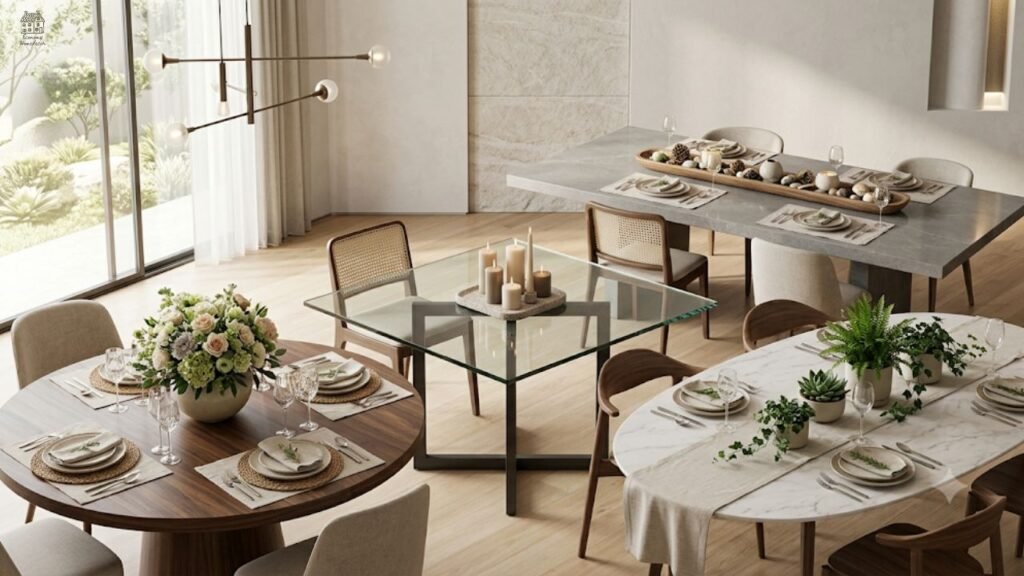
Choosing Table Centerpiece Ideas by Table Shape
The table’s shape should guide the arrangement. A centerpiece does not need to match the table exactly, but it should respect the way space is distributed.
Round Tables
A round table naturally draws attention to the middle, so one central arrangement usually works best. Strong round dining table centerpiece ideas include a low floral bowl, pedestal dish, round tray, sculptural vase, or compact candle cluster.
Avoid arrangements that spread too far toward each place setting. For a large round table, use a wider low arrangement rather than a taller one. For a smaller table, one vessel is enough. This creates a balanced centerpiece for round dining table while keeping the table comfortable.
For holiday or formal settings, a ring of greenery around candles can create a more layered display. For everyday use, a bowl or potted plant keeps round dining table centerpieces simple.
Rectangular and Long Tables
A long table can make one small centerpiece look isolated. Instead, use an elongated arrangement, repeat objects along the centerline, or combine one main focal piece with smaller supporting elements.A centerpiece for rectangle dining table may include a long tray, three evenly spaced vases, a row of candles, or a low garland.
The same principle applies to a centerpiece for rectangular dining table and rectangular dining centerpiece layouts: emphasize length without filling the entire surface.For an especially large table, create rhythm. Repeat similar objects at intervals rather than using one oversized arrangement.
This works for a long dining table centerpiece, centerpiece for long dining table, and long centerpiece for dining table. It also helps with long dining table decor ideas, because repeated pieces make the table feel connected from end to end.
Square Tables
Square tables usually look best with a compact arrangement placed directly in the center. A square tray can reinforce the geometry, while a round bowl can soften it.
For square-table centerpiece layouts, avoid long runners that divide the table awkwardly. A central cluster of three objects, a short vase, or a candle arrangement is more balanced. The same advice applies when considering how to decorate a square dining table or choosing a centerpiece for square dining table.
Oval Tables
Oval tables combine the softness of a round table with the length of a rectangular one. A slightly elongated bowl, oval tray, or low arrangement of flowers usually fits best.
A successful centerpiece for oval dining table should follow the table’s direction without becoming too rigid. For oval dining table decor ideas, use curved shapes, gentle repetition, and enough breathing room at both ends.
Glass Tables
Glass surfaces visually expose every object, so clutter is more noticeable. Choose a centerpiece with a strong base and clean silhouette. Ceramic, wood, woven fiber, and matte metal add contrast and prevent the display from feeling cold.
Effective glass-table centerpiece styling includes a wooden bowl, stoneware vase, woven tray, or low planter. A clear glass vase can work too, but pairing it with greenery or textured linens gives the arrangement more depth.
Floral, Greenery, and Non-Floral Centerpieces
Flowers are popular because they bring color, movement, and life to a room. However, the best floral arrangement depends on how the table is used.
For simple floral centerpieces for dining tables, choose one type of flower and keep the arrangement loose. Grocery-store tulips, carnations, mums, roses, or seasonal branches can look sophisticated when placed in a simple vase and trimmed to the right height.
A low arrangement of dining table centerpieces flowers is easier for everyday meals than a tall bouquet. Bud vases also work well because they spread color across a long table without creating one heavy focal point. For a more formal appearance, use matching vessels or repeat one flower variety.
Non-Floral Options
Flowers are not required. Many of the most stylish non floral centerpieces for dining room tables use candles, bowls, sculptural objects, books, lanterns, pottery, fruit, greenery, or natural materials.
Useful alternatives include fruit, pottery, pillar candles, moss bowls, lanterns, books, driftwood, and low succulent planters. These ideas help anyone wondering what can be used for a table centerpiece. The answer is almost anything that creates a deliberate focal point, fits the scale of the table, and does not interfere with dining.
Modern, Rustic, and Elegant Dining Styles
Style becomes easier when the centerpiece repeats something already present in the room. If the dining area has black metal lighting, add a black candleholder. If it has warm oak furniture, use pottery, linen, or woven textures. If the room has glass and chrome, choose cleaner, more sculptural pieces.
Modern Centerpieces
For modern dining centerpiece ideas, use simple forms, limited colors, and strong negative space. One oversized vessel, a low black bowl, or a cluster of geometric candleholders can feel more current than a busy arrangement.
The best elegant modern dining table centerpieces often combine one refined material with one natural element. Think stone with branches, glass with greenery, or metal with soft candlelight. This creates modern dining room table centerpieces that feel polished but not sterile.
Rustic and Farmhouse Centerpieces
Rustic styling works best when it feels authentic rather than themed. Use worn wood, pottery, linen, greenery, and simple seasonal materials. A rustic dining centerpiece approach may include a wooden dough bowl, wildflowers in a stoneware pitcher, or candles on a reclaimed board.
For rustic dining room table decor, avoid adding too many signs, labels, or miniature decorative objects. One strong natural arrangement has more impact. Farm table centerpieces also benefit from length, texture, and repetition.
Elegant and Formal Centerpieces
An elegant setting depends on restraint and proportion. A formal dining table centerpiece may use symmetrical flowers, matching candlesticks, a silver bowl, or one sculptural vessel.
For elegant centerpieces for dining table use, choose a controlled color palette and fewer, better objects. Crystal, polished metal, linen, porcelain, and fresh flowers can create an elevated look. A centerpiece for formal dining table should feel special but still allow guests to see one another.
When planning formal dining room centerpiece arrangements, consider the full setting. The centerpiece should coordinate with the tablecloth, dinnerware, glasses, and lighting. It should not compete with every element at once.
Seasonal and Special-Occasion Styling
Seasonal decorating works best when the base arrangement stays the same and only a few details change. A tray, bowl, or vase can remain year-round while the contents shift with the season. For birthday table decor, repeat two or three colors across flowers, candles, napkins, and place cards.
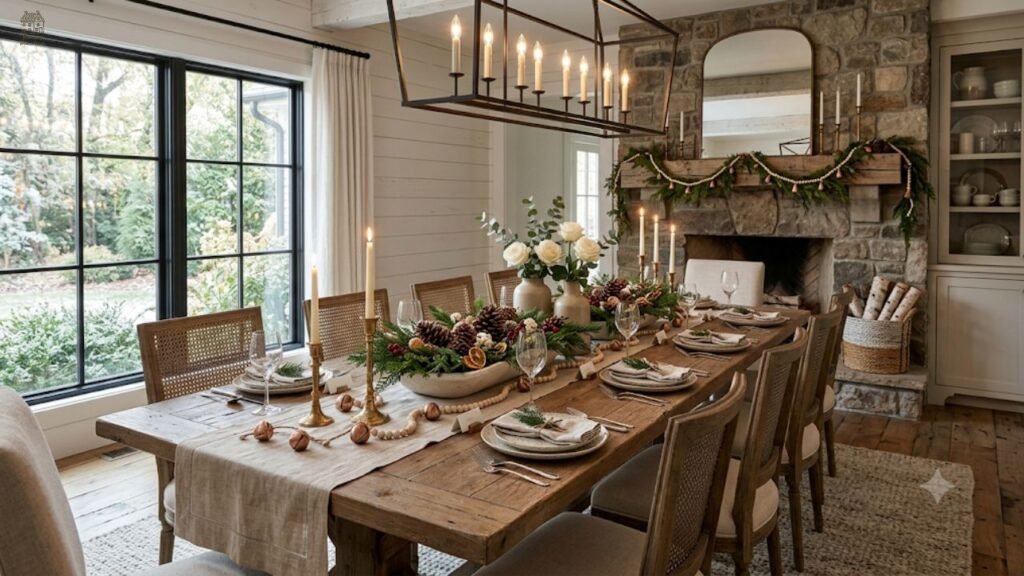
In spring, use flowering branches, tulips, pale ceramics, and soft greenery. In summer, try citrus, wildflowers, herbs, or a summer dining centerpiece built around light colors and natural textures. In autumn, a fall centerpiece might include pears, leaves, seed pods, small pumpkins, or dried grasses.
In winter, use evergreen branches, candles, pinecones, or a winter centerpiece for table.For holidays, leave room for serving dishes. Christmas table decorations ideas, christmas table decoration ideas, and xmas table centerpieces can use fresh pine, taper candles, berries, or restrained metallic accents.
How to Arrange a Dining Table Centerpiece
A beautiful centerpiece is rarely about the object alone. The arrangement around it matters just as much. Start with the table empty, place the main object, and step back. Then add only what improves balance.
For dining table arrangements, use three design tools: repetition, variation, and negative space. Repeat a material or color, vary heights slightly, and leave open areas so the eye can rest.
Use Odd Numbers
Groups of three or five tend to feel more natural than pairs. Try a tall vase, medium candle, and low bowl. The items should relate through color, material, or shape but should not be identical.
This method is useful for table arrangements ideas, dining room table arrangements, and table centerpieces ideas for home because it creates a complete look from ordinary objects.
Build in Layers
Begin with a base such as a runner, tray, or board. Add the tallest object slightly off center, then place shorter items around it. Finish with a soft element such as greenery, linen, beads, or a small natural object.
Layering is especially effective for dining room table centerpiece decor, centerpiece decor for dining table, and dining table centerpiece decor ideas. It creates depth without requiring many colors.
Leave Functional Space
The table should still work. Before finishing, place a dinner plate at each seat and imagine serving bowls in the center. If the arrangement crowds the place settings, reduce its width or move it to a tray that can be lifted away.
This practical check is the difference between attractive dinner table decorations and a centerpiece that becomes annoying during every meal.
DIY and Budget-Friendly Centerpieces
Good design does not require a large budget. Many attractive diy dining table centerpieces use items already in the home: jars, bowls, branches, candles, books, baskets, bottles, fabric, or seasonal produce.
For diy centerpieces for dining table, focus on consistency. Paint mismatched bottles the same color, group inexpensive bud vases, or fill a long bowl with one repeated material. Repetition makes low-cost items look intentional.
Reuse jars, clip garden branches, group thrifted pottery, or fill a bowl with fruit. These are strong cheap centerpiece ideas, easy cheap table centerpieces, and easy centerpiece ideas because they rely on arrangement rather than expensive materials.
Common Centerpiece Mistakes to Avoid
The most common mistake is choosing something too tall. Other problems include crowding the surface, mixing unrelated themes, using strongly scented candles during meals, choosing unstable vessels, and leaving everyday clutter around the display. A centerpiece should feel edited, not like a collection of leftovers.
Another frequent issue is treating the centerpiece separately from the rest of the room. The best dining room table decor ideas connect with nearby lighting, artwork, rugs, or cabinetry. Even a simple bowl looks more intentional when it repeats the room’s color or material.
Frequently Asked Questions
What should I put in the middle of my dining table?
When deciding what to put in middle of dining table, choose one low, stable object or a small grouped arrangement. Bowls, vases, candles, greenery, trays, and sculptural objects are all practical choices.
What is the best centerpiece for a dining table?
The best centerpiece for dining table use is one that matches the table’s size, stays below eye level, and can be moved easily. For most homes, a low bowl, compact vase, or tray arrangement works well.
How do I decorate a dining table for everyday use?
To learn how to decorate a dining table for everyday, begin with one functional focal point. Add a bowl, vase, or tray, then include one supporting detail such as a candle or greenery. Keep the rest of the surface clear.
What shape centerpiece works on a rectangular table?
For anyone asking what shape centerpiece for rectangle table, elongated or repeated arrangements usually work best. Use a long tray, row of candles, garland, or three spaced vessels to follow the table’s length.
How can I decorate a round dining table?
To decorate round dining table surfaces, place one compact arrangement in the middle. A round bowl, low floral design, pedestal dish, or grouped candle display follows the table’s natural shape.
How can I make a centerpiece look expensive?
Use fewer objects, coordinate the color palette, vary height carefully, and include one material with visual weight, such as stoneware, glass, wood, or metal. Fresh greenery and clean negative space also make an arrangement feel more polished.
Are candles suitable for everyday dining tables?
Yes. Candles create warmth and are easy to arrange, but avoid strong fragrances during meals. A low candle centrepiece for dining table use can include tapers, votives, or flameless candles placed on a stable tray.
How often should I change my centerpiece?
There is no fixed schedule. Keep a reliable base and update one element seasonally. Changing flowers, fruit, branches, candles, or textiles is enough to refresh an everyday dining table centerpiece without redesigning the entire table.
Conclusion
Great table centerpiece ideas begin with the way the table is actually used. A family breakfast table needs flexibility, a formal dining room can support more structure, and a long table often benefits from repetition rather than one oversized object.
Start with a bowl, vase, tray, candleholder, or natural branch. Match the scale to the table, keep the height comfortable, and leave room for people and food. Whether the goal is simple dining table decor, beautiful dining table centerpieces, or a more formal arrangement, the most successful result will feel connected to the room and easy to live with.