
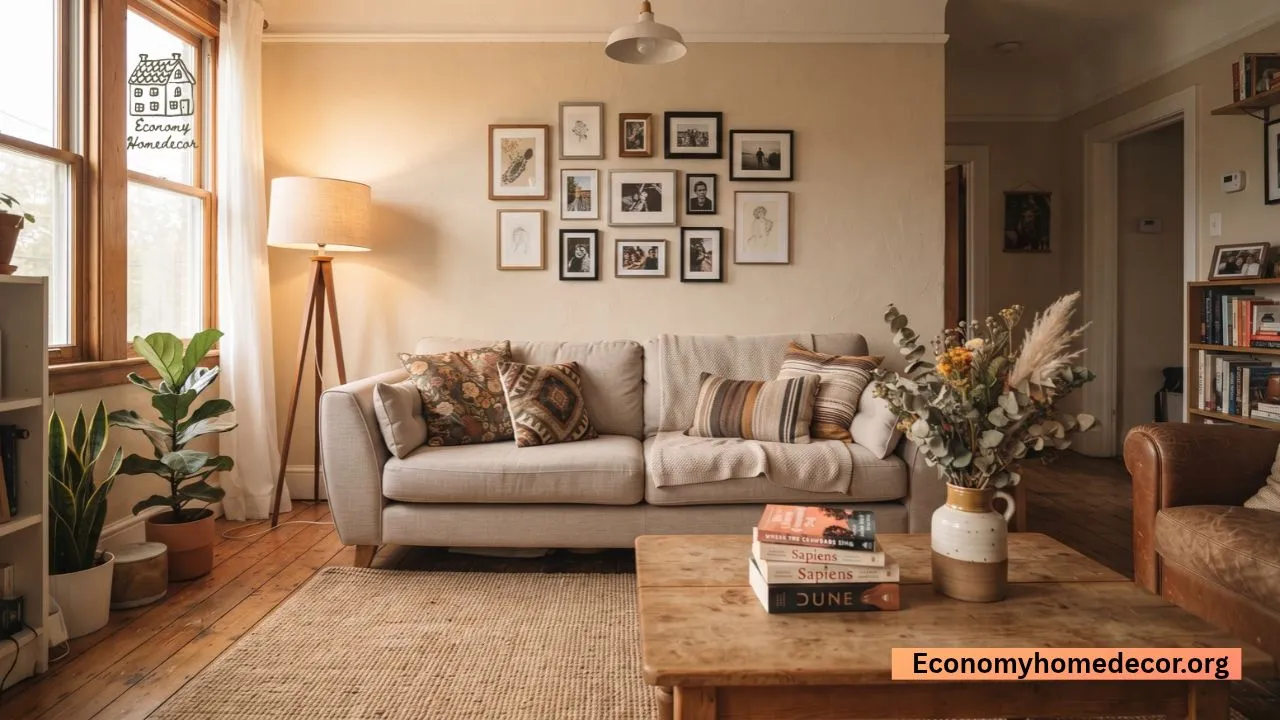
There’s a specific kind of frustration that comes from scrolling through home decor inspiration and then looking at your own living room. The gap between “Pinterest board” and “apartment I can actually afford” feels enormous.
But here’s what almost nobody tells you: most expensive-looking rooms aren’t built on expensive furniture. They’re built on a handful of decisions proportion, lighting, color discipline, and a few well-placed pieces that cost almost nothing to get right.
I’ve spent years furnishing homes on tight budgets, first as a renter cycling through five apartments in six years, then helping friends and family stretch renovation dollars during moves, downsizes, and first-home purchases.
The lesson that stuck: economy home decor isn’t about buying less-nice versions of everything. It’s about spending money where it’s visible and skipping it where it isn’t.
This guide walks through exactly how to do that room by room, dollar by dollar, with the kind of specifics you won’t find in a generic “10 tips” listicle. If you’re furnishing a first home from scratch, pair this with our roundup of 5 must-have furniture pieces for your first home.
What “Economy Home Decor” Actually Means
Economy home decor is the practice of furnishing and styling a home using low-cost, high-impact methods thrifted and secondhand pieces, budget retailers, DIY updates, and strategic splurges on a small number of items that do the visual heavy lifting.
It’s different from “cheap decorating,” which usually just means buying the least expensive version of everything. Economy decorating is smarter than that.
It’s about knowing which five things in a room actually get noticed (lighting, textiles, wall color, one anchor piece, and how things are arranged) and putting your limited budget into those while getting everything else for close to nothing.
This matters because search intent around this topic splits into a few clear groups, and a good answer has to serve all of them:
- People furnishing a first apartment or starter home from scratch
- Renters who want style without permanent changes
- Homeowners doing a room refresh instead of a full renovation
- Parents decorating on a single income or after a major expense
- People downsizing who need to make less furniture feel intentional, not sparse
If you’re in any of those situations, the advice below applies directly.
The Real Cost Breakdown: Where Your Money Should Go
Before any shopping list, it helps to understand where a decorating budget typically leaks and where it should actually go.
| Category | What People Overspend On | Where to Redirect the Budget |
|---|---|---|
| Furniture | Buying everything new from one retailer | One or two quality anchor pieces (sofa, bed frame); secondhand for the rest |
| Lighting | Ceiling fixtures that came with the home | Lamps, dimmer bulbs, and layered lighting |
| Wall Decor | Large framed art sets | Gallery walls using cheap frames + printables or personal photos |
| Textiles | Matching bedding/curtain sets | Mixed-and-layered thrifted textiles, one statement rug |
| Storage | Built-in units or custom shelving | Modular, freestanding shelving that moves with you |
| Accessories | Themed decor sets (coastal, farmhouse, etc.) | A few well-chosen objects with personal meaning |
The pattern here matters more than any single line item: spend on things that touch your body (sofa, mattress, and bedding quality) and things that shape light and color (lamps, paint, and curtains). Save on things that are mostly visual filler.
Room-by-Room Economy Decorating Strategy
Living Room on a Budget
The living room carries the most visual weight in a home, so it’s worth the largest share of a decorating budget, but that doesn’t mean the largest number of purchases.
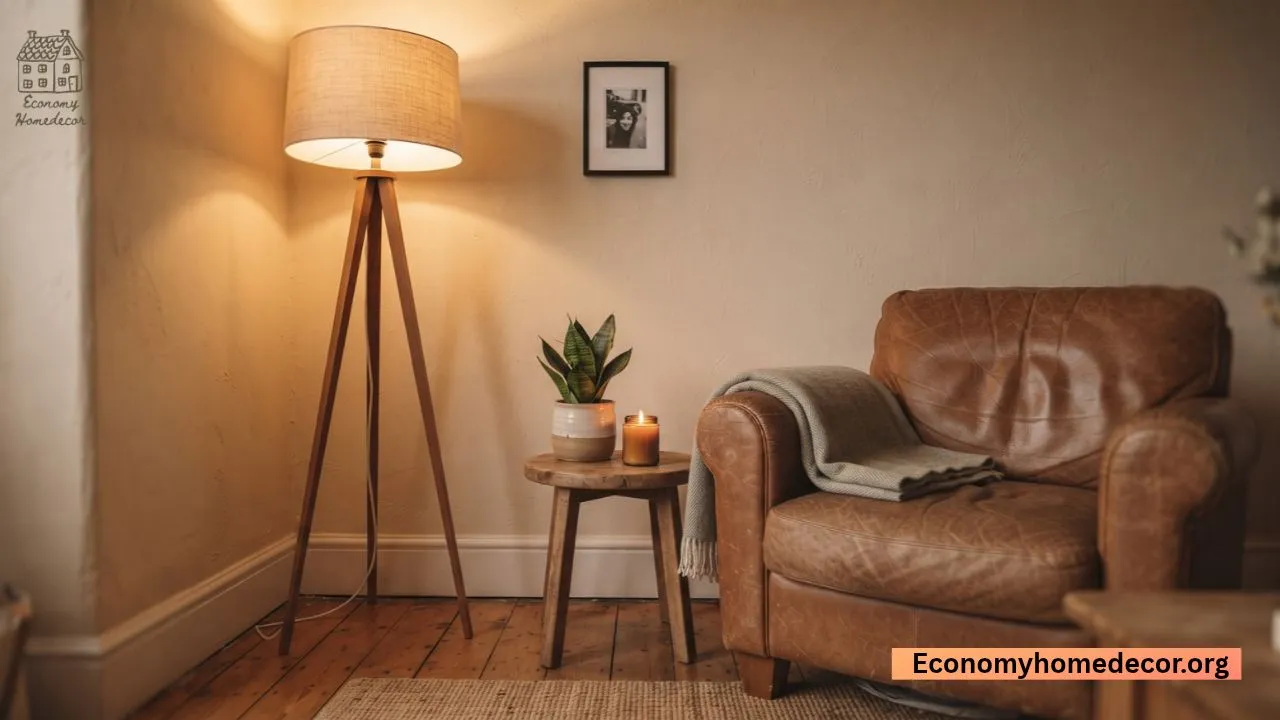
Prioritize in this order:
- The sofa or main seating. This is the one piece worth stretching for, even secondhand. A structurally sound sofa in a neutral fabric (or one you can slipcover) anchors everything else. If a statement piece appeals to you more than neutral, our pink couch styling guide shows how to build a whole room around one bold seating choice without it looking like a gimmick. For smaller layouts, our best reclining loveseats of 2026 roundup is worth a look before you buy a new one.
- A rug that’s actually large enough. The single most common budget-decorating mistake is a rug too small for the room. The front legs of furniture should sit on the rug, not float off the edge of it.
- Layered lighting. One overhead light reads like an office. Add a floor lamp and a table lamp with a warm bulb (2700K–3000K), and the room instantly feels finished.
- One anchor art piece, oversized if possible, rather than several small mismatched prints.
Facebook Marketplace, OfferUp, and local buy-nothing groups are genuinely underrated for sofas and coffee tables people upgrading often give away pieces in great shape because moving them is a hassle. If you’d rather buy new but still budget-conscious, we’ve reviewed a few worth comparing, including the Koala sofa bed and the 7th Avenue modular couch.
Bedroom Decor Without the Price Tag
Bedrooms are forgiving spaces because so few pieces are visible at once: bed, nightstands, lighting, and textiles.
- Invest in decent sheets and a duvet cover this is where “spend on what touches you” applies most directly.
- Mismatched vintage nightstands, painted the same color, look intentional rather than cheap.
- A headboard can be faked with an oversized textile, a piece of reclaimed wood, or even a large framed print behind the bed.
- Swap the lampshade instead of the whole lamp a $10–15 shade change transforms an outdated fixture.
If you’re working with a smaller footprint or decorating a kids’ room, our small room bunk bed ideas guide covers space-saving layouts that still feel styled rather than purely functional.
Kitchen and Dining Updates on a Budget
Full kitchen remodels are outside the scope of economy decorating, but cosmetic changes go a long way:
- Cabinet hardware swaps are one of the highest-ROI changes in any home, often under $50 for an entire kitchen.
- Contact paper is one of the most underrated budget tools in a kitchen. Our full contact paper for cabinets guide walks through the application process step by step, and it’s a fraction of the cost of refacing.
- Open a cabinet or two and style it like open shelving instead of paying for actual open shelving installation.
- A tablecloth or runner hides an outdated dining table finish for a fraction of the refinishing cost see our table centerpiece ideas and dining buffet decor ideas for styling the surface once the table itself is handled.
- Secondhand dining chairs almost never match, and that’s fine; the same color, different shape reads as curated, not mismatched.
For a broader look at kitchen styling beyond the budget-fix basics above, our kitchen decor ideas guide is worth bookmarking. And if you’re weighing a full cabinet replacement against these cosmetic fixes, our breakdown of Home Depot kitchen cabinet pricing will help you decide whether it’s worth the jump.
Bathroom Decor That Doesn’t Require Renovation
- New towels in one consistent color instantly upgrade the whole room.
- A peel-and-stick wallpaper accent (fully removable, rental-friendly) on one wall changes the entire feel for $30–60.
- Swap the mirror or add a frame kit around an existing builder-grade mirror.
- A woven basket for towels or toilet paper solves storage and adds texture in one move.
If a bathroom refresh turns into a bigger project, our 2026 bathroom remodel ideas guide covers where the cosmetic-fix line ends and a real remodel begins.
Where to Actually Shop for Economy Home Decor
This is the part most guides skip, and it’s the part that matters most.
Secondhand and resale:
- Facebook Marketplace and Craigslist for furniture
- Thrift stores (Goodwill, Salvation Army, local nonprofits) for accessories, frames, textiles
- Estate sales, which are consistently underrated for solid wood furniture at a fraction of retail
- ThredUp and Poshmark aren’t just for clothes. some sellers list home textiles too
Budget retail:
- IKEA for structural basics (shelving, bed frames) that don’t need to be heirloom quality
- HomeGoods and TJ Maxx for discounted decor, rugs, and lighting from higher-end brands
- Target’s home line for affordable, currently-trending pieces
- Dollar Tree and Five Below for vases, candle holders, and small styling objects
DIY and upcycling:
- Paint is the single highest-impact, lowest-cost decorating tool that exists. A gallon covers roughly 400 square feet and can transform furniture, cabinets, or an entire wall for $30–50. Not sure which shade to commit to? Our breakdown of Benjamin Moore’s 2026 Color of the Year, Silhouette AF-655, and our guide to what colors pair well with green are both good starting points.
- Reupholstering a single chair seat cushion is a beginner-friendly project that costs far less than buying new.
- Frame swaps: buy cheap frames and use your own photos or free printable art instead of paying for pre-made wall art.
- For more room-by-room projects, our 50+ DIY home decor ideas roundup is one of our most comprehensive resources on this exact subject.
The 80/20 Rule for Economy Home Decor
Interior designers use a version of this principle constantly, even if they don’t name it: roughly 80% of how “expensive” a room looks comes from 20% of the decisions.
That 20% is almost always the following:
- Color cohesion: a room where colors relate to each other looks pulled-together even with mismatched furniture
- Lighting warmth: warm bulbs versus harsh white bulbs change a room’s entire mood
- Scale: furniture and art sized correctly for the room, not too small
- Negative space: A room with breathing room reads as intentional; a room stuffed with small items reads as cluttered, regardless of cost
This is genuinely the highest-value insight in economy decorating, and it’s the one most budget guides never explain: a $200 room with disciplined color and correct scale will outperform a $2,000 room with neither every time.
Common Mistakes That Make a Home Look Cheap (Not Just Budget-Friendly)
There’s a real difference between “economy decor” and “decor that looks like it was bought on a budget,” and it usually comes down to a few specific habits:
- Buying matching sets. Matching furniture sets from one store are actually a giveaway of a tight, single-source budget. Mixed sourcing looks more expensive, not less.
- Too many small accessories. Five small tchotchkes read as clutter. One larger, well-chosen object reads as styled.
- Ignoring window treatments. Bare windows or short, cheap curtains are one of the fastest ways to make a room feel unfinished. Hang curtains close to the ceiling, not just above the window frame — it makes ceilings look taller for free.
- Overhead lighting only. Fluorescent or single-bulb overhead lighting is one of the most common reasons budget rooms feel institutional rather than cozy.
- Skipping the floor. An empty floor with no rug, or a rug that’s too small, undercuts everything else in the room.
Economy Home Decor for Renters
Renters face a specific constraint: most of the highest-impact changes (paint, fixtures, flooring) usually require landlord approval. Here’s what still works within rental limits:
- Peel-and-stick wallpaper and removable wall decals
- Command strip gallery walls (no nail holes)
- Tension rod curtain setups that don’t require drilling
- Furniture and rugs, which move with you and build equity in your own decor over time rather than being sunk into a space you don’t own
- LED smart bulbs that change color temperature without any fixture replacement
If your rental leans toward a specific aesthetic, it’s worth looking at style-first guides too our grandmillennial style guide and cottagecore house guide both lean heavily on furniture, textiles, and accessories rather than permanent changes, which makes them naturally rental-friendly starting points.
A Realistic Budget Example
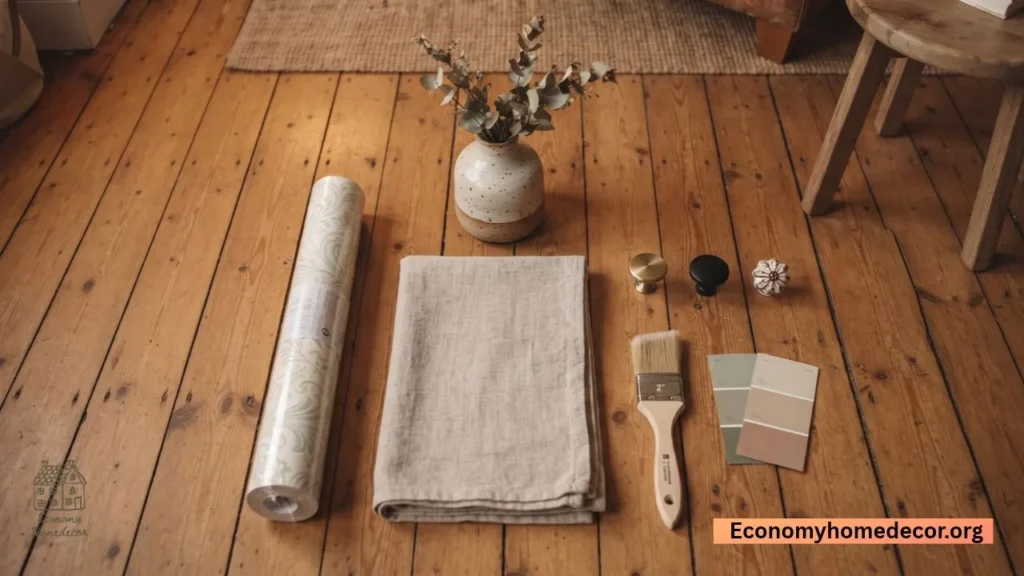
To make this concrete, here’s what a full living room refresh can look like on an economy budget, sourced primarily secondhand and from budget retail:
| Item | Estimated Cost |
|---|---|
| Secondhand sofa (Marketplace) | $150–300 |
| Area rug (HomeGoods/overstock) | $80–150 |
| Two table lamps + floor lamp | $60–100 |
| Coffee table (thrifted, painted) | $20–40 |
| Curtains (IKEA, hung high) | $40–60 |
| Throw pillows and a blanket | $30–50 |
| Gallery wall (frames + prints) | $40–70 |
| Total | $420–770 |
Compare that to new-retail pricing for an equivalent room, which regularly runs $2,500–4,000, and the gap explains why economy decorating isn’t a compromise; it’s a strategy.
Frequently Asked Questions About Economy Home Decor
Is economy home decor the same as cheap decor?
No. Cheap decor usually means buying the least expensive version of every item. Economy decor means being strategically spending on a few high-impact pieces (a sofa, lighting, a rug) and sourcing everything else secondhand, on sale, or DIY.
What’s the cheapest way to make a room look more expensive?
Paint and lighting, in that order. A fresh coat of paint in a cohesive color and warm-toned bulbs in layered lighting sources (not just overhead) change a room’s feel more than almost any furniture purchase.
Where is the best place to buy budget home decor?
For furniture: Facebook Marketplace, thrift stores, and estate sales. For new items: HomeGoods, Target, and IKEA. For accessories and styling objects: Dollar Tree, Five Below, and thrift stores.
How much should I budget to decorate a room on an economy budget?
A full living room refresh, sourced mostly secondhand, typically runs $400–800. A bedroom refresh runs lower, often $150–400, since fewer pieces are needed.
Can rental homes use economy decor strategies?
Yes, and rentals are actually a great fit peel and stick wallpaper, removable decals, tension rods, and furniture-based updates require no landlord approval and move with you to the next place.
What decorating mistakes make a room look cheaper, not more budget-friendly?
Matching furniture sets, too many small accessories, bare or short curtains, single overhead lighting, and an empty or undersized rug are the most common culprits.