
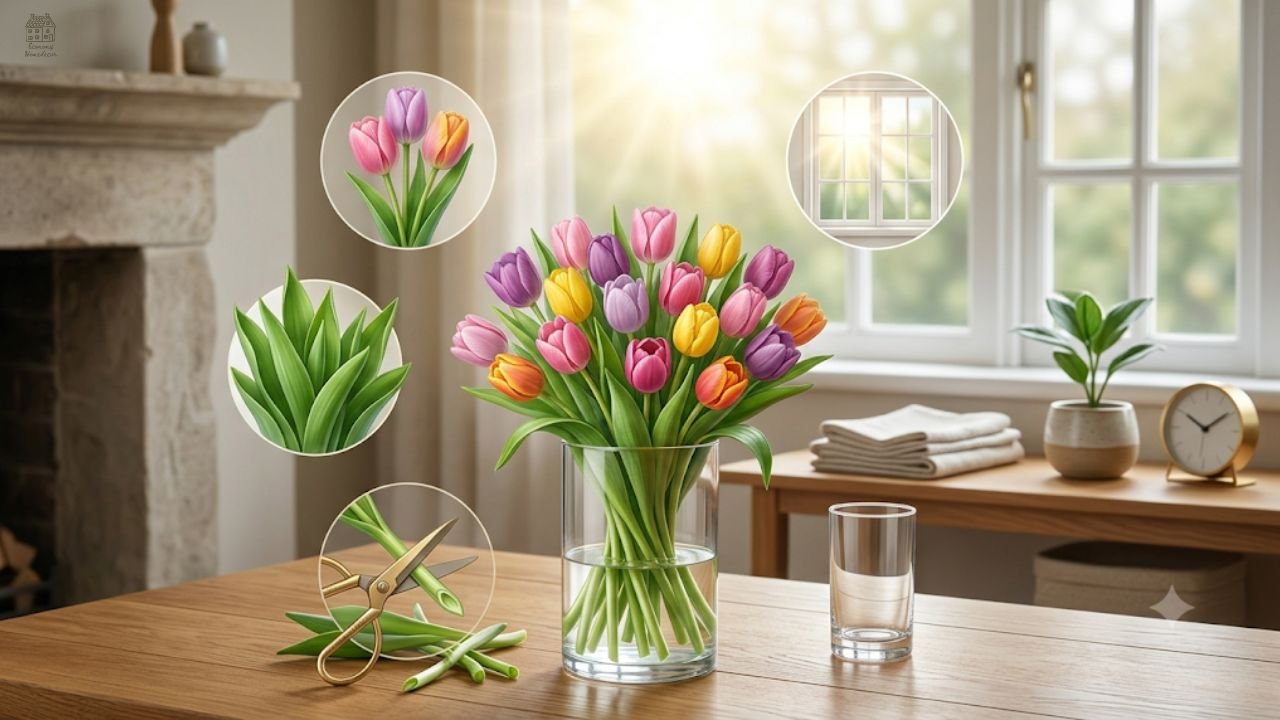
Few flowers bring the same feeling of spring, freshness, and elegance as tulips. Their bright colors, graceful stems, and delicate petals can instantly transform a room or garden. However, many people wonder how to care for tulips properly because these flowers can sometimes droop, fade quickly, or stop blooming earlier than expected.
Whether you have a fresh tulip bouquet, a potted tulip plant, or bulbs growing in your garden, proper care makes a noticeable difference. Understanding water needs, trimming methods, sunlight requirements, and maintenance routines helps you enjoy healthier flowers for longer.
Tulips may look delicate, but they are surprisingly resilient when given the right conditions. From learning how to take care of tulips in vase arrangements to maintaining outdoor plants after flowering, small adjustments can extend their beauty and improve their overall health.
This complete guide explains everything you need to know about tulip care, including vase techniques, watering habits, cutting methods, blooming stages, and answers to common questions like how long do tulips last and why tulips sometimes droop.
Understanding Tulip Care Before You Start
Tulips belong to the genus Tulipa and grow from bulbs. They are popular worldwide because of their wide range of colors, unique shapes, and seasonal appearance. Although they are often considered spring flowers, successful tulip care depends on understanding their natural growth cycle.
A healthy tulip requires the right balance of:
- Fresh water
- Proper sunlight
- Clean cutting techniques
- Suitable temperature
- Regular maintenance
- Correct timing after blooming
Many people assume tulips require complicated gardening knowledge, but they are actually beginner-friendly flowers. The key is knowing what tulips need at different stages of their life.When people search for how do you take care of tulips, they are usually trying to solve common problems such as:
- Flowers bending downward
- Leaves turning yellow too early
- Buds failing to open
- Petals falling quickly
- Stems becoming weak
- Flowers lasting only a few days
Most of these issues can be prevented with simple daily care.
How to Care for Tulips in a Vase
Fresh-cut tulips are one of the most beautiful ways to bring nature indoors. However, cut tulips behave differently from many other flowers because their stems continue growing even after being placed in water.
Learning how to care for tulips in a vase starts with preparation. Before arranging your flowers, clean your vase thoroughly because bacteria in dirty water can shorten the life of your tulips.A clean vase helps prevent:
- Cloudy water
- Weak stems
- Early petal loss
- Unpleasant smells
Choose a vase that supports the stems but does not squeeze them tightly. Tulips naturally lean and move toward light, so a little space allows them to create a graceful arrangement.
How to Prep Tulips for a Vase
Before putting tulips into water, follow these steps:
- Remove damaged leaves and any leaves that will sit below the water line.
- Trim the stems at an angle using a sharp, clean knife or scissors.
- Place the flowers immediately into fresh water.
- Keep the vase away from direct heat sources.
Knowing how to cut tulips for vase arrangements is important because a clean angled cut improves water absorption.Avoid crushing the stems because damaged tissue prevents proper hydration.
How to Cut Tulips Correctly
Many people ask how to cut tulips because the wrong technique can reduce their vase life.The best method:
- Cut approximately 1–2 centimeters from the bottom of the stem.
- Make a diagonal cut instead of a straight cut.
- Use clean tools.
- Re-trim stems every few days if needed.
A diagonal cut increases the surface area that absorbs water. This is especially useful when caring for fresh cut tulips purchased from a florist or grocery store.
How Much Water Do Tulips Need in a Vase?
One common mistake is filling the vase too high. Unlike some flowers, tulips do not need deep water. Too much water can cause stems to weaken and leaves to rot.
Many people ask how much water for tulips in vase arrangements. The ideal amount is usually around 5–10 centimeters of fresh water, enough to cover the bottom portion of the stems without soaking unnecessary leaves.
Good tulip water habits include:
- Change water every one to two days.
- Clean the vase regularly.
- Remove fallen leaves or petals.
- Add fresh cool water whenever levels drop.
Fresh water is one of the easiest ways to improve tulips in vase care.
What to Put in Tulip Water
A common question is what to put in tulip water to help flowers last longer.
Commercial flower food can help because it provides nutrients and controls bacteria. Many people ask, do tulips need flower food? The answer is that it is helpful but not always necessary.Fresh clean water is usually more important than additives.If you use flower food:
- Follow the package instructions.
- Avoid adding too much.
- Replace the water regularly.
Homemade mixtures are often unnecessary because incorrect amounts of sugar, bleach, or other ingredients may damage the flowers.
How Long Do Tulips Last?
A major concern for flower lovers is how long do tulips last. The answer depends on whether they are growing in soil or displayed as cut flowers.
Fresh-cut tulips usually last around 5–10 days with proper care. Some varieties may last longer, especially when kept in cool conditions.
People often ask:
- how long do tulips last in a vase
- how long do cut tulips last
- how long do fresh cut tulips last
- how long will cut tulips last
The typical vase life depends on:
- Flower freshness when purchased
- Room temperature
- Water quality
- Cutting technique
- Variety of tulip
Cooler environments generally help tulips last longer. Heat speeds up blooming and causes petals to fall sooner.
How to Make Tulips Last Longer
If you want to extend the beauty of your bouquet, follow these simple tips:
- Keep tulips away from direct sunlight.
- Avoid placing them near heaters or appliances.
- Change water frequently.
- Trim stems every few days.
- Remove fading flowers.
- Keep them in a cooler room overnight if possible.
These habits answer one of the most common questions: how to make tulips last longer.Tulips are also sensitive to fruit. Ripening fruit releases ethylene gas, which can cause flowers to age faster. Keep your tulip vase away from bowls of apples, bananas, and other produce.
Why Are My Tulips Drooping?
One of the most common problems is cut tulips drooping. Many people panic when their flowers bend over, but drooping does not always mean the tulips are dying.Tulips naturally continue growing after cutting, and their stems may bend toward light. However, severe drooping usually indicates a problem.
Common reasons include:
Lack of Water
The most common cause is dehydration. If tulips have been out of water too long, their stems lose strength.People often ask how long can tulips be out of water. Ideally, they should be placed back into water as soon as possible. A few hours without water may cause stress, especially in warm conditions.
Warm Temperatures
Tulips prefer cooler environments. Heat accelerates blooming and weakens stems.Avoid placing tulips:
- Near windows with strong afternoon sunlight
- Near radiators
- Near kitchen heat sources
Weak or Damaged Stems
Old flowers or damaged stems cannot transport water efficiently. Regular trimming can improve hydration.To learn how to keep tulips from drooping, focus on clean water, proper cutting, and cooler placement.
How to Care for Tulips Indoors
Bringing tulips indoors creates a beautiful seasonal display, but indoor conditions are different from outdoor gardens. Temperature, light exposure, and watering habits all influence how long your flowers remain healthy.
Learning how to take care of tulips indoors starts with choosing the right location. Tulips prefer bright, indirect light rather than harsh direct sunlight. A spot near a bright window with filtered light is usually ideal.Avoid placing indoor tulips near:
- Heating vents
- Fireplaces
- Radiators
- Air conditioners
- Hot kitchen appliances
Extreme temperature changes can shorten flower life and cause stems to weaken.
Indoor tulip maintenance also requires regular observation. Check the leaves, stems, and petals every day. Removing damaged parts early helps maintain a fresh appearance.For people wondering how to keep tulips alive inside, the main factors are:
- Proper watering
- Cooler temperatures
- Enough natural light
- Clean containers
- Regular maintenance
Tulips are not difficult house flowers, but they do respond quickly when their environment is unsuitable.
How to Keep Tulips Alive in a Vase
Many flower lovers search for how to keep tulips alive in a vase because tulips sometimes appear healthy one day and start bending the next.The secret is consistency. Tulips need a stable environment rather than frequent changes.
Follow these steps:
- Use a clean vase before arranging flowers.
- Add fresh cool water.
- Remove leaves below the water surface.
- Trim stems when they become soft or blocked.
- Place the vase in a cool area.
- Replace water regularly.
Another useful technique is rotating the vase every day. Tulips naturally grow toward light, so turning them helps create a more balanced arrangement.
When taking care of tulips in a vase, avoid overcrowding. Too many stems in a small container can restrict airflow and cause faster deterioration.
Tulip Water Requirements
Understanding tulip water requirements is one of the most important parts of successful flower care.Tulips do not need deep water like some tropical flowers. They perform best with a moderate amount of fresh water that covers the lower part of their stems.
Important watering tips:
- Use cool tap water.
- Refresh water frequently.
- Keep leaves above the water line.
- Wash the vase before refilling.
People often ask do tulips need water? Yes. Even after cutting, tulips continue absorbing water through their stems.Without enough water, flowers lose firmness, stems become flexible, and petals begin falling.
How to Care for Cut Tulips
Fresh-cut tulips require slightly different care compared with tulips growing in soil. Since they no longer have roots, all hydration comes through the stem.Proper cut tulips care begins immediately after purchasing or cutting flowers.
When buying tulips:
- Choose firm buds.
- Look for green healthy leaves.
- Avoid flowers with damaged petals.
- Select stems that feel strong.
Fresh flowers with closed buds often last longer because they open gradually at home.Many people wonder about closed tulips and whether they are healthy. In most cases, closed buds are a positive sign because they have more blooming time remaining.
How to Keep Cut Tulips Fresh
To understand how to keep cut tulips fresh, focus on reducing stress after cutting.
Helpful practices include:
- Keeping flowers cool during transportation.
- Cutting stems before placing them in water.
- Avoiding direct sunlight.
- Removing old petals quickly.
Tulips are unique because they may continue opening several days after being placed in a vase.
This leads many people to ask, do tulips open up in vase? Yes, tulips naturally open as they mature, especially when exposed to warmth and light.
Why Are My Tulips Not Opening?
Sometimes tulips remain closed longer than expected. People commonly ask:
- why are my tulips not opening
- how long do tulips take to open
- how long does it take tulips to open
Fresh tulips may take one to several days to fully open depending on:
- Variety
- Temperature
- Amount of light
- Flower maturity
If your tulips are completely closed, try:
- Moving them to a brighter location.
- Keeping fresh water available.
- Allowing room temperature exposure.
- Removing damaged outer petals.
However, avoid placing them near intense heat to force opening. Excessive warmth may make flowers open too quickly and reduce their lifespan.
How to Make Tulips Open
If you want to encourage blooming, follow gentle methods.For how to make tulips open, try:
- Providing indirect sunlight.
- Keeping water fresh.
- Maintaining a comfortable room temperature.
- Giving flowers time.
Many people search for how to get cut tulips to open, but patience is usually the best solution. Tulips have their own natural blooming rhythm.
How to Trim Tulips Properly
Trimming is one of the most important parts of maintaining healthy tulips. Knowing how to trim tulips correctly can improve water absorption and keep arrangements attractive.Use clean scissors or a sharp knife and:
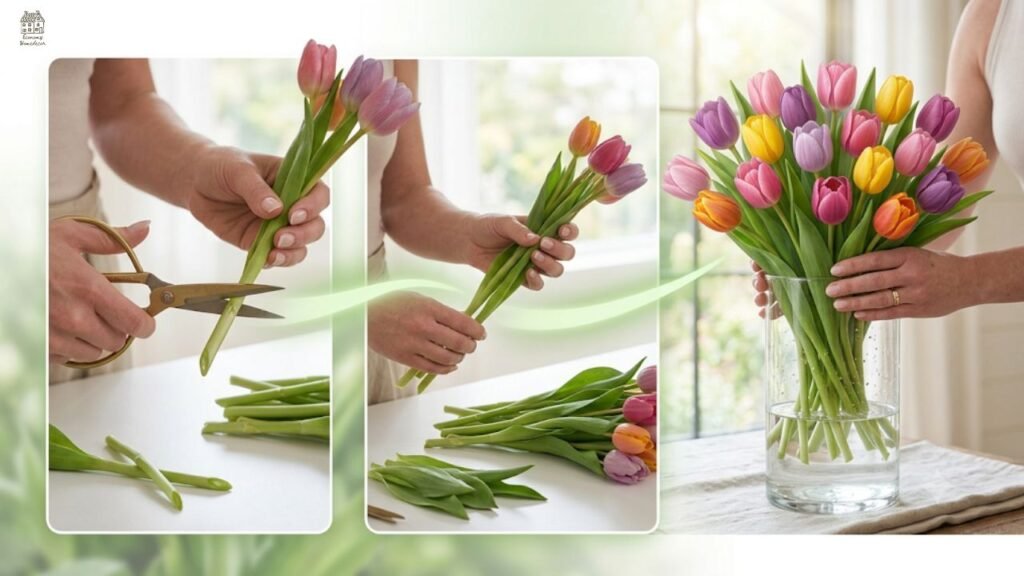
- Cut stems at an angle.
- Remove damaged leaves.
- Trim small amounts rather than cutting too much.
- Repeat when stems become soft.
Many people ask do you trim tulips for vase? Yes. Trimming helps refresh the stem and improves hydration.
How to Trim Tulips for Vase Arrangements
For how to trim tulips for vase care:
- Remove packaging carefully.
- Hold stems together.
- Cut about 1–2 centimeters from the bottom.
- Place immediately into fresh water.
Avoid cutting stems while they are dry for long periods. Once exposed to air, the stem ends may become less effective at absorbing water.
Do You Take Leaves Off Tulips?
A common question is do you take leaves off tulips in vase?You do not need to remove all leaves. Healthy leaves help the arrangement look natural.
However, remove:
- Leaves sitting below water.
- Yellow leaves.
- Damaged leaves.
Knowing how to remove tulip leaves properly prevents bacteria growth while keeping the bouquet attractive.
Tulip Plant Care After Blooming
Tulips have a seasonal growth cycle. After flowers fade, many gardeners wonder what happens next.Proper tulip plant care after flowering helps bulbs store energy for future growth.After blooming:
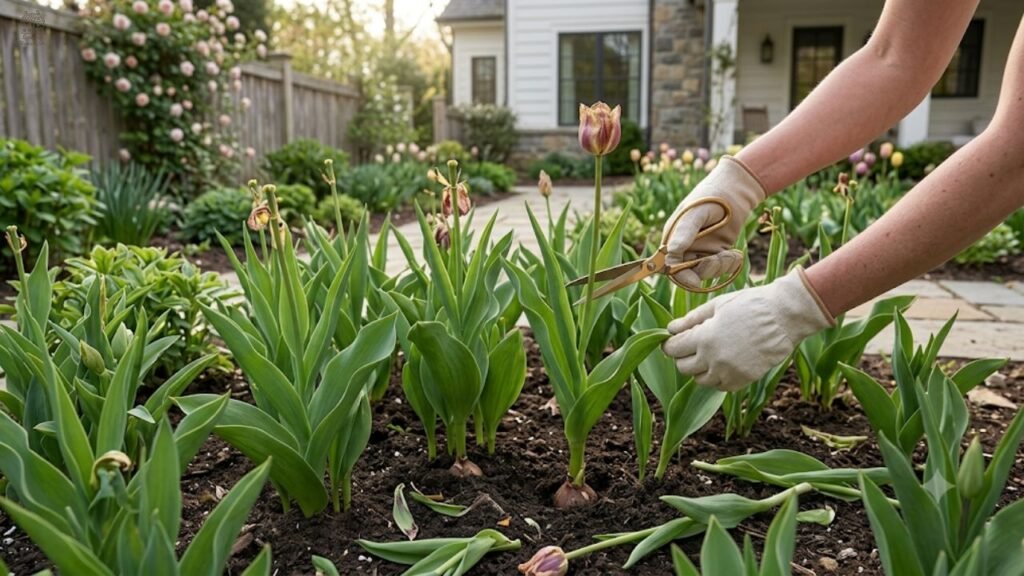
- Remove faded flowers.
- Keep leaves until they naturally turn yellow.
- Continue light watering.
- Avoid cutting green leaves too early.
The leaves continue photosynthesis, helping the bulb prepare for the next season.
Can You Cut Tulips After They Bloom?
Many gardeners ask:
- can i cut tulips after they bloom
- should you cut tulips after they bloom
- cutting tulips after they bloom
The answer depends on your goal.
If you want to save energy for the bulb, remove the flower head after it fades but keep the leaves. The plant uses those leaves to strengthen the bulb.Do not remove all green growth immediately after flowering.
When to Cut Tulips Back
Knowing when do you cut tulips back is important.Wait until:
- Leaves become yellow.
- Leaves naturally fall over.
- The plant finishes storing energy.
Usually, this happens several weeks after blooming.This process is called cutting back tulips and is an important part of long-term bulb health.
How to Prune Tulips Correctly
Many people use the term pruning for flowers, but tulips require minimal pruning.Proper pruning tulips mainly involves:
- Removing faded blooms.
- Cutting away dead foliage.
- Cleaning damaged parts.
For how to prune tulips after they bloom, avoid removing healthy green leaves too early.
Pruning Tulips After Bloom
After flowers finish:
- Cut off the faded flower head.
- Leave leaves attached.
- Allow natural yellowing.
- Remove dead foliage later.
This supports stronger bulbs for future seasons.People often ask how to trim tulips after they die. Wait until the plant has completed its natural cycle before removing remaining leaves.
How to Keep Tulips Alive in a Pot
Potted tulips need different care compared with cut flowers. They depend on soil, drainage, and sunlight.For how to keep tulips alive in a pot, provide:
- Well-draining soil
- A container with drainage holes
- Bright sunlight
- Moderate watering
Avoid overwatering because tulip bulbs can rot in constantly wet soil.
Watering Potted Tulips
People often ask how much water does a tulip need.The answer depends on the environment, but generally:
- Water when the top layer of soil feels dry.
- Keep soil slightly moist.
- Never allow the pot to remain waterlogged.
Good drainage is more important than frequent watering.
Are Tulips Easy to Take Care Of?
Many beginners ask are tulips hard to take care of.The answer is no. Tulips are relatively easy when their basic needs are met.They do not require complicated routines. Most problems happen because of:
- Too much water
- Poor drainage
- Excessive heat
- Incorrect trimming
- Removing leaves too early
With simple habits, even beginners can successfully grow and maintain tulips.
Preserving, Drying, and Extending the Beauty of Tulips
Tulips are naturally temporary flowers, but there are several ways to enjoy them even after their fresh bloom period ends. Many flower lovers search for how to preserve tulips because they want to keep a special bouquet, wedding flowers, or flowers from a memorable occasion.
Preserving tulips requires patience because their delicate petals can lose shape easily. The best preservation method depends on whether you want to keep the whole flower, preserve petals, or create a dried arrangement.Common preservation methods include:
- Air drying
- Pressing flowers
- Silica gel drying
- Creating decorative arrangements with dried petals
Before preserving tulips, choose flowers that are still healthy. Flowers that are already damaged or losing petals usually do not preserve well.
How to Dry Tulips Properly
Many people ask how to dry tulips because dried flowers can become beautiful long-lasting decorations.Air drying is one of the easiest methods:
- Remove excess leaves.
- Group a few stems together.
- Hang tulips upside down in a dark, dry place.
- Allow several weeks for complete drying.
Keep dried tulips away from direct sunlight because UV exposure can fade their colors.If you want better shape retention, silica gel drying is often more effective. It helps preserve the structure of the petals and creates a more realistic dried flower appearance.
People also ask can you dry tulips and can you dry out tulips. Yes, but dried tulips will have a different texture. They become delicate and should be handled carefully.
How to Preserve Tulip Petals
Tulip petals can also be saved separately for crafts, decorations, or keepsakes.For how to preserve tulip petals, try:
- Pressing petals inside heavy books.
- Drying petals naturally.
- Using silica gel.
- Storing dried petals in airtight containers.
Pressed tulip petals work well for handmade cards, artwork, bookmarks, and decorative projects.However, fresh petals cannot be preserved indefinitely in their original soft condition. The goal is to maintain their color and shape as much as possible.
Understanding Tulip Growth After Cutting
One of the most interesting things about tulips is that they continue changing even after being cut.Many people ask:
- do tulips keep growing after cut
- do tulips continue to grow after cutting
- do tulips grow after being cut
- do tulip stems grow after cutting
The answer is yes. Tulip stems can continue extending after being placed in water. This happens because the flower remains biologically active even without roots.
This growth can make a bouquet look slightly different each day. Some stems may become taller, curve toward light, or create a more natural shape.However, cut tulips do not usually create new roots or become new plants.
People often ask can you plant cut tulips. A cut flower stem cannot normally be planted to grow a new tulip because it does not contain the bulb structure needed for growth.
Can Tulips Bloom Again After Being Cut?
A common question is:
Do tulips bloom after being cut?
Cut tulips can open further after being placed in water, but they do not produce another flower from the same cut stem.If you want tulips to return next year, you need healthy bulbs planted in soil.Garden tulips can bloom again when:
- Bulbs receive proper care.
- Leaves remain healthy after flowering.
- The plant stores enough energy.
- Growing conditions are suitable.
Common Tulip Problems and Solutions
Even with proper care, tulips may experience some common problems. Understanding the cause helps you correct the issue quickly.
Why Are My Tulips Dying?
Many people search why are my tulips dying when flowers begin to bend, fade, or lose petals.Common reasons include:
Old Flowers
Tulips naturally have a limited lifespan. As flowers mature:
- Petals become softer.
- Colors fade.
- Leaves may yellow.
- Stems weaken.
This is a normal part of the flower cycle.
Poor Water Quality
Dirty water encourages bacteria, which blocks water movement through stems.Solution:
- Replace water regularly.
- Clean the vase.
- Remove damaged leaves.
Too Much Heat
Warm temperatures speed up aging.Move tulips away from:
- Direct sunlight
- Heating systems
- Warm appliances
Why Are My Tulip Petals Falling Off?
People often ask:
- why are my tulip petals falling off
- why are my tulips petals falling off
- what to do when tulip petals fall off
Petal loss is usually a natural sign that the flower is reaching the end of its blooming stage.However, early petal dropping may happen because of:
- Heat exposure
- Lack of water
- Flower age
- Physical damage
Remove loose petals and continue proper water care if the remaining flower is still healthy.
Why Do Tulips Open and Close?
Tulips have a fascinating natural behavior. Their flowers may open during the day and partially close at night.People often ask:
- do tulips close up at night
- why do tulips open
- do tulips open and close
Tulips respond to:
- Light
- Temperature
- Time of day
Cool temperatures often encourage flowers to remain closed, while warmth and light encourage opening.
This movement is completely normal and does not mean the flower is unhealthy.
Seasonal Tulip Care Tips
Tulips change throughout the year, so care requirements depend on the season.
Spring Tulip Care
During active growth:
- Provide sunlight.
- Keep soil lightly moist.
- Remove damaged flowers.
- Protect plants from extreme weather.
Spring is when most tulips display their brightest colors.
Summer Tulip Care
After blooming:
- Allow leaves to remain.
- Reduce watering gradually.
- Let foliage naturally die back.
This helps bulbs prepare for the next growing season.
Winter Tulip Care
Tulip bulbs often require a cold period to bloom successfully. In colder regions, bulbs naturally experience winter conditions outdoors.
If storing bulbs:
- Keep them dry.
- Avoid moisture buildup.
- Store in a cool location.
Tips for Buying Healthy Tulips
Good care starts before you bring tulips home. Knowing how to buy tulips helps you choose flowers that last longer.
Look for:
- Firm stems
- Healthy green leaves
- Closed but developed buds
- No brown spots
- No damaged petals
Closed buds are often better because they provide more time to enjoy the blooming process.Avoid flowers that already look soft, bent, or damaged.
What to Do After Tulips Bloom in Water
Many people ask what to do with tulips after they bloom in water.Once cut tulips finish blooming:
You can:
- Remove faded flowers.
- Save petals for crafts.
- Dry flowers.
- Compost plant material.
- Replace them with fresh seasonal flowers.
If the tulips are growing from bulbs in water, their future depends on the bulb condition and growing method.
Creating Beautiful Tulip Arrangements
Tulips naturally look elegant, so they do not need complicated designs.Simple arrangement ideas include:
- Single-color tulip bouquets
- Mixed spring colors
- Tulips with greenery
- Minimal glass vase displays
- Rustic farmhouse arrangements
A clean vase and healthy flowers often create a more impressive display than excessive decoration.For tulip bouquet care, focus on:
- Fresh water
- Clean stems
- Proper temperature
- Regular observation
Frequently Asked Questions
How long do tulips last in a vase?
Most fresh-cut tulips last around 5–10 days in a vase with proper care. Cool temperatures, clean water, and regular trimming can help extend their life.
How often should I change tulip water?
Change tulip water every one or two days. Fresh water reduces bacteria and helps flowers stay hydrated.
Do tulips need sunlight in a vase?
Tulips need light, but direct sunlight can shorten their vase life. Bright indirect light is usually best.
How do I stop tulips from drooping?
To prevent drooping:
- Trim stems correctly.
- Use fresh water.
- Keep flowers cool.
- Remove damaged leaves.
These steps help with how to keep tulips from drooping.
Do tulips need flower food?
Tulips can survive with fresh water alone, but flower food may help extend their freshness when used correctly.
How long do tulips last indoors?
Indoor tulips usually last several days to around two weeks depending on care, temperature, and flower condition.
When should tulips be cut back?
Garden tulips should be cut back after their leaves naturally turn yellow. Removing green leaves too early can weaken the bulb.
How do I keep tulips fresh longer?
Keep them fresh by:
- Using clean water.
- Trimming stems.
- Avoiding heat.
- Removing fading flowers.
- Keeping them in a cool room.
Conclusion
Tulips may appear delicate, but with the right habits they can remain beautiful for much longer than many people expect. Understanding how to care for tulips is mainly about providing clean water, proper trimming, suitable temperatures, and patience through each stage of growth.
Whether you are caring for a colorful bouquet, a vase arrangement, or garden bulbs, small details create the biggest difference. Regular maintenance, careful watering, and correct pruning help tulips stay healthier and more attractive.
From learning how to care for tulips in a vase to maintaining plants after flowering, tulip care becomes simple once you understand their natural needs. With the right approach, these elegant flowers can brighten your home and garden while giving you the full beauty of their seasonal bloom.