
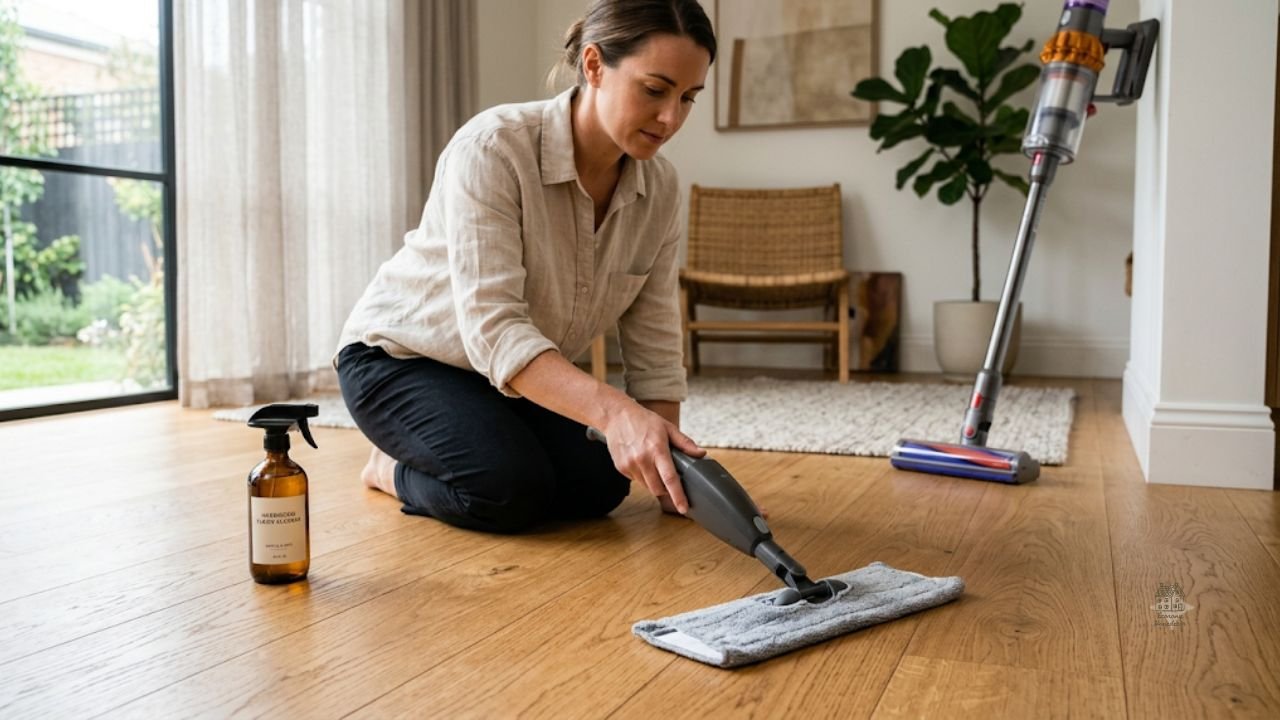
Hardwood floors don’t usually need aggressive cleaning. In fact, the easiest way to damage them is often to clean them too aggressively.For most finished hardwood floors, the safest routine is simple: remove loose grit first, clean spills promptly, then use a microfiber mop with a small amount of cleaner that’s approved for your floor’s finish.
The mop should be damp, not dripping, and water should never be left sitting between the boards.That sounds straightforward. The complication is that not every wood floor has the same finish. Advice that works perfectly well on one floor can leave another cloudy, sticky or damaged.
So before reaching for vinegar, dish soap, a steam mop or whatever cleaning hack is trending, figure out what you’re actually cleaning.
The best way to clean most hardwood floors is to vacuum or dust-mop first, then lightly damp-mop with a pH-neutral cleaner made for your specific wood-floor finish. Use as little liquid as possible and clean up standing moisture immediately.
The National Wood Flooring Association recommends routine sweeping, dust mopping or vacuuming with a bare-floor setting, immediate cleanup of spills, and a cleaner made for the finish on the floor. It advises against wet and steam mops because repeated moisture exposure can damage both the finish and the wood. he safe starting point.
Before You Clean: Know What Kind of Floor You’re Dealing With
People often ask whether oak, maple or hickory needs a different cleaner.For ordinary maintenance, that usually isn’t the most useful question.The finish on top of the wood has more influence over what should touch the floor.
A modern polyurethane- or factory-finished floor, for example, has a protective surface coating. An oil-finished floor behaves differently. Older floors may be waxed, penetratively finished or worn through in places. Completely unfinished wood is more vulnerable again.
Lowe’s current hardwood-care guidance makes the same distinction: surface finishes can generally tolerate appropriate water-based cleaners, whereas penetrating finishes require lower-moisture products designed for that finish. now the flooring brand, start with the manufacturer’s maintenance instructions.
If you don’t, don’t experiment aggressively. A conservative dry-cleaning and spot-cleaning routine is safer until you establish what finish you have.
A warning sign worth taking seriously
Look closely at high-traffic areas and around sinks, doors and pet bowls.If you can see exposed raw wood, peeling finish, open seams, grey wood fibers, severe cupping or black water staining, you’re no longer dealing with an ordinary cleaning problem. Introducing more liquid may make matters worse.
What You Need
You don’t need a cupboard full of products.For a typical finished hardwood floor, the useful kit is:
- a microfiber dust mop or soft broom
- a vacuum with a hard-floor attachment or disengageable brush roll
- clean microfiber mop pads
- a cleaner approved for your floor’s finish
- several soft absorbent cloths
- a dry microfiber pad for the final pass
A spray or controlled-dose cleaner is often easier to manage than a bucket because it reduces the temptation to soak the floor.Bruce Flooring likewise recommends regular dry removal of grit followed by occasional cleaning with a dedicated hardwood cleaner, while warning against excessive water.
Remove Grit Before You Introduce Moisture.This step looks almost too simple to matter. It matters a lot.Sand, dirt and tiny hard particles get dragged across the finish under shoes, chair legs and mop pads. Once wet, loose soil can also turn into dirty slurry that gets spread across the room rather than removed.
Vacuum or dry-mop the entire floor first.Pay extra attention to:
- entrances
- kitchen work areas
- under dining tables
- around pet bowls
- floorboard edges
- corners
- underneath movable rugs
If you’re vacuuming, switch off a rotating carpet brush or use the hard-floor attachment. A beater bar designed to agitate carpet can scratch or dull a wood finish.NWFA specifically recommends the bare-floor setting for routine vacuuming. tical example: muddy footprints
Let loose, dry material dry enough to vacuum safely rather than immediately grinding it around with a wet mop.Remove the grit first.Then deal with the remaining mark.It takes slightly longer at the beginning and often saves you from cleaning the whole area twice.
Deal With Spills and Sticky Spots Individually
You don’t need to wet-clean an entire room because someone spilled juice in one corner.Blot liquid spills promptly with an absorbent cloth.Don’t scrub the spill outward. Work from the edges toward the center if necessary so you aren’t spreading liquid across a larger section of flooring.
For a dried sticky spot, place a small amount of the appropriate hardwood cleaner on a microfiber cloth and work the mark gently.Then dry the area.
Current NWFA advice recommends spot-cleaning common spills with a small amount of pH-balanced wood-floor cleaner and testing stain-removal products in an inconspicuous area first.
Choose the Cleaner Based on the Finish
This is where internet advice becomes messy.You’ll find recommendations for:vinegar, dish detergent, oil soap, plain water, essential oils, alcohol, polish and various homemade mixtures.
Some homeowners swear by products they’ve used for decades. Others report hazing or residue from the same products.The safest general rule is less exciting:
Use the cleaner recommended by the flooring or finish manufacturer whenever that information is available.
For modern surface-finished wood, a residue-free, pH-neutral hardwood cleaner is a sensible default when compatible with the manufacturer’s care instructions.Why pH-neutral?Strongly acidic or alkaline cleaners can interact poorly with some finishes, and unnecessary soap or polish can leave material behind rather than simply removing soil.
Lowe’s currently recommends pH-neutral hardwood cleaner while advising users to avoid vinegar, wax and abrasives. milarly advises against vinegar, ammonia, wax, oil soap and steam on its hardwood flooring.
Damp-Mop—Don’t Flood the Floor
Once the dry debris is gone, work in manageable sections.If you’re using a spray cleaner, apply only enough to lightly wet the area you’re about to clean.Move a clean microfiber pad across the boards without leaving puddles behind.
The pad should be damp enough to pick up soil but not so wet that water beads, pools or runs into seams.If you use a cleaner that requires dilution, follow its directions rather than assuming “more cleaner” means a cleaner floor.
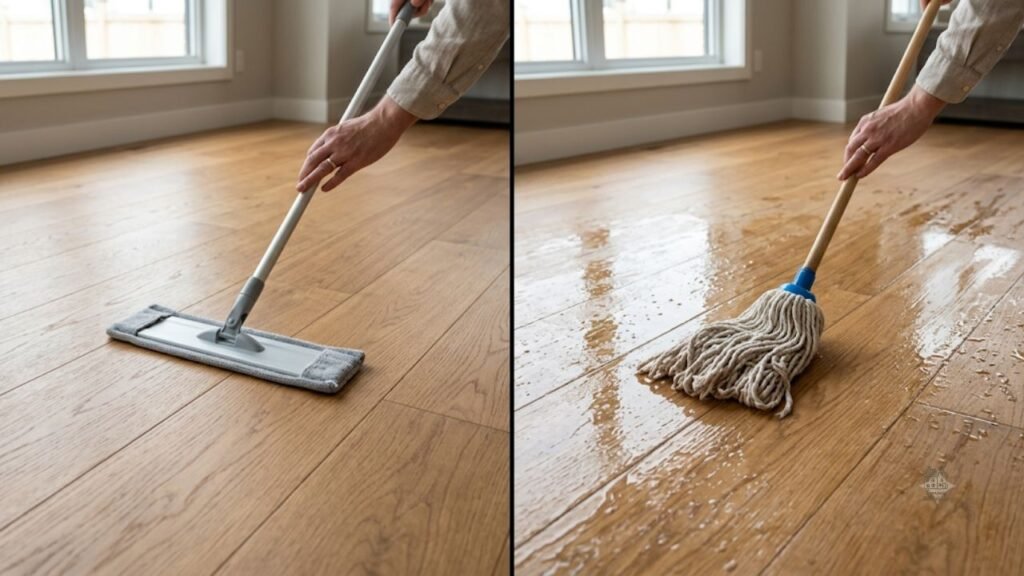
It often means more residue.Change dirty pads instead of continuing to push the same dissolved soil through the room.
Should you mop with the grain?
Following the direction of the boards is useful, especially on textured flooring, because it makes it easier to work along the surface rather than leaving visible crosswise streaks.But moisture control and clean pads matter more than obsessing over perfect mop direction.
Let the Floor Dry Quickly and Inspect It
A correctly damp-mopped hardwood floor should not stay visibly wet for long.If you see water collecting along seams or standing on the surface, remove it with a dry microfiber cloth.Once the floor dries, look at it in natural side light.
This reveals something overhead lighting hides:
- streaks
- footprints
- cloudy residue
- remaining grease
- worn finish
- scratches
Don’t automatically add more cleaner if it still looks dull.First work out why it looks dull.
Why Hardwood Floors Look Cloudy, Sticky or Dull After Cleaning
A dirty floor and a damaged finish aren’t the same problem.Neither is cleaner buildup.
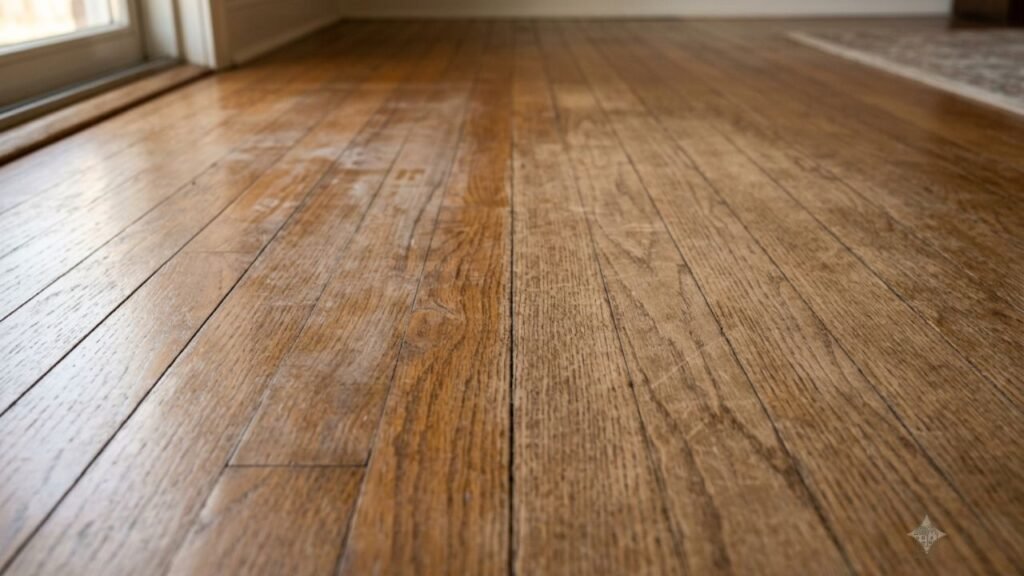
If the floor feels sticky
You may be using too much cleaning product, a soap that leaves residue, or repeatedly passing a dirty mop over the same surface.Switch to clean pads and use the minimum manufacturer-approved product necessary.
If you see streaks
Common causes include:
- too much cleaner
- dirty mop pads
- mineral-heavy water in a diluted solution
- uneven drying
- greasy soil that wasn’t fully removed
A second heavy dose of cleaner can compound the problem.
If the floor is uniformly dull
Consider the possibility that you’re looking at finish wear rather than dirt.A floor whose protective finish has worn down will not necessarily become glossy because you mop it more aggressively.
NWFA notes that floors that have become dull can sometimes be renewed through recoating, which adds another layer of finish. a flooring-maintenance job, not a stronger-cleaner job.
How to Deep Clean Hardwood Floors
“Deep clean” should mean more thorough soil removal, not dramatically more water.Start exactly as you would for routine cleaning:
- Remove rugs and easy-to-move furniture.
- Vacuum meticulously, including edges.
- Identify stained or sticky areas.
- Spot-clean them separately.
- Use a compatible cleaner across the floor with controlled moisture.
- Change microfiber pads as they become soiled.
- Dry excess liquid promptly.
- Inspect the finish once the floor is completely dry.
Lowe’s makes a useful distinction here: periodic deeper cleaning can remove accumulated grime, but the process should still follow the manufacturer’s recommendations and use a cleaner appropriate to the floor finish. ep clean” tutorial tells you to soak a hardwood floor, treat that as a warning sign.
Can You Clean Hardwood Floors With Vinegar?
For a general-purpose article, I would not recommend vinegar as the default hardwood-floor cleaner.Yes, diluted vinegar appears in older cleaning advice and plenty of homeowners report using it without obvious damage.
The problem is that you don’t know whether their finish is the same as yours.Several current sources are more conservative.
Good Housekeeping’s Cleaning Lab advises against vinegar because acidity can damage or dull certain finishes. ecifically lists acidic materials such as vinegar among the products to avoid on its floors. flooring manufacturer explicitly authorizes a particular dilution, follow its instructions. Otherwise, a purpose-made compatible cleaner removes the guesswork.
Can You Steam-Mop Hardwood Floors?
The conservative answer is no.Steam combines moisture with heat and can force water vapor into joints and small openings.
NWFA advises against steam mops for wood flooring. kewise warns that introducing heat and moisture can damage its hardwood flooring and says resulting damage may not be covered by warranty. you’ve steam-mopped a floor before without visible damage, that doesn’t establish that repeated exposure is safe for every finish, joint or installation.
What About Oil Soap or Floor Polish?
Don’t automatically equate “wood cleaner” with “hardwood-floor cleaner.”Furniture products, oily soaps, waxes and shine restorers can leave films on modern floor coatings or create compatibility problems when the floor eventually needs maintenance.
Architectural Digest quotes NWFA technical expert Brett Miller warning specifically about products marketed to “polish,” “shine,” “rejuvenate” or “revitalize” hardwood because they can leave temporary material on the surface. ore recent guidance similarly cautions against casually applying waxes and oils to modern factory-finished floors because they can interfere with future maintenance coatings. enuinely have a wax- or oil-finished floor, that’s different.
Use products intended for that exact finish.
How to Clean Specific Hardwood-Floor Messes
Greasy footprints
Dry-clean first.Use a compatible hardwood cleaner on a fresh microfiber pad, working a small area at a time. Replace the pad if it becomes visibly dirty.
Mud
Allow loose mud to dry if practical, then vacuum away the grit.Clean the remaining mark with minimal moisture.
Food spill
Lift solids first rather than grinding them into the finish.Blot moisture, clean the remaining film and dry the area.
Pet accident
Remove the liquid immediately.If staining, odor or discoloration persists after surface cleaning, the contamination may have entered damaged finish or wood seams. Don’t keep soaking the area with cleaner. Persistent penetration can require professional evaluation.
Scuff mark
Start gently with a microfiber cloth and the floor’s normal cleaner.Avoid jumping immediately to abrasive pads or eraser-type products that may change the sheen of the finish.
Candle wax or chewing gum
Some manufacturers recommend hardening sticky material before gently lifting it with a nonmetallic scraper. Shaw, for example, suggests ice and a plastic scraper for sticky substances on its hardwood products. heck your specific floor first.
Solid Hardwood vs. Engineered Hardwood: Is Cleaning Different?
Both have real wood at the surface, but engineered hardwood uses a real-wood wear layer over a layered base.The routine still follows the same conservative principles:remove grit, minimize moisture, use compatible cleaner and wipe spills quickly.
Do not confuse engineered hardwood with laminate or luxury vinyl. Those are different materials and may have different cleaning tolerances.And “engineered” does not automatically mean waterproof.
Bruce describes most engineered hardwood as water-resistant rather than waterproof and advises against soaking it, steam cleaning, harsh chemicals, vinegar and oil-based soaps. o Clean Very Old Hardwood Floors
Old hardwood requires more judgment because the age of the wood doesn’t necessarily tell you the condition or chemistry of the finish.A 100-year-old floor may have been refinished recently.A 15-year-old floor may have badly worn coating.
Look at the surface rather than the calendar.If you’re dealing with worn-through areas, loose boards, open joints, unidentified wax, flaking coating or visible raw wood, start with dry cleaning and seek finish-specific advice before washing the whole room.
This is one of the situations where paying for a flooring professional’s assessment can cost less than fixing a cleaning experiment.
How Often Should You Clean Hardwood Floors?
There isn’t one schedule for every home.A quiet guest bedroom and an entrance shared by two children and a muddy dog obviously need different care.A practical schedule is:
As needed: Clean spills immediately.Every few days: Dry-mop high-traffic areas.Weekly: Vacuum areas receiving normal traffic.Periodically: Damp-clean using a floor-safe cleaner when visible soil warrants it.
Good Housekeeping currently recommends sweeping or dusting every few days, vacuuming weekly and deeper cleaning roughly every one to two months depending on traffic. et-household guidance suggests daily sweeping or dust mopping, weekly vacuuming and a finish-compatible cleaning product approximately monthly, while noting that schedules vary with use and lifestyle. ciple matters more than the calendar:
remove dry abrasive soil frequently so you need less wet cleaning later.
The Easiest Way to Keep Hardwood Floors Cleaner
A surprisingly large part of hardwood-floor cleaning happens before dirt ever reaches the mop.Use mats at exterior entrances.Remove muddy or gritty footwear.Keep felt pads beneath furniture.Trim pets’ nails.Vacuum entrance areas frequently.Wipe water around pet bowls and sinks before it sits.
Shaw also recommends controlling indoor humidity and using mats and furniture protectors to reduce moisture, scratches and dimensional movement. on isn’t glamorous, but it protects both the appearance of the finish and the amount of work required to clean it.
When Cleaning Won’t Fix the Problem
Stop looking for a stronger cleaner when you see:
- finish worn through to raw wood
- deep scratches
- widespread grey areas
- boards cupping or crowning
- black moisture stains
- finish peeling
- large gaps associated with moisture problems
- persistent haze that began after application of polish or wax
- water damage
- widespread discoloration
These symptoms may call for finish correction, recoating, repair or refinishing rather than cleaning.Wood flooring has one major advantage here: unlike many imitation surfaces, genuine hardwood can often be repaired, recoated or refinished rather than immediately replaced.The trick is knowing when to stop cleaning and start treating the floor as a flooring problem.
The Rule Worth Remembering
If you forget everything else, remember this:Remove grit first. Use the least moisture necessary. Match the cleaner to the finish.Hardwood doesn’t need to be soaked, steamed, polished or scrubbed into submission to become clean.A careful routine usually works better—and leaves the finish intact for far longer.
Frequently Asked Questions
What is the best thing to clean hardwood floors with?
For most finished hardwood floors, use a microfiber mop and a pH-neutral hardwood-floor cleaner approved by the flooring or finish manufacturer. Remove dry dirt before damp cleaning.
Can you mop hardwood floors?
Yes, many finished floors can be cleaned using tightly controlled moisture, but avoid soaking them. NWFA recommends avoiding traditional wet mopping and using products designed for the floor’s finish. inegar safe for hardwood floors?
It shouldn’t be treated as a universal hardwood cleaner. Current Good Housekeeping expert advice, Lowe’s guidance, NWFA contributor guidance and Bruce manufacturer recommendations warn against vinegar on hardwood finishes. you steam-clean hardwood floors?
The conservative industry guidance is no. NWFA and Bruce advise against introducing steam to hardwood flooring. are my hardwood floors sticky after mopping?
Common causes include excess cleaner, product buildup, dirty mop pads or unsuitable cleaning products. Don’t automatically add more detergent.
Why do my floors still look dull after cleaning?
The problem may be residue or a worn finish rather than dirt. A worn finish may require recoating rather than stronger cleaning.
How do you deep-clean hardwood floors?
Vacuum thoroughly, spot-treat stubborn soil, then work through the floor in sections using a compatible cleaner and minimal moisture. Replace dirty microfiber pads as needed.
How often should hardwood floors be mopped?
Wet or damp cleaning should be based on traffic and soil rather than an arbitrary daily schedule. Dry soil removal should happen considerably more frequently.