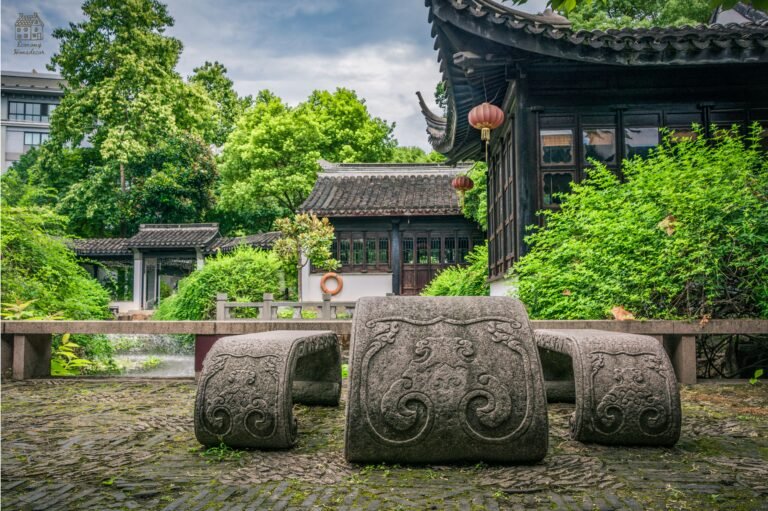
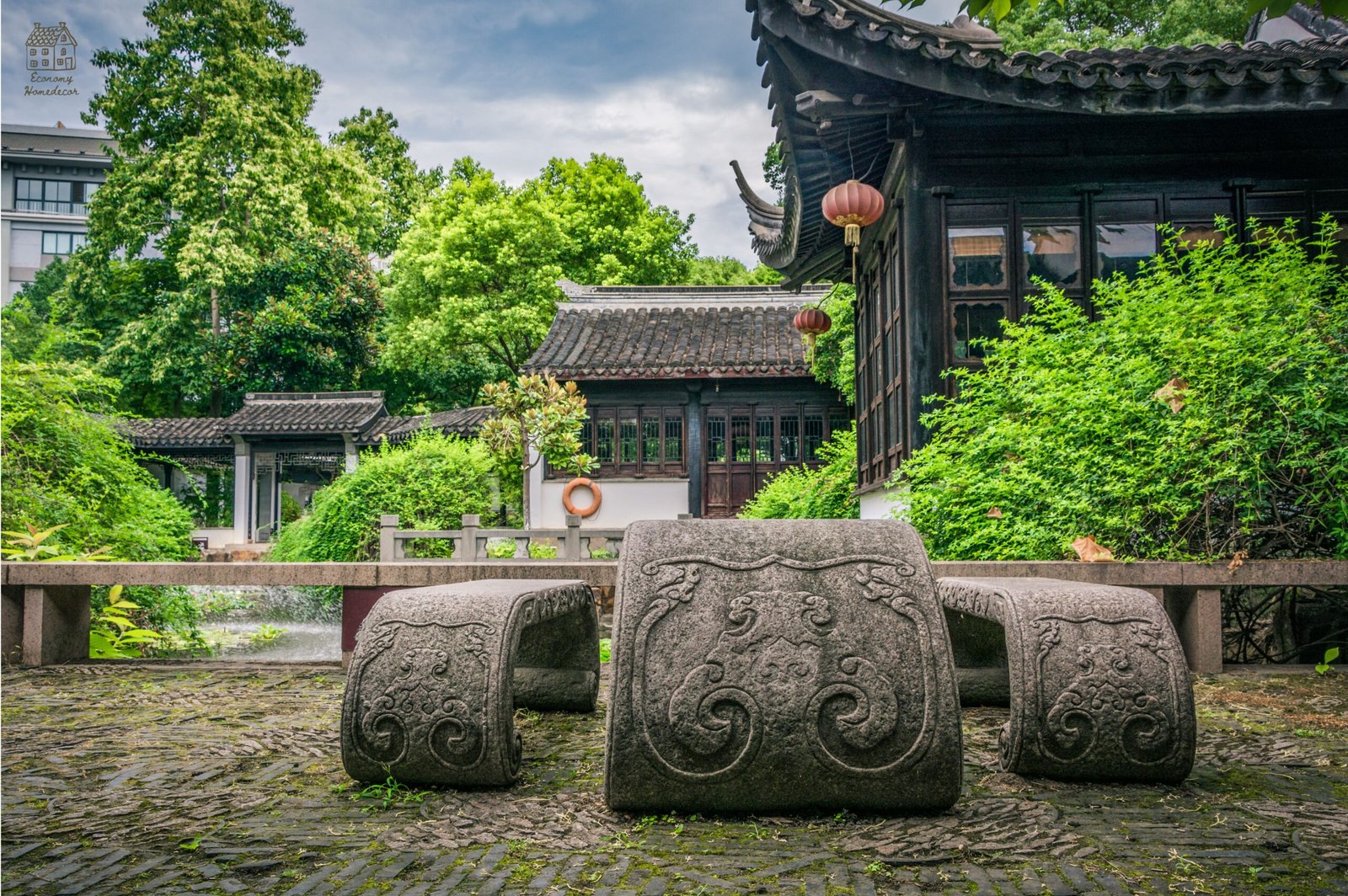
A China Garden is not just a pretty outdoor space with bamboo and a small pond. At its best, it is a way of arranging nature, architecture, texture, shadow, and movement so a home feels calmer than the world outside it.
That is why Chinese garden design still matters for modern home decor. You do not need a palace courtyard, a historic pavilion, or a large backyard. The deeper idea is much more useful: create a space that reveals itself slowly, frames beauty carefully, and offers the eye a peaceful place to rest.
For American homeowners, renters, decorators, and garden lovers, this style can work in surprisingly practical ways. A small patio can borrow the feeling of a scholar’s courtyard. A living room can use Chinese garden principles through screens, plants, stone textures, water sounds, and framed views. Even a balcony can feel more intentional when it stops acting like leftover space and becomes a tiny landscape.
Chinese gardens have developed over thousands of years and traditionally combine water, rocks, plants, architecture, walls, pavilions, winding paths, and framed views. The classical version is often described as a miniature idealized landscape, designed to express harmony between people and nature.
What Is a China Garden?
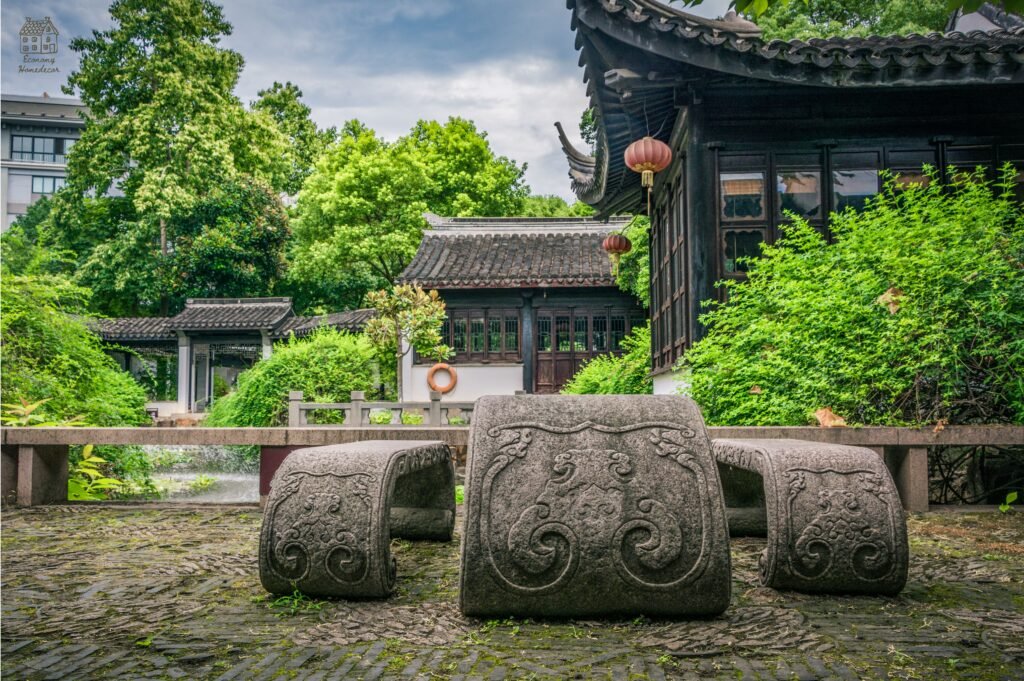
A Chinese garden, more accurately called a Chinese garden, is a designed landscape inspired by traditional Chinese ideas of nature, balance, poetry, painting, symbolism, and retreat.
Unlike many Western gardens that are organized around open lawns, symmetry, flower beds, or direct views, a Chinese garden is usually more layered. It may hide part of the view, then reveal it through a turn in the path, a round moon gate, a lattice screen, or a reflection in water.
A traditional Chinese garden often includes:
- Water
- Rocks or artificial mountains
- Plants with symbolic meaning
- Pavilions or seating structures
- Courtyard walls
- Winding paths
- Framed views
- Screens or windows
- Seasonal change
- A sense of quiet discovery
The goal is not to show everything at once. A good Chinese garden feels like a walk through a painting. One view leads to another. A stone sits where it can be noticed. A plant is chosen not only for color, but for mood and meaning. A wall is not just a boundary; it is part of the composition.
This is exactly why the style translates so well into home decor. It teaches restraint. It teaches placement. It teaches you to stop filling space and start composing it.
Why Chinese Garden Design Works So Well for Home Decor
Many homes in the U.S. have the same problem: too many objects, not enough atmosphere.
A patio may have furniture, string lights, planters, and outdoor rugs, but still feel unfinished. A living room may be decorated, but not grounded. A backyard may have plants, but no sense of movement or destination.
Chinese garden design solves this through composition.
It asks better questions:
Where does the eye land first?
What view is being framed?
Where does the visitor pause?
What is hidden?
What sound softens the space?
What material brings age, weight, or calm?
What changes with the season?
That kind of thinking is valuable whether you are styling a courtyard, a porch, a sunroom, or a small apartment balcony.
The Main Elements of a Chinese Garden
1. Water
Water is one of the most important elements in Chinese gardens. It brings reflection, movement, sound, and softness.
In a full-scale garden, water may appear as a pond, lake, stream, waterfall, or lotus pool. In a home setting, the same feeling can come from a small patio fountain, a ceramic water bowl, a reflecting basin, or even an indoor tabletop fountain.
The point is not size. The point is atmosphere.
A quiet water feature can make a small space feel less static. It reflects light, softens hard surfaces, and adds a sensory layer that furniture alone cannot provide.
In classical Chinese gardens, ponds and lakes often serve as central features, with pavilions and viewpoints arranged around them. Water is also understood in contrast with rocks: softness against solidity, movement against stillness.
2. Rocks and Stone
Rocks are not filler in a Chinese garden. They are treated almost like sculptures.
A single unusual stone can suggest a mountain. A group of rocks can create a sense of age, endurance, and natural drama. In classical Chinese gardens, artificial mountains and rockeries are deeply important, partly because mountains symbolize stability, virtue, and retreat.
For home decor, this does not mean you need a massive rockery. You can use the idea more quietly:
- A weathered stone near a planter
- A sculptural rock in a courtyard corner
- Slate stepping stones
- Pebble trays under planters
- Stone-textured ceramic vessels
- A low stone bench
- A gravel garden beside a patio
The mistake is using too many small decorative stones with no purpose. One strong stone is often better than twenty random accents.
3. Plants With Meaning
Chinese garden planting is not only botanical. It is symbolic.
Bamboo suggests resilience and flexibility. Pine suggests longevity and endurance. Plum blossom suggests renewal and perseverance. Together, pine, bamboo, and plum are known as the “Three Friends of Winter,” a traditional motif associated with steadfastness and resilience.
Other meaningful plants include lotus, peony, orchid, chrysanthemum, and flowering trees.
For U.S. homes, plant selection should be adapted to the climate. A homeowner in Florida, Oregon, Texas, New York, or California should not blindly copy the same plant list. The smarter approach is to preserve the plant’s role.
Use:
- Bamboo or bamboo-like grasses for vertical rhythm
- Pine or evergreen shrubs for year-round structure
- Flowering plum, cherry, dogwood, or crabapple for seasonal bloom
- Lotus or water lilies where ponds are possible
- Peonies where the climate supports them
- Ferns, mosses, or shade plants for softness
- Container plants for patios and balconies
If running bamboo is invasive in your area, choose clumping bamboo, horsetail reed in containers, ornamental grasses, or narrow evergreen shrubs instead.
4. Architecture
Architecture gives a Chinese garden its pauses.
A pavilion, covered bench, pergola, moon gate, lattice screen, or small tea corner tells the visitor where to stop and look. In historical gardens, buildings are not separate from the landscape. They are viewing devices.
At home, this can be simple:
- A covered seating corner
- A bench facing a framed view
- A pergola with climbing plants
- A circular opening or moon-gate-inspired arch
- A wood screen behind a planter
- A small tea table near a window
- A garden stool placed as a sculpture and seating
A Chinese garden-inspired room can use the same idea indoors. A reading chair near a window, a plant beside a screen, a low table with ceramics, and one framed artwork can create a quiet “viewing pavilion” inside the home.
5. Walls, Screens, and Framed Views
Chinese gardens often use enclosures. Walls and screens create privacy, but they also shape attention.
A blank wall can make a tree’s shadow more visible. A circular opening can turn a plant into a living picture. A lattice screen can break a view into pattern and depth.
This matters for home decor because most rooms and patios suffer from visual noise. Everything is visible at once. Nothing feels special.
Try this instead:
- Frame one plant through a doorway
- Place a mirror where it reflects greenery
- Use a folding screen to hide storage or utilities
- Put a large planter at the end of a sightline
- Use an arched trellis as a focal point
- Hang one piece of art where it feels discovered, not shouted
The Chinese garden approach is not about adding more decor. It is about editing the view.
Borrowed Scenery: The Most Useful Principle for Modern Homes
Borrowed scenery may be the most practical Chinese garden idea for American homes.
The principle is to use something beyond the immediate garden as part of the design. It might be a distant tree, a neighbor’s mature oak, a skyline, a mountain view, reflected clouds, birdsong, evening light, or even the shadow of a branch on a wall.
In classical Chinese garden theory, borrowed scenery is associated with jiejing, a concept discussed in relation to Ji Cheng’s Yuanye, also known as The Craft of Gardens.
For a homeowner, borrowed scenery can be beautifully simple.
If your patio overlooks trees, arrange the seating toward them.
If your kitchen window catches morning light, place herbs or ceramics there.
If your balcony faces another building, frame the sky instead of the wall.
If your yard has one beautiful old tree, make that the hero.
Borrowed scenery is a reminder that you do not always need to buy more. Sometimes the best design move is noticing what is already there.
How to Create a Chinese Garden at Home
Step 1: Choose the Feeling Before the Objects
Do you want the space to feel quiet, formal, rustic, poetic, shaded, lush, minimal, or dramatic?
A China Garden-inspired space can go in different directions. A scholar garden mood feels restrained and contemplative. A courtyard mood feels enclosed and social. A water garden mood feels reflective. A modern Chinese-inspired patio may feel clean, architectural, and understated.
Do not start with products. Start with mood.
Step 2: Create Enclosure
Even a small sense of enclosure changes everything.
Use fencing, hedges, tall planters, screens, pergolas, curtains, trellises, or walls. The goal is not to block the world completely. The goal is to create a threshold between daily life and a calmer space.
For renters, use large containers, outdoor screens, bamboo roll fencing, tall grasses, or movable planters.
Step 3: Add One Water Element
A small fountain is enough. So is a water bowl with floating leaves. If water maintenance is not realistic, use reflective material: glazed ceramic, dark stone, a mirror, polished metal, or glass.
Water should feel calm, not noisy. Avoid oversized fountains that overpower the space.
Step 4: Use Stone for Stillness
Add one grounding stone element:
- A natural boulder
- A stone stool
- A slate pathway
- A gravel bed
- A ceramic planter with a stone texture
- A sculptural rock
Stone gives the design weight. It makes a decorated space feel settled.
Step 5: Choose Plants for Structure and Symbolism
Use plants in layers:
- Vertical: bamboo, grasses, narrow evergreens
- Structural: pine, boxwood, holly, juniper
- Seasonal: plum, cherry, dogwood, peony, camellia
- Softening: fern, moss, groundcover
- Water: lotus, water lily, aquatic grasses
For a simpler version, use three containers: one tall, one rounded, and one flowering. That small composition can carry the mood without needing a full landscape redesign.
Step 6: Frame a View
This is where most people skip the real design work.
Stand at the doorway, patio entrance, or main window. What do you see first?
Now improve that view.
Place a planter at the end of the sightline. Add a screen behind it. Move a chair so it faces the garden instead of the fence. Use an arch to frame a path. Let one object become the quiet focal point.
A Chinese garden does not need to be large. It needs to be composed.
Step 7: Add a Place to Pause
Every good garden needs a pause point.
This could be:
- A bench
- A tea table
- A chair under shade
- A floor cushion near a window
- A small patio dining set
- A stone stool beside a pond
- A reading corner facing plants
The pause point tells the body what the space is for.
Chinese Garden Ideas for Different Home Spaces
Small Backyard
Use a curved path, one tree, a water bowl, a stone feature, and a bench. Keep the plant palette tight. Small gardens look better when they are disciplined.
A good layout:
- Screen or fence on the back boundary
- Curved stepping stones
- Tall bamboo-like planting in one corner
- Small water feature near seating
- One sculptural stone
- Low lighting
Avoid filling the edges with random plants. Create a scene, not a collection.
Patio
A Chinese-inspired patio works best with enclosure and texture.
Use:
- Outdoor screen
- Large ceramic planters
- Dark wood or black metal furniture
- Stone or concrete water bowl
- Bamboo or ornamental grasses
- Soft lantern lighting
- One patterned outdoor rug if the space needs warmth
Keep the color palette calm: charcoal, clay, deep green, warm wood, ivory, muted red, aged bronze.
Balcony
For a balcony, think vertical and framed.
Use:
- Tall narrow planters
- A folding screen
- One compact chair
- A small water-safe tabletop fountain
- Hanging lantern
- Bamboo mat or outdoor floor tiles
- One flowering plant for seasonality
The balcony should not feel like storage with plants. It should feel like a tiny viewing platform.
Living Room
Chinese garden decor indoors should be subtle.
Use the principles rather than copying the garden literally:
- Place plants where they frame a view
- Use a screen to create depth
- Add stone, ceramic, wood, and natural fiber
- Use one large artwork instead of many small pieces
- Choose low, calm furniture lines
- Leave negative space around special objects
A living room inspired by a Chinese garden should feel composed, not themed.
Entryway
The entryway is perfect for moon-gate thinking, even without an actual moon gate.
Create a threshold:
- Round mirror
- Console table
- Tall vase with branches
- Stone bowl
- Soft lighting
- One plant
- Minimal clutter
A round mirror can echo the feeling of a moon gate while staying modern and practical.
What to Avoid
Chinese garden-inspired design can go wrong quickly when it becomes too literal.
Avoid:
- Too many statues
- Cheap “Oriental” props
- Plastic bamboo
- Random red-and-gold overload
- Oversized dragons in small spaces
- Mixing Chinese, Japanese, Thai, and Balinese elements without intention
- Cluttered patios
- Loud fountains
- Fake cultural styling without understanding
The best China Garden home decor feels respectful, quiet, and edited. It uses principles before symbols.
Beginner vs Advanced Approach
Beginner Approach
Start with:
- One plant grouping
- One water feature
- One stone or ceramic object
- One screen or framed view
- One seating pause
This is enough for most homes.
Advanced Approach
Go deeper with:
- Layered sightlines
- Seasonal planting
- Moon gate or framed opening
- Custom screens
- Integrated lighting
- Water reflection
- Borrowed scenery
- A designed path sequence
- Architecture that acts as a viewpoint
Advanced Chinese garden design is less about adding more and more and more, and more about controlling the sequence. What does the visitor see first, second, and third? Where do they pause? What is hidden until they move?
That is where the style becomes powerful.
Chinese Garden vs Japanese Garden
Chinese and Japanese gardens are often grouped together in discussions of American decor, but they are not the same.
Chinese gardens often feel more architectural, literary, symbolic, and scene-based. They use walls, pavilions, rockeries, water, winding paths, and framed views to create a sequence of experiences.
Japanese gardens often emphasize restraint, emptiness, moss, gravel, asymmetry, and meditative simplicity, though there are many types of Japanese gardens.
Both traditions value nature and composition, but a Chinese garden often feels like walking through a painted story, while a Japanese dry garden may feel more like sitting in silence.
For home decor, this difference matters. If you want layered views, courtyards, screens, round openings, water, and symbolic plants, Chinese garden style may be the better fit.
Best Plants for a Chinese Garden in the USA
Good plant choices depend on region, but these categories work well:
Structural Plants
- Pine
- Juniper
- Boxwood
- Holly
- Podocarpus
- Japanese yew, where appropriate
Vertical Plants
- Clumping bamboo
- Horsetail reed in containers
- Ornamental grasses
- Narrow evergreens
Flowering Plants
- Plum
- Cherry
- Dogwood
- Camellia
- Peony
- Magnolia
- Azalea
Water Plants
- Lotus
- Water lily
- Iris
- Rushes
- Aquatic grasses
Shade and Softening Plants
- Ferns
- Moss
- Hostas
- Groundcovers
- Shade-tolerant grasses
For U.S. readers, always check the USDA hardiness zone, local invasive species rules, water needs, and maintenance requirements before planting bamboo or water plants.
The Home Decor Version of a Chinese Garden
Not everyone needs a literal garden. Many people simply want the feeling.
Here is the home decor translation:
| Garden Element | Home Decor Translation |
|---|---|
| Pond | Water bowl, fountain, reflective tray |
| Rockery | Stone sculpture, slate, ceramic, textured wall |
| Pavilion | Reading nook, tea corner, covered patio |
| Moon gate | Round mirror, arched doorway, circular wall art |
| Bamboo | Tall plant, vertical screen, bamboo shade |
| Lattice window | Room divider, carved screen, patterned panel |
| Winding path | Curved furniture flow, layered entry sequence |
| Borrowed scenery | Framed window view, mirror reflection, plant sightline |
| Seasonal planting | Rotating branches, flowers, textiles, artwork |
This is where the topic becomes especially valuable for home decor audiences. A Chinese garden is not only a landscape style. It is a design language.
A Practical China Garden Decor Formula
Use this simple formula:
Enclosure + Water + Stone + Planting + Framed View + Pause Point
That formula can work almost anywhere.
For a patio:
Screen + fountain + stone planter + bamboo + focal wall + bench.
For a balcony:
Privacy panel + water bowl + ceramic pot + tall grass + skyline view + chair.
For a living room:
Room divider + reflective tray + stoneware vase + indoor tree + round mirror + reading chair.
For an entryway:
Wall color + ceramic bowl + branch arrangement + round mirror + soft lamp + clean console.
The formula keeps the design grounded while allowing flexibility.
Final Expert Take
A China Garden-inspired home should not look like a stage set. It should feel composed, calm, and quietly alive.
The real lesson from Chinese garden design is not “buy bamboo.” It is this: beauty becomes stronger when it is framed, paced, and given room to breathe.
That is useful in a historic courtyard. It is useful in a suburban backyard. It is useful on a balcony. It is useful in a living room with one good window and a tired corner that needs purpose.
Start small. Frame one view. Add one natural sound. Let one plant matter. Give stone and water a place. Remove what interrupts the mood.
A good garden is not only planted. It is edited.