A beautiful home is not always the one with the most expensive sofa, imported rug, or designer lamp. More often, it is the home where the colors feel calm, the lighting feels soft, the furniture makes sense, and every corner looks like someone cared enough to think about it.
That is the real meaning of economy home decor.
It is not about filling your room with the cheapest things you can find. That usually creates the opposite result: clutter, mismatch, and regret. Economy home decor means using a limited budget intelligently so your home feels comfortable, personal, and visually complete.
The best part? Many of the biggest improvements do not start with shopping. They start with editing.
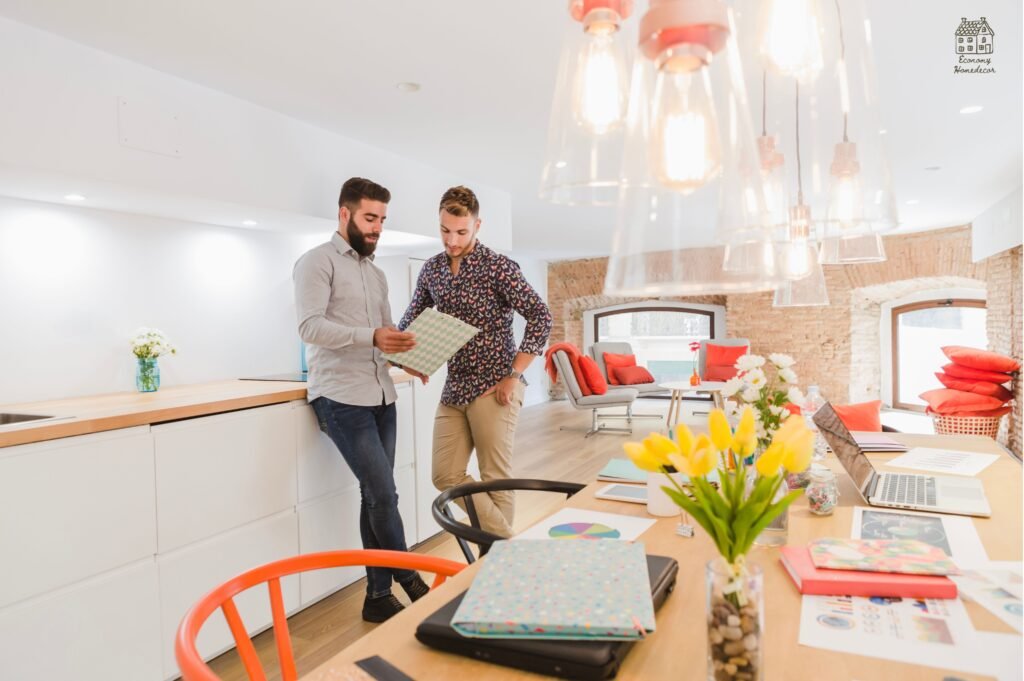
What Economy Home Decor Really Means
Economy home decor is the art of making a home look good, feel comfortable, and function better without overspending. It focuses on value, not just low price.
A cheap item saves money today.
An economical item saves money, improves the room, and keeps working for you.
That difference matters.
A $5 plastic decor piece that looks random may be cheap, but it is not economical if it adds clutter. A $25 lamp that changes the whole mood of your bedroom is economical because it improves how the room feels every night.
Good economy decor usually has four qualities:
- it solves a real visual or functional problem
- it works with what you already own
- it can move between rooms if needed
- it does not make the home feel more cluttered
Think of economy decor as smart styling, not poor styling.
Why Budget Homes Often Look Unfinished
Most low-budget homes do not look unfinished because the owner has bad taste. They look unfinished because the room has no clear order.
Common problems include:
- harsh white ceiling light
- too many small accessories
- furniture pushed against every wall
- rugs that are too small
- curtains that stop too low
- random colors in every corner
- empty walls with no focal point
- cheap storage visible everywhere
- matching flatpack furniture with no personal pieces
- decor bought one item at a time without a plan
This is why some people keep buying cushions, candles, small frames, and artificial plants, but the room still feels wrong.
The issue is not the number of items.
The issue is the lack of design hierarchy.
A room needs one clear focal point, a controlled color palette, proper lighting, and a few textures that make it feel warm. Without those, even expensive furniture can look flat.
The Economy Decor Rule: Fix Layout First, Buy Last
Before buying anything, do this simple room audit.
Stand at the entrance of the room and ask:
- What is the first thing my eye sees?
- Is that thing attractive or messy?
- Is the room easy to walk through?
- Is there one main focal point?
- Does the lighting feel warm or harsh?
- Are there too many colors fighting each other?
- What can I remove before I add anything?
This step costs nothing, but it can change the whole room.
Move the sofa away from the wall if the room allows it. Shift the rug. Bring a lamp from another room. Remove five small decor items from one surface. Try putting books, a tray, and one vase together instead of spreading small objects everywhere.
Economy home decor starts with using what you already own better.
The 7 Highest-Impact Budget Decor Upgrades
1. Warm layered lighting
Lighting changes the emotional temperature of a room faster than almost anything else.
If your room only has one ceiling light, it will often feel flat. Add a table lamp, floor lamp, wall light, or even a small plug-in lamp on a shelf. Choose warm bulbs instead of cold white ones.
A budget room with warm layered lighting usually looks better than an expensive room under harsh light.
Best use: living room, bedroom, hallway, dining corner.
2. Curtains that look intentional
Curtains are one of the easiest ways to make a room feel taller and more finished.
The mistake is hanging them too low or choosing panels that are too short. Hang curtains higher than the window frame and wide enough that they frame the window instead of blocking it. Little House of Four gives a similar practical curtain tip: hang curtains between the top of the trim and ceiling/crown area, and wide enough that the curtain edge skims the window sides.
Even inexpensive curtains can look better when they are hung properly.
Best use: living room, bedroom, rental apartments.
3. One large focal wall instead of many tiny pieces
A common budget mistake is buying several tiny wall pieces because each one is cheap. But many small pieces can make a room look scattered.
Instead, create one strong wall moment:
- one oversized framed print
- a simple gallery wall
- wooden wall art
- Islamic calligraphy
- a large mirror
- peel-and-stick wallpaper on one wall
- painted arch or accent panel
For Pakistani homes, wooden wall art and Islamic calligraphy are popular low-budget choices because they are lightweight, easy to install, and suitable for living rooms and bedrooms.
Best use: sofa wall, bed wall, dining wall, entryway.
4. A rug that connects the furniture
A rug should not float like a small island in the middle of the room. In a living room, at least the front legs of the sofa and chairs should touch the rug if possible.
If a large rug is too expensive, consider:
- waiting for sale season
- layering a smaller patterned rug over a plain base rug
- using a flatwoven rug
- checking local markets or secondhand options
A correct-size simple rug often looks better than a fancy rug that is too small.
Best use: living room, bedroom, dining space.
5. Hardware swaps
Cabinet handles, drawer pulls, door knobs, and curtain rods are small details, but they affect the room more than people expect.
A basic dresser can look more custom with matte black, brass, wood, or ceramic knobs. Modern Home Look also highlights hardware swaps as a fast DIY upgrade that can make inexpensive furniture look more elevated.
Best use: kitchen, bedroom, TV console, wardrobes, bathroom vanity.
6. Textiles that add softness
Textiles make a room feel lived-in. Use them carefully.
Affordable upgrades include:
- cushion covers
- throw blankets
- bedding
- table runners
- curtains
- fabric lampshades
- slipcovers
The trick is not to buy too many patterns. Choose two or three colors and repeat them.
For example:
- beige sofa
- olive cushions
- cream curtains
- warm wood table
- black lamp
That looks calmer than five unrelated colors.
7. Plants and natural texture
Plants add life, shape, and freshness. If real plants are difficult, use one or two high-quality faux plants instead of many cheap artificial ones.
Good budget-friendly plant choices include:
- money plant
- snake plant
- pothos
- ZZ plant
- peace lily
- succulents
Affordable.pk notes that popular affordable plant options in Pakistan include money plants, snake plants, peace lilies, and succulents.
Natural textures also help:
- jute
- rattan
- cane
- clay
- linen
- cotton
- wood
- woven baskets
These materials make a room feel warmer without needing luxury furniture.
What to Save On and What to Spend On
Economy decorating does not mean saving on everything. It means spending where the item carries the room and saving where items can be changed later.
| Category | Save or Spend? | Why |
|---|---|---|
| Sofa | Spend carefully | It affects comfort, durability, and the main room look. |
| Mattress | Spend | Comfort matters daily. |
| Lighting | Spend modestly | Even affordable lamps can transform a room. |
| Cushion covers | Save | Easy to replace seasonally. |
| Curtain rods | Spend modestly | Cheap rods can bend or look weak. |
| Curtains | Save/moderate | Simple fabric looks good if hung well. |
| Rugs | Spend smartly | Size and texture matter more than trend. |
| Wall art | Save/moderate | DIY, prints, and local art can work well. |
| Storage | Spend smartly | Bad storage creates visible clutter. |
| Decor accents | Save | Buy fewer, better-looking pieces. |
| Hardware | Save/moderate | Small upgrade, big visual effect. |
| Paint | Spend modestly | High impact for relatively low cost. |
A useful rule: spend on items you touch daily or that visually anchor the room. Save on items you rotate.
Room-by-Room Economy Home Decor Ideas
Living room
The living room needs three things first: seating, lighting, and a focal point.
Start here:
- remove clutter from the TV unit
- add one warm lamp
- choose one wall to highlight
- use a rug large enough to connect seating
- add two or three cushions in a controlled palette
- use one tray on the coffee table
- add one plant or natural texture
Avoid buying many small decor pieces. They make the room harder to clean and visually noisy.
A simple living room formula:
neutral base + warm lighting + one large wall piece + textured rug + two accent colors
Bedroom
A bedroom does not need much decor. It needs calm.
Start with:
- clean bedding
- two matching or coordinated pillow covers
- soft curtains
- bedside lamp
- one wall piece above the bed
- hidden storage for daily clutter
If the room is small, avoid heavy furniture. Use wall shelves, under-bed storage, and lighter curtains.
A bedroom should feel restful, not decorated from every corner.
Kitchen
A budget kitchen can look better with small changes:
- replace cabinet handles
- add under-cabinet lighting
- use matching jars for open shelves
- clear the countertop
- add one washable runner
- use peel-and-stick backsplash if renter-friendly
- keep only beautiful or useful items visible
The biggest kitchen decor mistake is leaving too much packaging on display. Tea boxes, oil bottles, spices, cleaning products, and random containers create visual clutter.
Decant what makes sense. Hide the rest.
Bathroom
Bathrooms often improve with textiles and lighting.
Try:
- matching towels
- simple soap dispenser
- peel-and-stick floor tiles
- framed small print
- mirror upgrade
- shower curtain
- small plant
- better bulb temperature
Do not overcrowd the sink. A bathroom looks more expensive when surfaces are clear.
Entryway
The entryway sets the mood for the home.
Low-budget upgrades:
- wall hooks
- shoe storage
- small mirror
- narrow console
- basket for keys
- one framed print
- washable mat
Even a tiny entryway can feel intentional if it has a clear function.
Balcony or small outdoor area
For apartments, balconies can become mini living spaces.
Try:
- foldable chair
- small outdoor rug
- hanging planters
- solar lights
- floor cushions
- bamboo screen
- compact side table
Do not overfill it. Leave space to sit comfortably.
Economy Decor for Small Homes and Rentals
Small homes need fewer, smarter pieces.
Use:
- vertical wall space
- mirrors to reflect light
- furniture with legs
- nesting tables
- foldable chairs
- hidden storage
- light curtains
- wall-mounted shelves
- one strong focal wall
Renters should focus on damage-free upgrades:
- peel-and-stick wallpaper
- removable hooks
- tension rods
- washable rugs
- plug-in lamps
- freestanding shelves
- lightweight wall art
BiyaDecor also highlights renter-friendly ideas such as peel-and-stick wallpaper, command hooks, lightweight furniture, and removable rugs.
The goal in a rental is not permanent luxury. It is comfort without future repair costs.
Local and Cultural Economy Decor Ideas
Economy home decor becomes stronger when it fits the culture of the home.
For Pakistani homes, practical options include:
- Islamic calligraphy wall art
- wooden wall panels
- locally made rugs
- handmade cushion covers
- cane or wooden furniture
- clay pots
- brass trays
- fabric market curtains
- local carpenter-made shelves
- embroidered textiles
- minimalist quote frames
Local sourcing can be more economical than imported decor, especially when you can customize size, fabric, or finish.
But quality still matters. Check:
- finishing
- edges
- weight
- installation method
- cleaning needs
- return policy
- color accuracy
- delivery cost
A low-priced item is not economical if it arrives damaged, fades quickly, or cannot be returned.
Common Mistakes That Make Budget Decor Look Cheap
Buying too many small things
Small items feel affordable, but they often create clutter. Buy fewer pieces with more presence.
Ignoring scale
Tiny art above a large sofa looks weak. A small rug under large furniture looks accidental.
Using cold white lighting everywhere
Cold lighting can make a room feel like a shop or clinic. Warm lighting feels more residential.
Matching everything too perfectly
A full matching furniture set can look flat. Mix one vintage, handmade, or textured piece to create character.
Choosing trend over fit
A trendy item that does not match your home becomes visual noise.
Forgetting storage
A room cannot look stylish if daily clutter has nowhere to go.
Buying before measuring
Always measure:
- wall width
- window height
- rug area
- sofa length
- table clearance
- shelf depth
Wrong size is one of the most expensive budget mistakes.
The 30-Day Economy Home Decor Plan
Week 1: Edit and observe
Do not buy anything.
- remove clutter
- clean surfaces
- rearrange furniture
- test a new layout
- identify the ugliest corner
- take photos of the room in daylight and at night
Photos show problems your eyes ignore.
Week 2: Fix lighting and textiles
Add or adjust:
- lamps
- bulbs
- curtains
- cushion covers
- bedding
- throws
- rug placement
This week changes the room’s mood.
Week 3: Add one focal point
Choose one:
- wall art
- mirror
- gallery wall
- accent paint
- peel-and-stick wallpaper
- wooden wall decor
- large plant
Do not decorate every wall. Let one wall lead.
Week 4: Add personality and storage
Now add:
- books
- trays
- baskets
- family photos
- handmade pieces
- local craft
- meaningful objects
- hidden storage
This is where the room starts feeling like yours.
Economy Home Decor Shopping Checklist
Before buying, ask:
- Where will this go?
- Does it match my color palette?
- Is the size correct?
- Can I use it in another room later?
- Is it easy to clean?
- Does it solve a problem?
- Am I buying this because it is useful or only because it is cheap?
- Will I still like it in six months?
- Does it make the room calmer or more cluttered?
If the answer is unclear, do not buy it yet.
Best Economy Home Decor Ideas by Budget
Under $25
- cushion covers
- thrifted vase
- small lamp
- framed print
- plant cutting
- cabinet knobs
- storage basket
- candle holder
- table runner
Under $50
- curtain panels
- mirror
- floor lamp
- peel-and-stick wallpaper
- large wall print
- side table
- bedding upgrade
- small rug
Under $100
- bigger rug
- accent chair secondhand
- console table
- wall shelves
- quality curtains
- full bedding set
- large plant
- coffee table
Under $250
- living room rug and curtains
- bedroom refresh
- entryway storage setup
- thrifted furniture makeover
- balcony seating
- full lighting upgrade
The best budget depends on the weakest part of your room. Spend where the room is failing most.
Final Thought
Economy home decor is not about pretending cheap things are luxury. It is about learning how rooms work.
A home looks better when the lighting is warm, the layout is practical, the colors are calm, the scale is right, and the decor has a reason to be there.
You do not need to finish your home in one weekend. In fact, the best budget homes usually improve slowly. You notice what the room needs, fix one thing, live with it, then improve the next thing.
That patience is not a limitation.
It is the strategy.
FAQs
What is economy home decor?
Economy home decor means decorating your home beautifully and practically without overspending. It focuses on smart choices, reuse, affordable upgrades, and high-impact changes like lighting, curtains, rugs, mirrors, storage, and wall art.
Is economy home decor the same as cheap decor?
No. Cheap decor focuses only on low price. Economy decor focuses on value, usefulness, durability, and visual impact. A cheap item can still be a bad purchase if it creates clutter or breaks quickly.
How can I make my home look expensive on a budget?
Start with decluttering, warm lighting, correctly hung curtains, a proper-size rug, a controlled color palette, and one strong focal point. Avoid too many small accessories.
What should I buy first for budget home decor?
Buy lighting first if the room feels cold or flat. Buy curtains or a rug first if the room feels unfinished. Buy storage first if clutter is the main problem.
What makes a home look cheap?
Common reasons include harsh lighting, small rugs, short curtains, cluttered surfaces, too many tiny accessories, mismatched colors, poor furniture scale, and visible low-quality storage.
How can renters decorate affordably?
Use removable wallpaper, command hooks, plug-in lamps, freestanding shelves, lightweight wall art, rugs, curtains, and furniture that can move with you.
What are the best low-budget decor items?
Lamps, cushion covers, curtains, mirrors, rugs, wall art, plants, baskets, cabinet hardware, and bedding usually give the highest visual impact for the price.
How do I decorate a small home on a low budget?
Use vertical storage, mirrors, light curtains, furniture with legs, foldable pieces, hidden storage, and one strong focal point per room. Avoid overcrowding the space.