
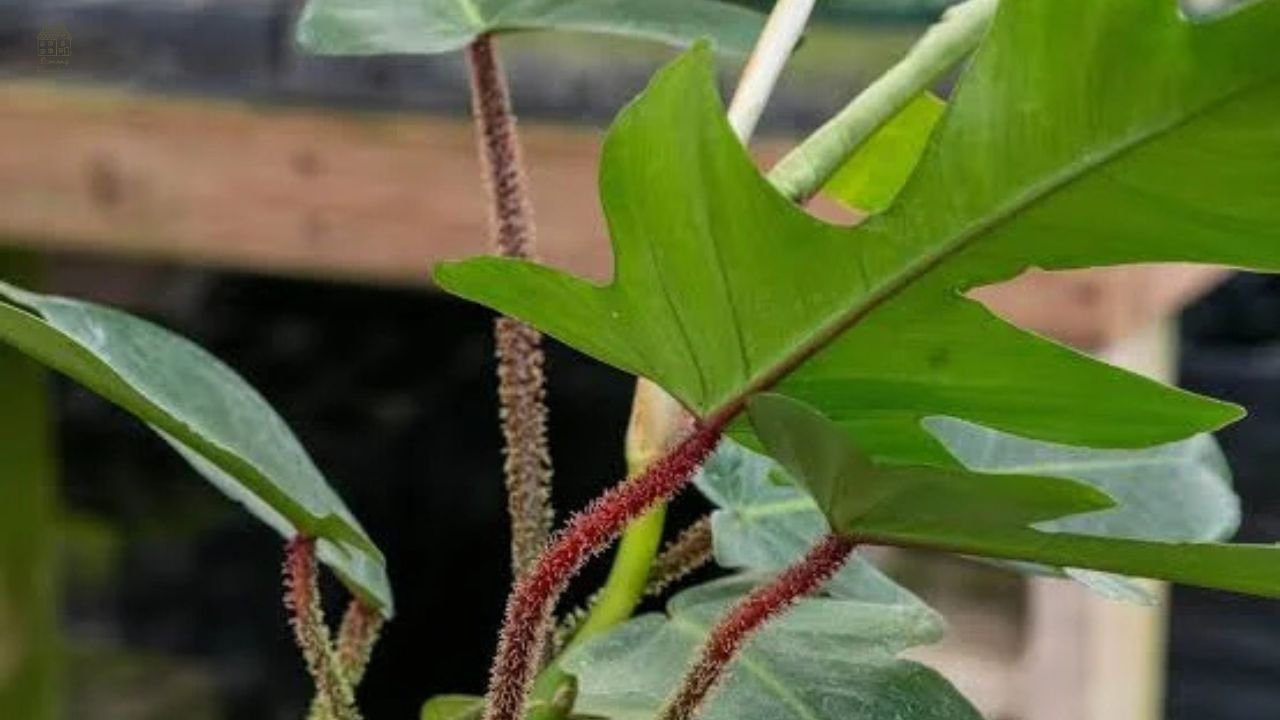
If you’ve ever seen a plant with green, shiny leaves and strange fuzzy red stems that almost look like they’re wearing tiny soft jackets, you’ve probably just met Philodendron squamiferum—a plant that looks like it came straight out of a tropical jungle storybook.
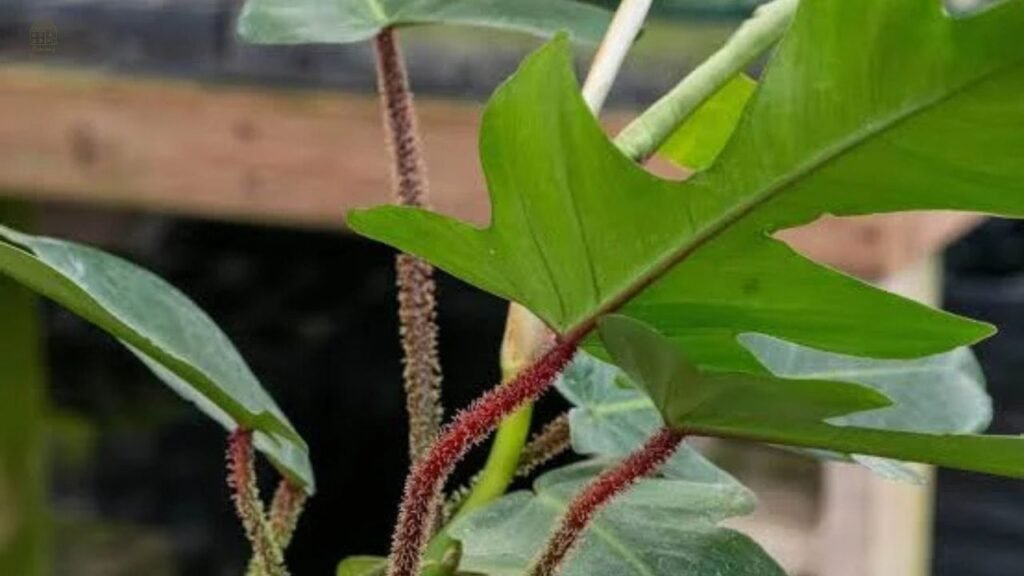
And yes, today we’re going to talk about it in a very simple, friendly way so that even a 10-year-old could understand everything without feeling confused.
Let’s start from the beginning.
🌿 Meet the Jungle Beauty
The plant squamiferum is a type of tropical houseplant that belongs to a big plant family called Araceae. That family also includes other famous plants like Monstera and other Philodendrons.
But what makes squamiferum special is not just its family—it’s its personality.
This plant grows like a climbing vine, which means it loves to stretch upward instead of staying small and bushy. In the wild, squamiferum climbs trees in rainforests, wrapping itself gently around trunks as it searches for sunlight.
Imagine a plant that doesn’t want to stay on the ground—it wants to explore the sky. That’s exactly how squamiferum behaves.
🌱 Where Does It Come From?
In nature, squamiferum grows in the warm, humid rainforests of South America. These forests are like giant green worlds filled with tall trees, dripping leaves, and constant moisture in the air.
In those forests, squamiferum doesn’t grow in soil like garden plants. Instead, it often grows on trees. This makes it what we call an “epiphyte”—a plant that uses trees for support but doesn’t harm them.
Think of it like a friendly climber using a tree like a ladder to reach sunlight.
Because of this natural lifestyle, squamiferum loves humidity, warmth, and indirect light. It is basically a tropical child that feels happiest in jungle-like conditions.
🌿 The Most Famous Feature (And Why Everyone Loves It)
Now let’s talk about the most exciting thing about squamiferum—its stems.
The stems of squamiferum are covered in soft, reddish, fuzzy hairs. Yes, real hairs!
They are not dangerous or sharp. They are soft and unique, and they make the plant look like it’s wearing tiny velvet sleeves.
This is the number one reason plant lovers get fascinated by squamiferum. When people first see it, they often say, “Wait… is that even real?”
And yes—it is absolutely real.
The leaves of squamiferum are also beautiful. They are deep green, glossy, and shaped a bit like hearts or elongated ovals depending on maturity. When the plant grows older, the leaves become larger and more dramatic.
So you can think of squamiferum as a plant that starts cute and becomes stunning as it grows.
🌿 A Plant That Loves to Climb
Unlike many small indoor plants that just sit in a pot, squamiferum is a natural climber.
It uses aerial roots—tiny root-like structures growing from its stem—to grab onto surfaces. In the wild, these roots attach to tree bark. Indoors, they attach to things like moss poles or wooden supports.
This climbing nature means squamiferum is always “reaching” for something higher.
If you give it support, it will grow taller, stronger, and more beautiful over time.
Without support, it may still grow, but it tends to look messy or spread out.
So if you want a happy squamiferum, think of it like a kid who loves jungle gyms—it needs something to climb.
🌱 Why Plant Lovers Are Obsessed With It
There are thousands of houseplants in the world, but squamiferum has a special fan base.
Why? Because it is rare enough to feel special, but not impossible to grow.
People love it because:
- It looks exotic and tropical
- It has unique fuzzy red stems
- It grows in a dramatic climbing style
- It changes appearance as it matures
In simple words, squamiferum feels like a “living decoration” that keeps changing over time.
It’s not boring. It’s always evolving.
🌿 Is It a Rare Plant?
Yes, in many places squamiferum is considered somewhat rare compared to common houseplants like pothos or spider plants.
But it is not impossible to find. Over the past few years, more plant nurseries and online shops have started selling it because demand has increased.
This rise in popularity is mainly because plant collectors love unique plants that stand out—and squamiferum definitely stands out.
It is not just another green plant. It has personality.
🌱 How It Grows Indoors
When grown inside a home, squamiferum usually grows slower than it does in the wild, but it still follows the same natural pattern.
It will:
- Grow upward
- Develop long stems
- Produce larger leaves over time
- Need support to climb
If you give it the right care, squamiferum can become a tall, beautiful indoor plant that looks like it belongs in a jungle café or a modern plant-filled home.
But if ignored, it may become weak or slow down its growth.
This plant is not difficult, but it does like attention.
🌿 Light, Water, and Air (Simple Understanding)
Even though this is not a full care section yet, it helps to understand what squamiferum naturally likes.
Think of it like this:
- It loves bright light, but not harsh sun
- It enjoys moist air, like a warm bathroom after a shower
- It prefers soil that is slightly damp, not dry like desert sand
If you remember one thing, remember this:
squamiferum is a jungle plant, not a desert plant.
So anything that feels “tropical” is usually good for it.
🌱 Why It Feels So Special Indoors
There are plants that just sit quietly in a corner… and then there is squamiferum.
This plant feels alive in a different way. Its fuzzy stems make people stop and stare. Its climbing habit makes it feel like it’s always moving upward in life. Its leaves change shape and size as it grows, almost like it is growing up in front of your eyes.
Many plant owners say they feel a kind of emotional connection to squamiferum because watching it grow feels rewarding and peaceful.
It’s not just decoration—it feels like a small living companion.
🌿 A Quick Fun Fact Section
Here are some fun and easy facts about squamiferum:
- It is part of the same family as the popular Monstera
- Its fuzzy stems are completely natural, not artificial
- It can climb several meters if supported properly
- It changes leaf size as it matures
- It originally grows in tropical rainforests
Nature really went creative with this one.
🌱 Why Beginners Should Not Be Afraid
Some people think rare plants are hard to care for, but squamiferum is not as scary as it looks.
Yes, it prefers humidity and climbing support, but it is still very manageable if you understand its basic needs.
Think of it like this:
It doesn’t want perfection—it just wants consistency.
A little care, a little attention, and it will reward you with beautiful growth.
🌿 Final Thoughts on This Amazing Plant
To sum it all up, squamiferum is a tropical climbing plant that stands out because of its fuzzy stems, beautiful leaves, and jungle-like personality.
It is rare enough to feel exciting, but not impossible to grow at home.
And most importantly, it brings a little piece of the rainforest into your living space.
When you look at squamiferum, you are not just looking at a plant—you are looking at a tiny piece of nature’s creativity.