
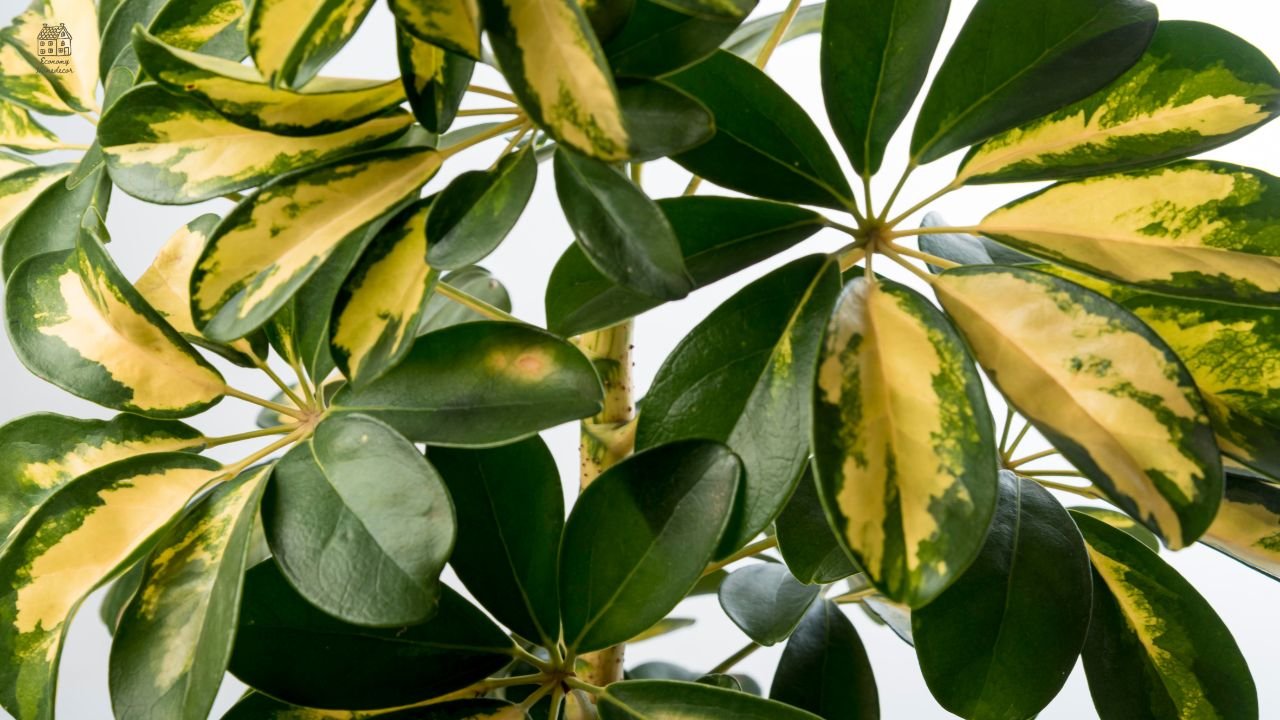
If you’ve ever seen a plant with beautiful green leaves splashed with creamy white and soft yellow tones, there’s a good chance you were looking at a ficus tineke. It’s one of those plants that makes people stop and say, “Wow… what is THAT?” It looks almost like nature painted it by hand.
But don’t worry—this plant isn’t as complicated as it looks. In fact, once you understand it, you’ll realize it’s quite friendly and easy to live with. In this section, we’re going to explore everything about ficus tineke in a super simple, fun, and easy way so even a 10-year-old could understand it without confusion.
🌱 A Plant with a Fancy Name but Simple Personality
Let’s start with the basics.
The full scientific name of ficus tineke is Ficus elastica ‘Tineke’. That sounds big and scary, but it really just means it belongs to the rubber plant family.
Now, here’s something interesting: the ficus tineke is actually a special type of rubber plant. It didn’t grow in the wild naturally in this exact form. Instead, it was carefully developed by plant growers who wanted something more colorful and decorative than the regular green rubber plant.
So, you can think of ficus tineke as the “stylish version” of the rubber plant family.
And yes—it’s famous for those soft cream, green, and light pinkish edges that look almost like watercolor art.
🌍 Where Does It Come From?
To really understand ficus tineke, we need to go back to its roots.
The original rubber plant family comes from warm tropical areas in Asia. These regions are hot, humid, and full of sunlight filtering through tall trees. That’s the natural home environment of plants like ficus tineke.
Because of this background, the ficus tineke loves:
- Warm temperatures
- Bright but indirect sunlight
- A bit of humidity (not dry air)
Imagine it like a person who enjoys sunny weather but doesn’t want to stand directly under a burning hot sun. That’s exactly how this plant behaves.
🎨 Why Does It Look So Unique?
One of the most exciting things about ficus tineke is its coloring. Unlike plain green plants, this one has a mix of colors on every leaf.
Each leaf can show:
- Deep green sections (for energy)
- Creamy white patches (for style)
- Light yellow-green tones (for softness)
- Sometimes even a hint of pink when it’s young
This mix happens because of something called “variegation.” But don’t worry about the big word—just think of it like nature’s paint splashes on leaves.
The more light it gets (but not too much direct sun), the more beautiful the patterns become. That’s why plant lovers adore ficus tineke so much.
🧠 A Living Plant That Reacts to Its Environment
Here’s something very important to know: ficus tineke is not just a decoration. It is alive and sensitive.
That means it reacts to how you treat it.
For example:
- If it gets too much water → its leaves may droop
- If it gets too little light → colors may fade
- If it’s happy → it grows strong and glossy leaves
So in a way, ficus tineke is like a quiet little communicator. It shows you how it feels through its leaves.
This is why people say plants “talk”—not with words, but with changes you can see.
🌿 Why People Love Ficus Tineke So Much
There are hundreds of indoor plants out there, but ficus tineke has become super popular for a few simple reasons:
1. It looks expensive (but isn’t)
Even though it looks like something you’d find in a fancy hotel, it’s actually quite affordable.
2. It fits modern homes
Its clean green-and-cream look matches almost any room style.
3. It feels calming
Many people say just seeing a ficus tineke in their home makes the space feel peaceful.
4. It’s not too difficult
With basic care, it grows happily indoors.
Because of all this, ficus tineke has become a favorite among beginners and plant lovers alike.
🌞 How It Behaves Indoors
When you bring a ficus tineke inside your home, it doesn’t just sit quietly. It slowly adjusts to its new environment.
At first, it may feel a bit “shy.” You might notice:
- A few leaves dropping
- Slight change in color
- Slow growth
Don’t panic—this is normal. Your ficus tineke is just getting used to its new home.
After a few weeks, it usually settles in and starts growing again like nothing happened.
🪴 A Plant That Grows With You
One of the most beautiful things about ficus tineke is that it doesn’t stay the same forever.
It grows slowly but steadily, like a calm friend who doesn’t rush life.
Over time:
- Its stem becomes stronger
- Its leaves become larger
- Its shape becomes fuller and more tree-like
If you take care of your ficus tineke, it can become a stunning indoor tree that stands tall in your living room.
And the best part? You get to watch it grow year after year.
🌤️ The “Mood” of Ficus Tineke
Let’s make this fun.
If ficus tineke were a person, its personality would be:
- Calm
- A little picky
- Loves sunshine (but not too much)
- Enjoys steady routines
- Doesn’t like sudden changes
This means it doesn’t like being moved around too often or overwatered randomly. It prefers stability.
Once you understand this “personality,” caring for ficus tineke becomes much easier.
💡 Why Its Leaves Matter So Much
The leaves of ficus tineke are like its diary pages. They tell you everything about its health.
Healthy leaves mean:
- Good light
- Proper watering
- Happy roots
Unhappy leaves mean:
- Stress
- Overwatering
- Low light
So instead of guessing, you just “read” the leaves. That’s one of the easiest ways to understand your ficus tineke.
🌱 A Beginner-Friendly Plant (But With Rules)
Even though ficus tineke is considered beginner-friendly, it still has a few simple rules:
- Don’t drown it in water
- Don’t keep it in dark corners
- Don’t ignore it for too long
- Don’t move it constantly
If you follow these simple points, your ficus tineke will reward you with beautiful growth.
Think of it like a pet that doesn’t need walking—but still needs care and attention.
🌿 The Emotional Side of Ficus Tineke
Plants may not speak, but they do create emotions.
When you look at a healthy ficus tineke, you feel:
- Peace
- Happiness
- Pride
- A sense of calm beauty
Many people say having a ficus tineke in their home helps reduce stress after a long day.
It becomes more than just a plant—it becomes part of your space and mood.
🌟 Final Thoughts on This Unique Plant
To sum it all up, ficus tineke is a beautiful, colorful, and peaceful indoor plant that brings life into any room. It may look fancy, but it’s actually quite simple once you understand it.
It teaches patience. It teaches observation. And most of all, it rewards care with beauty.
If you treat your ficus tineke well, it will grow with you quietly and gracefully for years.
And honestly, that’s what makes it so special.