
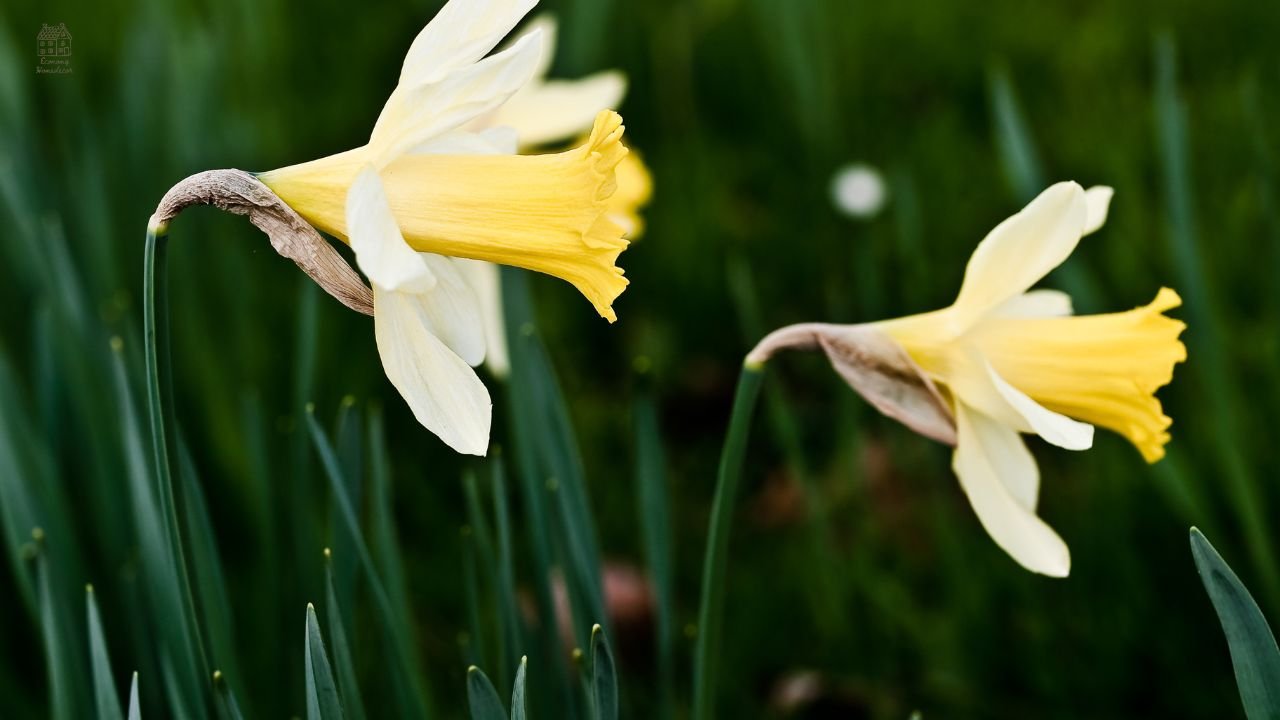
If you’ve ever looked at bright yellow spring flowers and wondered, “Is that a jonquil or a daffodil?”—you’re not alone. This confusion is incredibly common, and honestly, it’s easy to see why.
Here’s the simple truth right away:
👉 All jonquils are daffodils, but not all daffodils are jonquils.
That one sentence clears up most of the mystery behind jonquil vs daffodil, but there’s still more to understand if you want to spot the difference with confidence.
Let’s make this super easy.
🌼 Why Everyone Gets Confused
Imagine walking through a garden in spring. You see clusters of cheerful yellow flowers swaying in the breeze. Someone calls them “jonquils.” Another person says, “No, those are daffodils.”
So which one is right?
👉 The answer: they both might be right.
That’s because the whole jonquil vs daffodil confusion comes from how people use these names in everyday life—not just from science.
In many places, especially in the southern United States, people casually call all yellow daffodils “jonquils.” Over time, that habit stuck. So now, the names get mixed up all the time.
But when you look a little closer, the difference between jonquil vs daffodil becomes much clearer—and even a bit fascinating.
🌱 Let’s Break It Down Simply
Think of it like this:
- “Daffodil” is a big family name
- “Jonquil” is a specific member of that family
So when comparing jonquil vs daffodil, you’re not looking at two totally separate flowers. Instead, you’re comparing:
- A general group (daffodils)
- A specific type within that group (jonquils)
It’s kind of like:
- “Dogs” vs “Golden Retrievers”
All Golden Retrievers are dogs—but not all dogs are Golden Retrievers.
That’s exactly how jonquil vs daffodil works.
🌼 What This Article Will Help You Do
By the time you finish reading, you’ll be able to:
✔ Understand the real difference between jonquil vs daffodil
✔ Identify them in real life (even in your own garden)
✔ Avoid common mistakes most people make
✔ Sound confident when talking about spring flowers
No confusing science talk. No complicated words. Just clear, helpful explanations.
🌸 Why This Difference Actually Matters
You might be thinking, “Okay, but does it really matter?”
Fair question.
Here’s why understanding jonquil vs daffodil is useful:
1. 🌿 Better Plant Identification
If you enjoy gardening or even just walking outdoors, knowing the difference helps you recognize plants more easily.
2. 🌼 Smarter Gardening Choices
Some types have:
- Stronger fragrance
- Different bloom times
- Unique growth habits
So understanding jonquil vs daffodil can help you pick the right flowers for your space.
3. 💬 Clear Communication
Ever tried explaining something but used the wrong name? It gets confusing fast.
Knowing the difference between jonquil vs daffodil helps you speak clearly—whether you’re chatting with a friend or visiting a nursery.
🌞 A Quick Peek at the Key Differences
Before we go deeper, here’s a quick preview of what sets them apart:
- Number of flowers per stem
- Leaf shape
- Fragrance
- Appearance
These small details make a big difference when comparing jonquil vs daffodil.
Don’t worry—we’ll walk through each one step by step.
🌼 The Science (Made Super Simple)
Now, let’s touch on the science—but keep it easy.
All daffodils belong to a plant group called Narcissus. This is just the official name scientists use.
Within this group, there are many different types. One of those types is called “jonquil.”
So again, when you think about jonquil vs daffodil, remember:
👉 Jonquils are just one special kind of daffodil.
That’s it. No complicated terms needed.
🌿 Why Some Daffodils Look Different
Here’s where things get interesting.
Not all daffodils look the same. Some have:
- One flower per stem
- Big petals
- Little to no scent
But jonquils usually have:
- Multiple small flowers
- Thin leaves
- A strong, sweet smell
That’s one of the easiest ways to understand jonquil vs daffodil in real life.
🌼 Real-Life Example (So You Never Forget)
Let’s say you’re standing in a garden.
You see:
- One big yellow flower on a stem → likely a daffodil
- A cluster of smaller flowers with a strong scent → likely a jonquil
Now you’re already thinking like an expert when it comes to jonquil vs daffodil.
🌸 The Biggest Myth You Should Ignore
Here’s a common myth:
❌ “All yellow flowers are jonquils.”
This is not true.
In fact, this misunderstanding is one of the main reasons people get confused about jonquil vs daffodil.
Color alone doesn’t decide it. You need to look at:
- Structure
- Leaves
- Flower arrangement
We’ll show you exactly how later.
🌱 Why Beginners Struggle With This
If you’re new to gardening, the whole jonquil vs daffodil topic can feel tricky.
And that’s okay.
Most beginners struggle because:
- Names are used loosely
- Flowers look similar at first glance
- There’s too much technical information online
That’s why this guide keeps things:
- Simple
- Visual
- Practical
🌼 What Makes This Guide Different
Most articles either:
- Oversimplify things too much
or - Dive into confusing scientific details
This one does neither.
Instead, we focus on:
- Real-world identification
- Clear comparisons
- Easy explanations
So you can fully understand jonquil vs daffodil without feeling overwhelmed.
🌞 Let’s Make This Easy and Fun
Think of this as a friendly guide—not a textbook.
You don’t need to memorize anything. Just follow along, and everything will click naturally.
By the end, the whole jonquil vs daffodil confusion will feel surprisingly simple.
🌼 Quick Recap Before We Move On
Let’s lock in the basics:
- Jonquils are a type of daffodil
- Not all daffodils are jonquils
- The confusion comes from everyday language
- You can tell them apart with a few simple clues
And most importantly:
👉 You don’t need to be an expert to understand jonquil vs daffodil.