
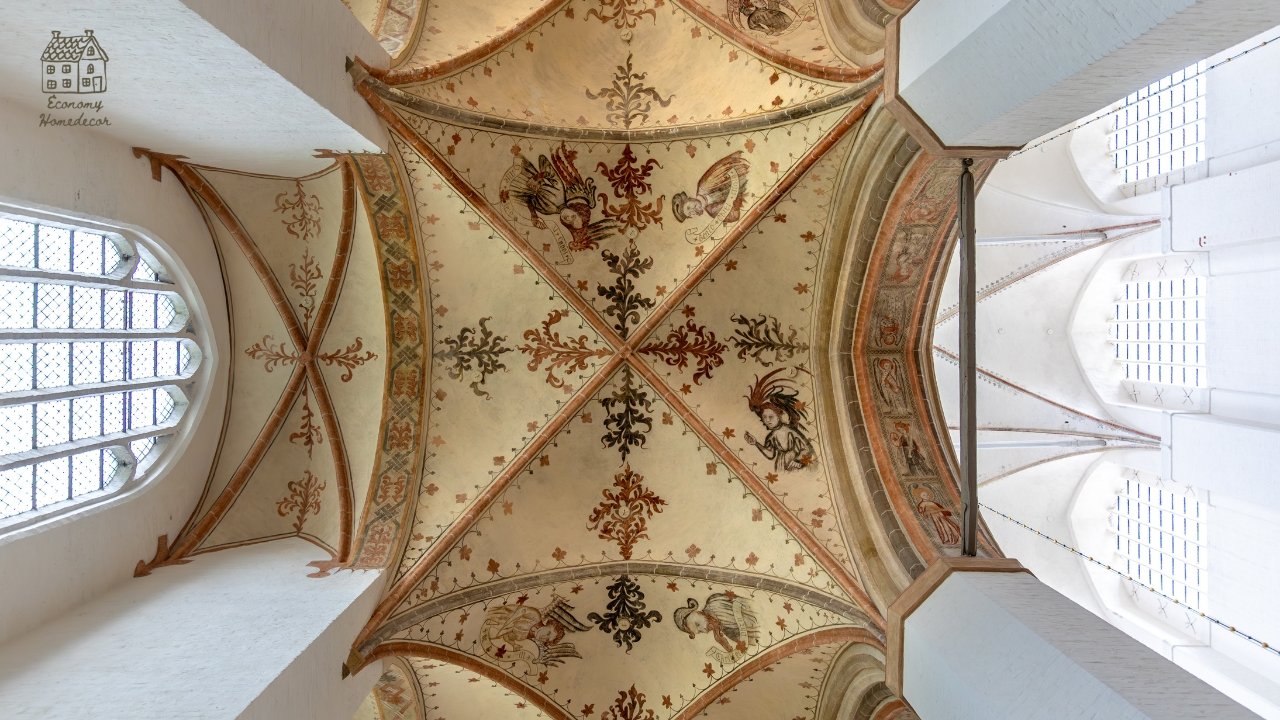
Have you ever walked into a room and instantly felt like it was bigger, brighter, and more beautiful than usual? Sometimes, that magical feeling comes from looking up. Instead of a flat surface above your head, the ceiling rises high and slopes upward, creating an open and airy space.
That special design is called a vaulted ceiling.
Today, you’ll learn exactly what a vaulted ceiling is, why people love it so much, and how it changes the look and feel of a home. Don’t worry—this guide keeps things simple, friendly, and easy to understand.
Let’s look up and explore.
A Simple Definition
A vaulted ceiling is a ceiling that slopes upward instead of staying flat. Instead of forming a straight horizontal line, it rises toward the roof, creating a tall, open shape.
Think of it like a triangle or arch above your room.
In many homes, the roof and the ceiling follow the same angle. That means when the roof goes up, the ceiling goes up too. This creates a large open space that feels much taller than a regular ceiling.
Because of this design, a vaulted ceiling makes rooms feel:
- Bigger
- Brighter
- More dramatic
- More stylish
Even a small room can feel grand when it has a vaulted ceiling.
Why the Ceiling Shape Matters
Most homes have flat ceilings that sit about 8 feet high. That’s comfortable and practical, but it doesn’t always feel exciting.
A vaulted ceiling, on the other hand, changes the entire mood of a room.
Here’s what happens when a room has a vaulted ceiling:
- The room looks larger than it actually is.
- Light spreads around more easily.
- The space feels more open and free.
- The home looks more luxurious.
Many designers love using a vaulted ceiling because it adds beauty without needing extra decorations.
The ceiling itself becomes the star of the room.
A Quick Look at History
The idea of a vaulted ceiling is actually very old. It goes back hundreds of years.
Long ago, builders used this style in churches, castles, and important buildings. The tall ceilings made these places feel powerful and impressive.
If you have ever seen a cathedral with huge arches above, you have already seen a type of vaulted ceiling.
These ceilings helped buildings feel:
- Grand
- Sacred
- Open
- Inspiring
Over time, architects started bringing the vaulted ceiling into homes. Today, you can see them in modern houses, cottages, and even small apartments.
What Makes a Vaulted Ceiling Different
Not every high ceiling is the same.
A vaulted ceiling has a very specific feature: it slopes upward or curves, instead of staying flat.
Here are the key features:
1. Sloped Shape
The ceiling rises up toward the roof.
2. Extra Height
Rooms with a vaulted ceiling are usually much taller than standard rooms.
3. Open Structure
Often, the roof beams are visible, which adds character and charm.
4. Dramatic Appearance
The design naturally catches the eye.
Because of these features, a vaulted ceiling instantly becomes the focal point of a room.
Where You Usually See Vaulted Ceilings
A vaulted ceiling can appear in many different places in a house. Designers often use it in rooms where people gather the most.
Here are the most common spaces:
Living Rooms
Living rooms are the most popular place for a vaulted ceiling. The tall space makes the room feel welcoming and impressive.
It also leaves plenty of room for large windows and beautiful lighting.
Kitchens
A kitchen with a vaulted ceiling feels bright and open. Sunlight spreads easily across the room, making it a cheerful place to cook and gather.
Bedrooms
A bedroom with a vaulted ceiling can feel calm and cozy at the same time. The extra height makes the space peaceful and relaxing.
Entryways
Some homes greet visitors with a tall entryway featuring a vaulted ceiling. It creates a strong first impression and makes the home feel elegant.
How a Vaulted Ceiling Changes a Room
A vaulted ceiling does much more than raise the height of a room. It changes the entire experience of being inside the space.
Let’s look at how it transforms a home.
1. More Natural Light
Because the ceiling is taller, there is room for bigger windows or skylights.
That means more sunlight can fill the room.
A vaulted ceiling helps light travel further, making the home feel warm and lively.
2. A Sense of Freedom
Tall ceilings create a feeling of openness. You don’t feel boxed in or cramped.
Many people say a vaulted ceiling makes a home feel peaceful and relaxing.
3. Beautiful Architecture
Even without fancy furniture, a vaulted ceiling makes a room look stylish.
The angles, beams, and height naturally draw attention upward.
4. Strong Visual Impact
Walk into a room with a vaulted ceiling, and you notice it right away.
It adds drama and personality to the home.
Vaulted Ceiling vs Flat Ceiling
To understand why a vaulted ceiling is special, it helps to compare it with a regular ceiling.
| Feature | Flat Ceiling | Vaulted Ceiling |
|---|---|---|
| Height | Usually 8–9 feet | Often much taller |
| Shape | Straight and flat | Sloped or arched |
| Visual effect | Simple | Dramatic |
| Light | Limited | Spreads widely |
| Feeling | Cozy | Open and spacious |
As you can see, a vaulted ceiling creates a much stronger design statement.
Why Homeowners Love Vaulted Ceilings
People choose a vaulted ceiling for many reasons.
Here are some of the most common ones.
It Makes Small Homes Feel Bigger
Even if the floor space stays the same, the extra height changes the way the room feels.
A vaulted ceiling can make a modest home feel much larger.
It Adds Style
Designers often say that ceilings are the “fifth wall” of a room.
A vaulted ceiling turns that wall into a beautiful design feature.
It Boosts Natural Light
More height means more space for windows and skylights.
That means brighter, happier rooms.
It Increases Home Appeal
Many buyers love homes with a vaulted ceiling because they look unique and elegant.
Popular Design Elements With Vaulted Ceilings
A vaulted ceiling often works together with other beautiful features.
Here are a few that designers love to pair with it.
Exposed Wooden Beams
Wooden beams add warmth and texture to the room.
When combined with a vaulted ceiling, they create a cozy yet dramatic look.
Skylights
Skylights placed in a vaulted ceiling bring sunlight directly from above.
This makes the room feel bright and cheerful all day.
Large Windows
Tall windows fit perfectly under a vaulted ceiling, letting sunlight pour inside.
Statement Lighting
Because the ceiling is high, designers often add big chandeliers or pendant lights.
These lights look stunning hanging from a vaulted ceiling.
Does Every Home Have Vaulted Ceilings?
Not all homes include this design.
A vaulted ceiling requires certain structural features in the roof, so it’s usually planned during construction.
However, some houses can be renovated to add a vaulted ceiling later. This depends on the roof structure and the support beams inside the home.
Builders must make sure the structure stays strong and safe.
Is a Vaulted Ceiling Right for You?
Before choosing this design, homeowners usually think about a few things.
A vaulted ceiling can be perfect if you want:
- A brighter home
- A spacious feeling
- Unique architecture
- Eye-catching design
However, it also means higher walls, which can make painting or cleaning a little harder.
Still, many people feel the beauty of a vaulted ceiling makes it completely worth it.
A Quick Recap
Let’s quickly summarize what we learned.
A vaulted ceiling is:
- A ceiling that slopes upward
- Much taller than standard ceilings
- A design that creates open, bright spaces
It has been used for centuries and remains one of the most loved architectural features in modern homes.
With better lighting, dramatic height, and stunning design, a vaulted ceiling can turn an ordinary room into something truly special.
What Comes Next
Now that you understand what a vaulted ceiling is, the next step is exploring the different styles.
Not all vaulted ceilings look the same. Some form arches, some create dramatic slopes, and others feature beautiful intersecting curves.
In the next section, we’ll explore the different types of vaulted ceilings and how each one changes the look of a room.
You might be surprised by how many styles exist!